


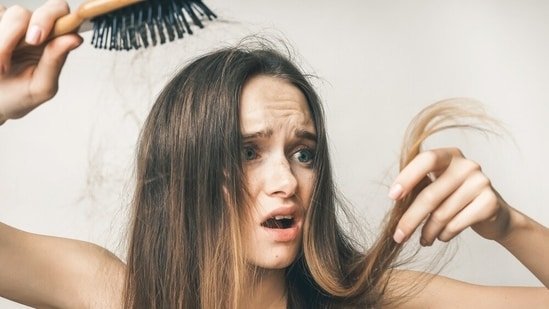
Hair fall has become an increasingly common concern among young adults and working professionals. While some daily shedding is completely normal, persistent hair fall or visible thinning can often point to an underlying issue. Among the most common causes seen by dermatologists are stress-related hair fall and hormonal hair loss. Though they can look similar at first, the two differ in how they present, what triggers them, and the effect they can have over time.
HT Lifestyle reached out to Dr Nandini Dadu – an aesthetic physician, trichologist, hair restoration expert and GLP coach at Dadu Medical Centre, Vasant Vihar and Rajouri Garden, New Delhi – who explains, “Hair fall is often dismissed as a temporary problem caused by stress, but not all hair loss has the same origin. Understanding whether hair fall is stress-related or linked to hormones is essential because treatment approaches can be completely different.”
Stress hair fall: Usually sudden and diffuse
According to Dr Dadu, stress-related hair fall, medically known as telogen effluvium, typically develops after the body goes through significant physical or emotional stress. This may include the following:
- Work pressure and emotional stress
- Illness or high fever
- Surgery or sudden weight loss
- Sleep disturbances
- Major life events or emotional trauma
The trichologist explains, “In stress hair fall, a larger number of hair follicles shift prematurely into the resting phase, leading to excessive shedding. The most important feature is that the hair fall is usually sudden and widespread rather than limited to a specific area. People often notice large amounts of hair while washing, combing, or on their pillow.”
Dr Dadu adds that stress-related hair fall often shows up two to three months after the triggering event, which can make it difficult to connect the shedding to its actual cause. The delay is what often makes it confusing for many people. The reassuring part, however, is that stress-induced hair fall is usually temporary and reversible. Once the underlying trigger is addressed and overall health begins to recover, hair growth often gradually returns to normal.
Hormonal hair loss: Gradual and patterned
The aesthetic physician highlights that hormonal hair loss develops differently and tends to progress slowly over time. In women, hormonal imbalance and hair loss may be associated with the following:
- PCOS
- Thyroid disorders
- Pregnancy and postpartum changes
- Menopause
- Hormonal fluctuations or genetic predisposition
Dr Dadu explains, “Unlike stress shedding, hormonal hair loss is usually progressive and patterned. Men may experience androgenetic alopecia, commonly known as male-pattern hair loss, which is strongly influenced by hormones and family history. Women may notice widening of the hair parting, reduced hair density around the crown, or thinning that makes the scalp more visible. Men often develop receding hairlines or thinning at the vertex area.”
She adds that since the progress is gradual, many individuals ignore early warning signs until hair density has significantly reduced.
How to distinguish between the two conditions?
According to Dr Dadu, one simple way to distinguish between the conditions is to observe the pattern of hair fall.
Stress hair fall often presents as the following:
- Sudden onset
- Excessive shedding throughout the scalp
- Increased hair fall during washing or brushing
- History of stress or illness in recent months
The hairline usually remains intact, and bald patches are uncommon.
On the other hand, hormonal hair fall can manifest as follows:
- Slow and progressive thinning
- Reduced volume over time
- Visible widening of parting or receding hairline
- Family history of hair loss
- Associated symptoms such as irregular periods, acne, or weight changes in women
The pattern often provides important diagnostic clues.
Avoid self diagnosis
According to the hair restoration expert, relying on self-diagnosis can often be misleading, as many people assume all hair fall is caused by stress and end up delaying proper medical evaluation. Others may panic at the first signs of shedding and start trying online remedies, oils, or supplements without understanding the actual cause. This can not only postpone the right treatment but may also make it harder to address the underlying issue effectively.
Dr Dadu emphasises, “However, hair loss is rarely a one-size-fits-all problem. A detailed evaluation may include scalp examination, medical history, and blood investigations to assess factors such as iron deficiency, thyroid imbalance, vitamin levels, or hormonal disturbances. Early diagnosis helps prevent unnecessary progression and allows treatment to be tailored to the actual cause.”
Timely treatment matters
Whether the trigger is stress or hormones, early intervention can make a significant difference. Dr Dadu explains that stress-related shedding often improves with lifestyle changes, better stress management, nutritional support, and targeted treatment once the trigger is addressed. Hormonal hair loss, however, usually requires a more long-term approach, with consistent medical guidance aimed at slowing progression, managing the underlying cause, and supporting healthier regrowth over time.
The trichologist concludes, “Hair fall should not be treated with assumptions or internet advice. The sooner we identify the underlying cause, the better the chances of preserving hair health and restoring confidence. Hair is often a reflection of internal wellbeing, and timely care can make all the difference.”
Note to readers: This article is for informational purposes only and not a substitute for professional medical advice. Always seek the advice of your doctor with any questions about a medical condition.
