


Friday afternoon can be a dangerous time to be a journalist.
Editors racing to put together weekend editions lob last-minute requests and governments routinely release uncomfortable information late in the day.
Proof of that practice arrived last week in a bruising auditor general’s report on management of public records requests by government departments.
Buried in the footnotes was data on Treasury bureaucrats making a mockery of freedom of information rules.
In January, they fessed up to withholding documents that had already been approved for release until Fridays. Sometimes public servants even went out of their way to extend processing timelines so decisions would land at the end of the week.
Of the 155 applications reviewed with data on day of release available, nearly half were found to have been withheld to the end of the week. It has been obvious for some time that Treasury’s website happens to be updated suspiciously close to 5pm on Fridays, most weeks.
Apart from ensuring documents disappear into the weekend, Treasury was shown not to have any policy for dealing with requests. A draft set of rules from 2023 boasted of five “procedure documents”. None actually existed.
Sadly, the report’s findings that 80% of FoI requests were blocked in part or in full is yet another indictment of transparency inside the Albanese government.
Now four years into power, promises of a transparent and upfront approach are in rough shape.
Consider some other recent examples.
On the same day as the budget was handed down this month, Labor released its formal response to Peta Murphy’s inquiry on gambling advertising. After 1,000 days with the report, the government’s response just happened to arrive at the same time as 99% of the Canberra press gallery was locked up covering the budget.
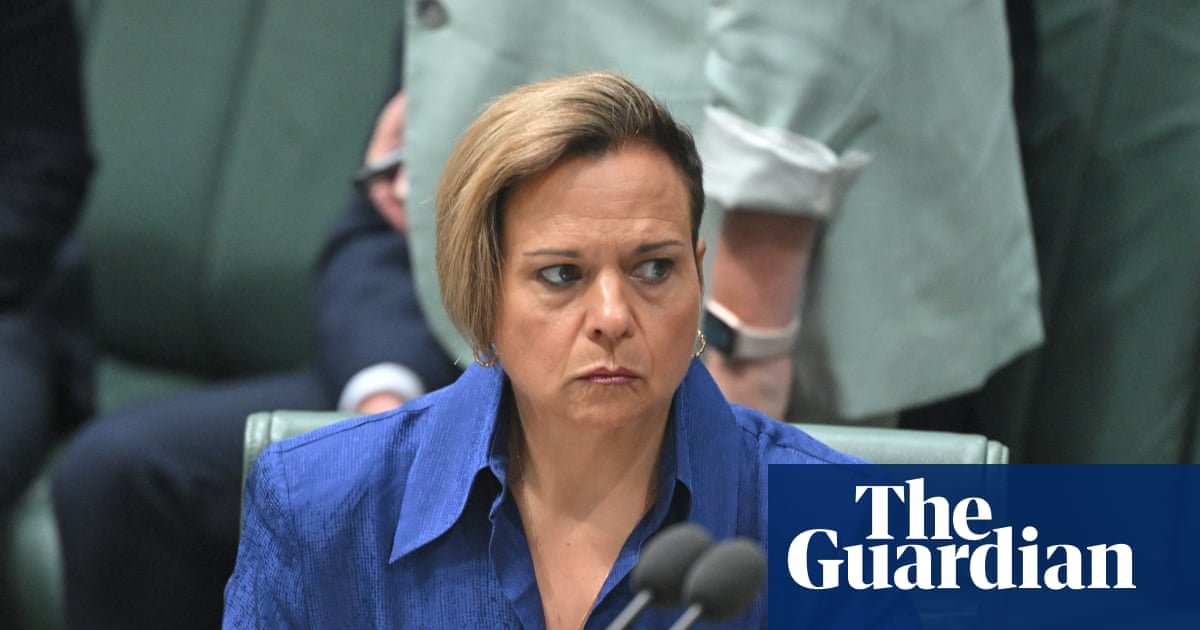
Independent David Pocock called the timing “cowardly”. Fellow crossbencher Monique Ryan said it represented “the height of political cynicism”.
Just as galling are recent written answers to questions on notice from members of parliament. The Centre for Public Integrity has been tracking answers given to Pocock on a $560m government infrastructure fund. CPI tells Guardian Australia the answers closely follow a secret Labor cheat sheet written to help ministers and public servants avoid answering questions in Senate estimates, uncovered by Capital Brief in 2024.
The document coached agencies to provide “only information required to answer the question” and avoid unnecessary explanatory material.
In the case of the major and local community infrastructure fund, Pocock asked who in the government had determined participation in the invite-only application process. In an answer that shows contempt for appropriate parliamentary scrutiny, Labor responded in just eight words: “Invitees for the program were identified by government.”
“This response doesn’t even meet the low threshold in the government’s guide for providing minimalist responses,” CPI’s executive director, Catherine Williams, said.
“Instead of answering, the government resorted to vague institutional language designed to obscure responsibility and provide no further detail than was already known.”
These trends show up just as the government has ignored calls for watchdogs including the Australian National Audit Office to be properly funded for their work.
In March, Labor dumped its controversial plans to overhaul FoI rules, conceding the laws had no viable pathway through parliament.
The attorney general, Michelle Rowland, said in a statement the government remains committed to improving the FoI system, which she called “a vital feature” of our democracy.
“The government expects all agencies to consider the ANAO’s findings and work towards enhancing their practices and processes to promote a stronger FOI framework.”
Rowland ruled out commissioning an independent review of FoI as part of the process.
“There have been multiple reviews of FOI in the last 15 years. Everyone agrees that right now, the FOI system is broken.”
Transparency advocates are frustrated a separate process to reform whistleblower laws appears on hold. Labor committed to changes ahead of the 2022 election, and released a draft legislation for possible changes last year.
Since submissions closed in October, there has been no action.
Kieran Pender, the associate legal director at the Human Rights Law Centre’s Whistleblower Project, said the changes to the Public Interest Disclosure Act had been in the too-hard basket for too long.
“It is time for the government to deliver on their promise to fix the PID Act so that whistleblowers in the public sector are able to safely report serious wrongdoing,” he said.
As bad as the situation seems, on Monday things got worse. As the first day of the latest budget estimates hearings got under way, it emerged the attorney general’s department had themselves delayed FoI applications in order to avoid scrutiny in parliamentary hearings.
The department secretary, Katherine Jones, insisted her staff took compliance with FoI laws seriously. Her answers about the revelations satisfied no one on the committee.
