


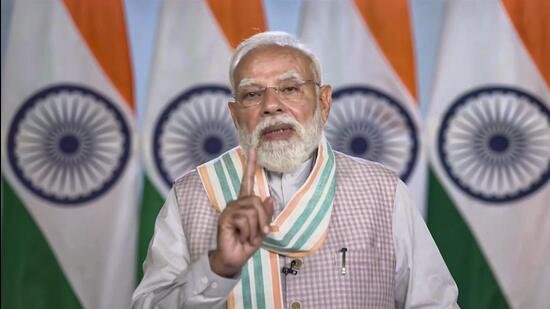
Prime Minister Narendra Modi on Saturday distributed appointment letters to over 51,000 recruits under the Center’s Rozgar Mela initiative and said India’s expanding global partnerships in technology, manufacturing, clean energy and infrastructure will open unprecedented employment opportunities for the country’s youth.
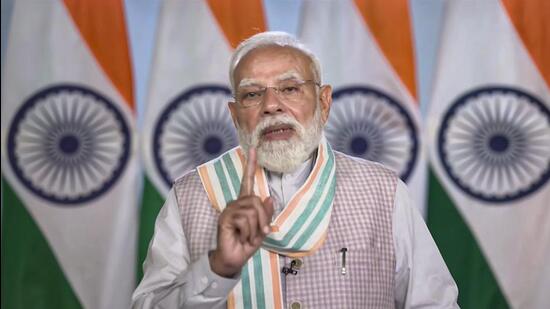
The PM addressed the recruits via video conference and said the newly appointed government employees will become “responsible partners” in India’s development journey and play a key role in realising the vision of a “Viksit Bharat” by 2047.
He congratulated the recruits and their families and said their success reflected not just personal effort but also society’s and nation’s contribution.
He urged the newly recruited employees to work with sensitivity and commitment, and said public service was ultimately about improving the lives of citizens. “The nation has placed its trust in you,” he said, adding that government employees must view their work as a form of national service.
Referring to his recent five-nation visit, Modi said India’s growing international collaborations are creating new avenues for employment and technological advancement for Indian youth. Discussions with global companies and leaders during the trip revealed widespread confidence in India’s technological progress and the capabilities of its young workforce, he said.
“The world is very excited about India’s youth and India’s technological progress,” he said.
Modi cited partnerships with countries including the Netherlands, Sweden, Norway, the UAE and Italy in sectors ranging from semiconductors and artificial intelligence to green technology, maritime cooperation and critical minerals. He said these agreements would generate new opportunities for engineers, technicians, researchers and skilled workers across India.
Modi also referred to an agreement involving Dutch semiconductor equipment maker ASML and the Tata Group and said it would help India enter next-generation technologies and create large-scale employment opportunities.
“Collaborations in clean energy, green hydrogen and sustainable manufacturing are helping India emerge as a major player in future industries,” he said.
Modi also said, “India is investing heavily in shipbuilding, aviation maintenance and electronics manufacturing…and developing a comprehensive semiconductor supply chain and expects at least 10 major semiconductor units to emerge in the coming years.”
“India is also building a shipbuilding and ship repair ecosystem with investments worth around ₹75,000 crore, which will raise demand for skilled manpower,” he said.
He added that the government is creating a complete MRO — maintenance, repair and overhaul — ecosystem for the aviation sector, opening another avenue for employment generation.
Pointing to the Production Linked Incentive (PLI) scheme, Modi said India witnessed record electronics production and job creation in recent years. He said public and private sector investments are ensuring that young people find employment opportunities within the country itself.
Modi also underlined the role of infrastructure development in accelerating economic growth and employment. “Over the last 12 years,” he said, “India rapidly expanded railways, highways, airports, logistics networks, ports and digital infrastructure, helping villages and smaller towns connect with larger markets.”
Modi also said that rural transformation improved opportunities for farmers, small traders and students, while schemes related to housing, electricity, sanitation and piped water generated demand for workers and small enterprises. He said improved connectivity and digitisation are reducing the urban-rural divide and strengthening local economies.
Manufacturing, digital services, railways, defence, space sectors and start-ups are creating opportunities at an unprecedented pace, he said.
He stressed that the government is focusing on skill development, industry-linked education and future technologies by strengthening institutions such as IITs and national skill training institutes.
Modi also pointed to the rapid expansion of India’s start-up ecosystem and said, “The country now has more than 2.3 lakh recognised start-ups.” He said the growth is no longer limited to metropolitan centres and that Tier-2 and Tier-3 cities are increasingly emerging as hubs of innovation and entrepreneurship.
He also noted the growing participation of women in entrepreneurship, citing the rise of women-led start-ups and the impact of schemes such as Mudra and PM SVANidhi in supporting self-employment and financial independence among women.
The Prime Minister concluded by reiterating the government’s mantra of “Nagrik Devo Bhava” and said citizens’ welfare must remain at the centre of governance.
He also expressed confidence that the newly appointed recruits will contribute to India’s development journey in the years ahead.
