


As India accelerates its push to emerge as a global advanced manufacturing hub, closer collaboration between corporate legal and finance functions is becoming critical to navigating geopolitical, technological and regulatory complexities.
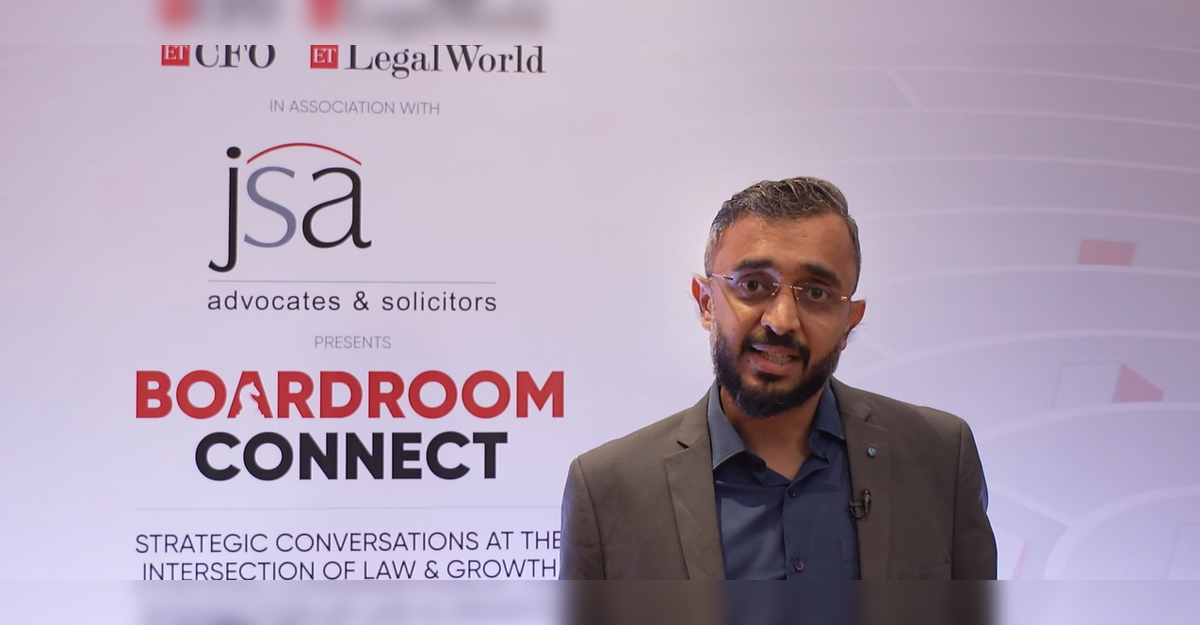
Speaking on the sidelines of the “JSA Boardroom Connect — Pune Edition”, Pulkit Goyal, Chief Financial Officer, Honeywell Automation India, and India Controller at Honeywell, said the discussions addressed some of the most pressing challenges facing the industrial sector today.
“The topics have been extremely relevant and most pressing for our industry. Being a finance professional for 20 years in the industrial sector, I could not wait but just to be here and participate and listen to other industry peers’ thoughts, suggestions, and pressing issues that they all are facing,” Goyal told ETLegalWorld during a media interaction.
Goyal highlighted that one of the most impactful aspects of the roundtable was the deliberate collaboration between legal and finance leaders—two functions that increasingly shape strategic decision-making in manufacturing organisations.
“One of the formats that I really liked was the collaboration between two very important functions in the corporate world—legal and finance. We deliberated things that will enable India’s manufacturing capability amid geopolitical challenges as well as technological development,” he added.
The closed-door CXO roundtable titled, “Scaling and Enabling India’s Advanced Manufacturing & Industrial Ecosystem: Innovation, Sustainability, and Global Competitiveness,” organised by ETCFO and ETLegalWorld, in association with JSA Advocates & Solicitors, brought together senior leaders from manufacturing, technology, legal and finance domains.
The discussions centred on how India can build a future-ready, resilient and sustainable industrial ecosystem as Industry 5.0, AI-driven manufacturing, automation and electrification reshape global production models. With global supply chains undergoing realignment and geopolitical uncertainties influencing trade and sourcing decisions, participants underscored the need for robust compliance frameworks alongside innovation-led growth.
Strategic sectors such as defence and aerospace were also in focus, where self-reliance, regulatory alignment and global partnerships must move in tandem. Participants noted that companies today must balance efficiency with sustainability, innovation with compliance, and scale with resilience, while meeting evolving ESG and stakeholder expectations.
The Pune edition of the roundtable offered a regional lens into India’s industrial transformation. With its strong base in automotive, engineering and a rapidly evolving EV ecosystem, Pune exemplifies how legacy manufacturing strengths are converging with new-age technologies and policy support.
