


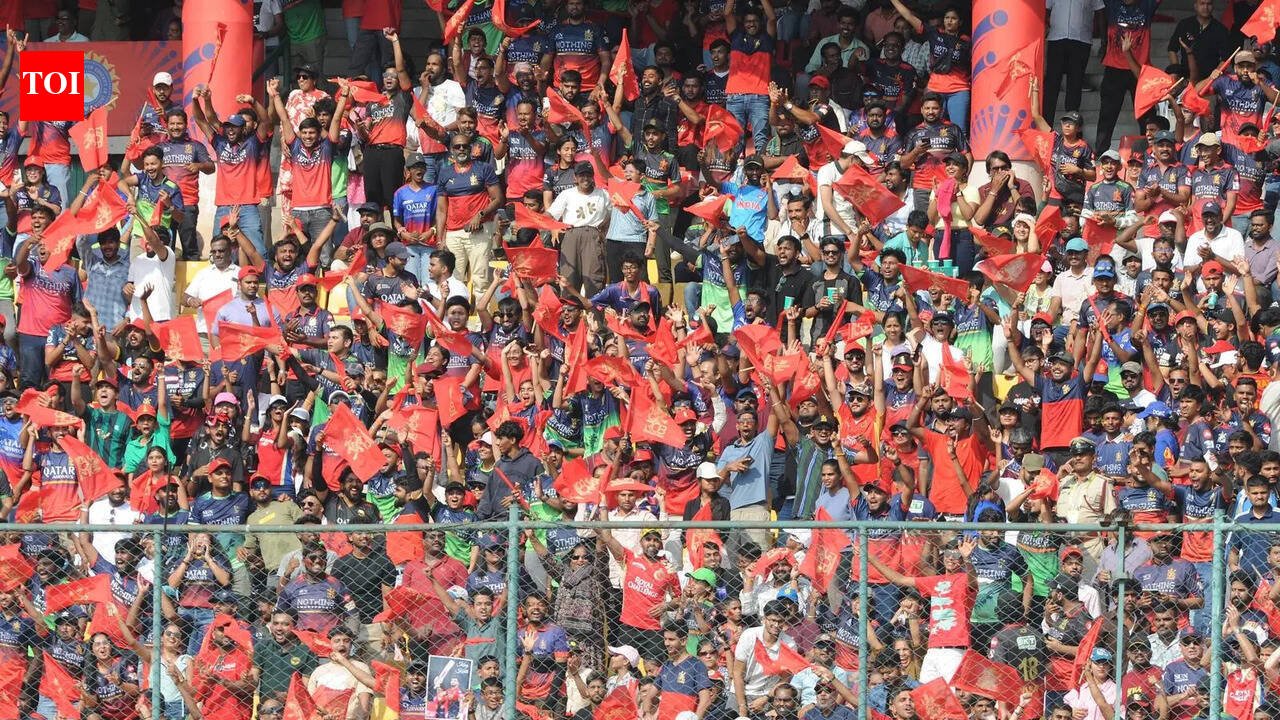
Bengaluru: As the Indian Premier League heads into the business end and the city leg of the 2026 tournament has concluded, it is hard to overlook how efficiently the home matches of Royal Challengers Bengaluru (RCB) were managed this season. The stadium remained the same, the police force largely unchanged, and the fanbase only continued to grow. What changed was the approach — in perception, planning, and preparation.The stampede outside M Chinnaswamy Stadium on June 4 last year, during RCB’s IPL victory celebrations, had claimed 11 lives and left an indelible scar on the city’s sporting landscape. The tragedy served as a massive wake-up call for all stakeholders involved. In that context, the five matches hosted by RCB at the venue this season stood out as examples of more structured and coordinated crowd management.The transformation did not happen overnight. It was the result of months of planning, review, and collaboration between the police, civic authorities, Karnataka State Cricket Association, and the franchise.Speaking at the RCB Innovation Lab Indian Sports Summit Monday, Bengaluru’s top police officers, led by commissioner Seemanth Kumar Singh, reflected on the extensive groundwork that went into ensuring cricket could safely return to the stadium after a govt-appointed committee had deemed the venue unsafe for hosting matches in the immediate aftermath of the tragedy.“It was a challenge to bring the stadium back to normalcy because the expectations of sports lovers and enthusiasts in Bengaluru are huge. So to balance this while at the same time ensuring safety was the biggest challenge. We took it up and interacted with all the stakeholders, who were many and diverse. Not everyone was on the same page initially. But our aim was to provide a safe environment to hold the matches,” Singh said. “Crowd management — not only during matches, but also for practice sessions, hotel stays, and transportation — was carefully planned. We told fans that if they had tickets, they should come to the stadium. If they did not, they should enjoy the match wherever they were.”Vamsi Krishna, joint commissioner (west), in his presentation, highlighted how technology was used in effective management and helped save time. For example, the time taken for the team bus to enter from the main gate was 2 minutes and 40 seconds last year; it was down to 49 seconds this year.On signage & rehearsalsEven signage was redesigned. Volunteers carrying mobile signage boards proved more effective than fixed signs because they could move dynamically depending on crowd movement. All police personnel, private security staff, and civil defence teams underwent extensive rehearsals. Three rounds of full-scale drills were conducted where police personnel themselves simulated spectators to identify operational gaps,” Krishna added.Unlike in the past, police also assessed the behavioural patterns of fans. “Understanding the crowd’s composition, behaviour, mood, and purpose is extremely important. Apart from the 32,000 spectators, there would always be an additional 10,000 to 20,000 people around the stadium — vendors, bystanders, onlookers and others… Fan behaviour changes depending on whether their favourite team wins, especially against rivals,” Krishna explained.“When the last ball of IPL 2026 was bowled at Chinnaswamy Stadium, all 32,000 people walked out safely in 30 minutes. That is the only scoreboard that mattered to us,” he concluded.
