


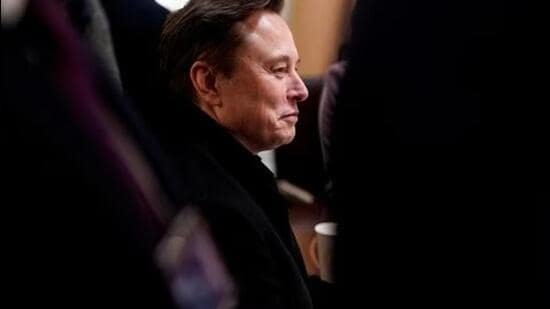
Absolute shambles to close the Musk v. Altman trial, with the judge ruling that Elon Musk took far too long to sue OpenAI and CEO Sam Altman over an alleged violation of an agreement to run OpenAI, which started out as a not-for-profit and later pivoted business models. The court ruled that Musk’s claims of “breach of charitable trust” were valid but fell outside of the three-year statute limitations; which Tesla and xAI’s Musk will appeal, calling the decision a “calendar technicality”. My takeaway from what was absolutely not the so-called tech trial of the year is this—none of the people leading AI can be trusted to do the right thing. I’ll get to each one of them.

Here are a few nuggets. During the course of this trial, Elon Musk testified that his own artificial intelligence (AI) startup OpenAI distilled many other AI models including those from OpenAI to build Grok. Model distillation, simply put, is to use one AI model to train another model. Of course Musk didn’t say this straight. When asked whether xAI had distilled OpenAI’s models, Musk tried to avoid the question by saying “generally all AI companies” do this. When pressed further if that meant a yes, he replied “partly”. You know what that means.
Also Read:Tech Tonic | Has too much tech ruined the cars we buy?
And I’d simply like to ask, where did all those billions of dollars of funding go, if it was this simple? xAI has raised a total of $42 billion in funding till date, including a massive $20 billion Series E round this January. Mind you, Grok isn’t the only product of such an approach. But it is quite interesting for AI companies such as OpenAI and Anthropic to be regularly crying about Chinese AI companies distilling their models. Yet, Anthropic’s own blog post on the issue suggests “distillation is a widely used and legitimate training method”. Does the word incest come to mind?
Microsoft led by CEO Satya Nadella, had been debating OpenAI’s commercial value as far back as in 2018, internal emails and trial testimonies have revealed. This coincides with a time when OpenAI was publicly positioning itself as a nonprofit. There can very much be an argument that Microsoft understood they stood to gain, and indeed did gain, when OpenAI made the pivot from the open approach to a closed-door commercial entity looking to maximise profits.
Nadella’s own testimony during this trial views OpenAI’s abrupt firing of Altman in 2023 as “amateur city”. One could argue that with Microsoft needing to protect its multi-billion dollar investments in the AI company, organisational peace and continuity were prioritised in that moment, over a larger move to transparency with governance.
“I don’t want to be IBM and OpenAI to be Microsoft.”
Words that Microsoft and Nadella were reminded of, and in legal terms, fully utilised by Musk’s lawyers to counter a rather common narrative that Microsoft’s investments and partnership with OpenAI is some act of corporate benevolence. Instead, there was a realisation within Microsoft that AI would represent some sort of a technological shift for years to come, and a fear that Microsoft would become a dated tech company, a hardware and software giant with extensive cloud compute infrastructure, but nothing more.
The reference? In 1980, dominant hardware giant IBM partnered with a still small software company Microsoft, to use the latter’s DOS operating system for IBM’s new personal computers. At the time, IBM let Microsoft keep the rights to the software and license it to other computer manufacturers as well. Eventually, software became more valuable than hardware—Microsoft grew rapidly, IBM not so much in the computing space.
Elon Musk, the man who started this legal drama, isn’t without his own share of inconsistencies. Never mind being difficult in court and not exactly playing ball with yes or no answers to questions that specifically required yes or no answers. A key takeaway was that Joshua Achiam, who is now OpenAI’s chief futurist, testifying that Musk’s race against Google was the reason for an “obviously unsafe and reckless” approach towards achieving AGI, or artificial general intelligence (been a buzzword in AI circles). In fact, it is believed Musk’s Tesla AI failed twice at this.
Which leads me to an AI-bro obsession with Google DeepMind’s Sir Demis Hassabis. He started DeepMind as an independent startup in 2010, sold it to Google four years later, and has since put together Google’s AI lab that has produced some of the biggest AI breakthroughs. OpenAI’s co-founder and current president Greg Brockman’s testimony notes Musk was “very consistent and fixated” with Hassabis. That, the trial tells us continued in conversations with Altman, Brockman, and Shivon Zilis, an OpenAI board member at the time. Musk and OpenAI cofounder Andrej Karpathy even suggested bringing OpenAI into Tesla’s fold for resources and a sense of urgency.
Then there’s Mira Murati, who seemingly played both sides in the Sam Altman ouster. First, it is believed she provided some chats to the board, to get Altman removed. The gossip flowing out from this legal wrangle seems to suggest she also shared details with Altman about what the board was up to. She still hasn’t come clean on her role in that ouster and reinstatement.
At a time when AI’s economic future is far from clear, and with it the societal as well as humanitarian mess it potentially may leave in its wake, one thing becomes very clear—some of the names that the world considers pivotal to the world of AI, are hypocrites, immature, bickering adults with a lot of money and no one to watch over them, and little regard for any consequences of their actions. Are these really the people who should be leading anything, let alone a haphazard march toward AI? No wonder, public sentiment about AI is at an all-time low.
Vishal Mathur is the Technology Editor at HT. Tech Tonic is a weekly column that looks at the impact of personal technology on the way we live, and vice versa. The views expressed are personal.
