


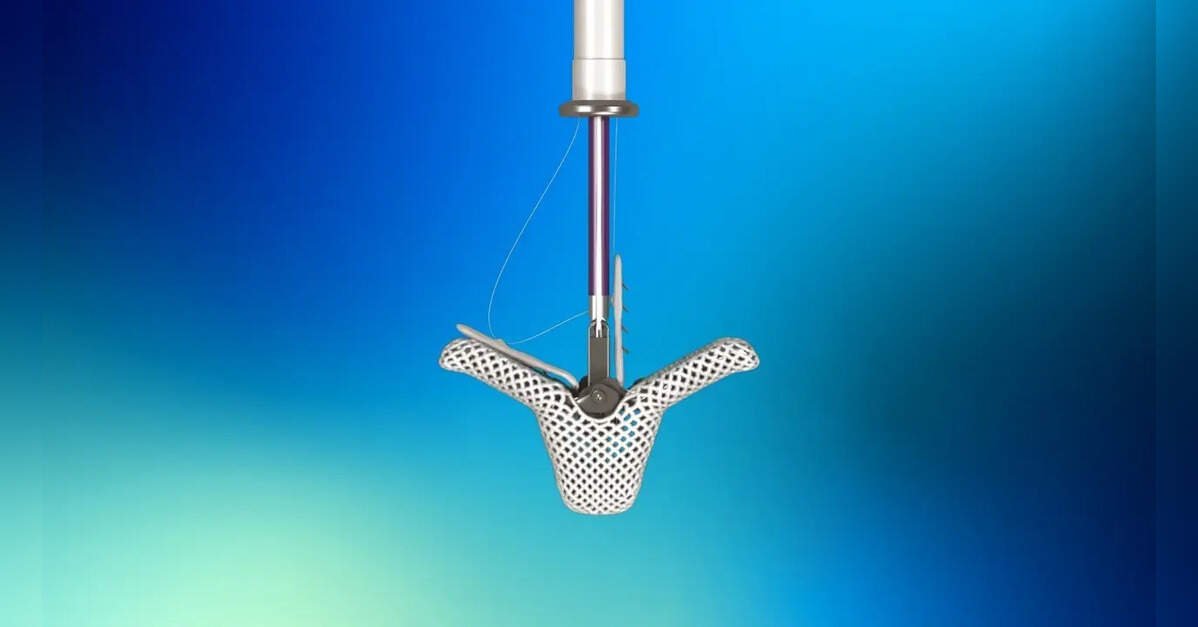
New Delhi: Abbott, a global healthcare leader, has announced the launch of its TriClip transcatheter edge-to-edge repair (TEER) system in India, marking a significant advancement in the treatment of tricuspid regurgitation (TR), a condition commonly referred to as a leaky tricuspid valve.
The TriClip system offers a minimally invasive alternative for patients who require tricuspid valve repair but are considered unsuitable candidates for open-heart surgery. Delivered through a vein in the leg, the device works by clipping together a portion of the valve’s leaflets, the flaps of tissue that regulate blood flow , helping the valve close more effectively and allowing blood to flow in the correct direction.
The technology is built on Abbott’s MitraClip system, which is widely used for repairing leaky mitral valves on the left side of the heart. TriClip features a specialised delivery system designed to navigate the unique anatomy of the right side of the heart. Patients who undergo the procedure typically require only about a day of hospitalisation before returning home.
The tricuspid valve regulates blood flow between the heart’s right atrium and right ventricle. When the valve fails to close properly, blood leaks backward within the heart, forcing it to work harder. Over time, this can lead to debilitating symptoms such as fatigue and shortness of breath and may progress to conditions such as atrial fibrillation or heart failure if left untreated.
In India, tricuspid regurgitation is increasingly being recognised as a common yet underdiagnosed condition, particularly among older adults and patients with rheumatic heart disease, atrial fibrillation, pulmonary hypertension, or other valve disorders. Clinical reviews and echocardiography-based studies suggest that significant TR is frequently encountered in routine cardiac practice and often worsens over time if left untreated.
“For far too long, patients living with tricuspid regurgitation have had limited treatment options that affected their quality of life. The introduction of TriClip in India represents an important advancement in care, offering a minimally invasive option that can improve symptoms and meaningfully impact patient outcomes,” said Sudheer Mirajkar, Country Manager, Abbott’s Structural Heart business in India.
“With the addition of TriClip to our broad structural heart therapy options in India, we are continuing to bring life-enhancing benefits to patients with cardiovascular conditions,” he added.
The tricuspid valve has historically received less attention than other heart valves, partly because symptoms tend to develop gradually and treatment options have been limited. However, the valve plays a critical role in heart function. Its complex structure, with soft tissue flaps that move with every heartbeat and a wide, uneven shape makes treatment particularly challenging.
As part of its approval process in the United States, the U.S. Food and Drug Administration (USFDA) reviewed data from the TRILUMINATE Pivotal trial, the world’s first randomised controlled study evaluating the safety and effectiveness of the TriClip system compared with medical therapy in patients with severe tricuspid regurgitation who are at intermediate or greater risk for surgery.
Trial findings showed that approximately 90 per cent of patients who received the TriClip system experienced a significant improvement in their tricuspid regurgitation grade, reducing from severe or higher to moderate or less within 30 days — a benefit sustained at one year. The study also demonstrated a favourable safety profile, with 98 per cent of patients free from major adverse events through 30 days.
Two-year follow-up data further showed that the TriClip system reduced hospitalisations for heart failure by 28 per cent, alongside continued improvements in valve function and patient quality of life.
