


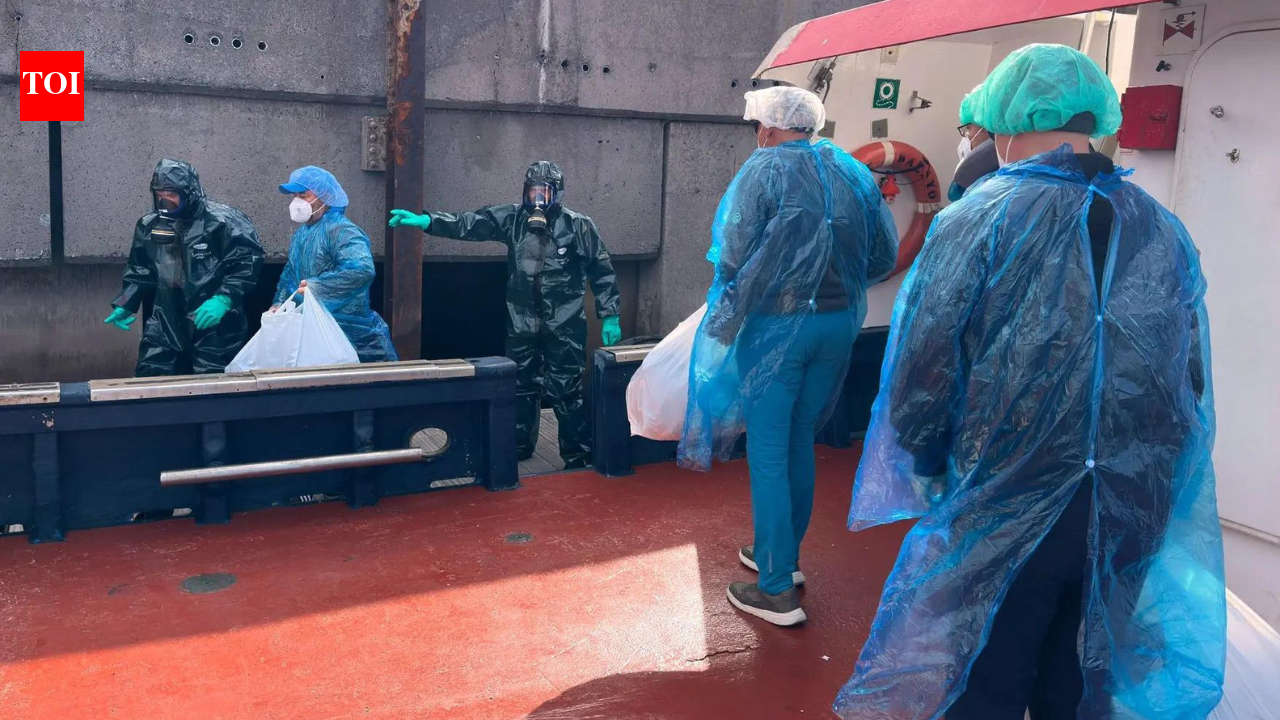
As the outbreak of hantavirus aboard a cruise ship triggered international concern, passengers on the quarantined vessel began disembarking on Sunday after it arrived off Tenerife in Spain’s Canary Islands.The MV Hondius reached Tenerife early Sunday after sailing from Cape Verde on May 6, following a deadly outbreak linked to the Andes strain of hantavirus. Three people have already died from infection, while five passengers who had earlier left the ship later tested positive.Spanish authorities, the World Health Organization (WHO) and cruise operator Oceanwide Expeditions said none of the more than 140 people still on board were showing symptoms at the time evacuation operations began.Passengers were ferried to shore in small launch boats carrying between five and 10 people at a time. According to Spain’s health ministry, Spanish nationals were given priority during the evacuation process.Everyone leaving the vessel was to undergo medical screening before boarding evacuation flights arranged by their respective countries. “The entire operation is proceeding normally,” Spanish Health Minister Mónica García said.Authorities said evacuation flights were expected to continue through Sunday and Monday. More than 20 nationalities are represented among the passengers and crew.WHO Director-General Tedros Adhanom Ghebreyesus travelled to Tenerife to oversee the operation alongside Spanish health and interior ministry officials. Authorities said those disembarking would remain isolated from the local population.Hantavirus is generally transmitted through exposure to rodent droppings, urine or saliva and is not considered easily transmissible between humans. However, the Andes variant identified in this outbreak has, in rare instances, shown the ability to spread from person to person. Symptoms can appear anywhere between one and eight weeks after exposure.Spanish passengers are expected to be transferred to a medical facility for quarantine. Oceanwide Expeditions said there are 13 Spanish passengers and one Spanish crew member aboard the vessel.Meanwhile, US, UK and the Netherlands confirmed evacuation plans for their nationals, while Australia is dispatching an aircraft expected to arrive Monday for Australians and citizens of nearby countries including New Zealand.US passengers will be quarantined at a medical centre in Nebraska, while British nationals will undergo hospital observation upon arrival. France said five of its citizens would be repatriated and monitored in hospital for 72 hours before beginning a 45-day home quarantine.Norway has also sent a specialised ambulance aircraft equipped for handling high-risk infectious disease cases.Passengers disembarking have been instructed to leave most of their belongings behind and carry only essential items such as documents, phones and chargers.Some crew members, along with the body of one passenger who died during the voyage, will remain aboard the ship as it sails to Rotterdam in the Netherlands for disinfection procedures. The cruise operator said the journey is expected to take about five days.The outbreak was first reported to the World Health Organization on May 2 after multiple passengers aboard the Dutch-flagged cruise ship developed severe respiratory illness during the voyage. Investigators believe the infection may have originated with a passenger who had spent more than three months travelling through Argentina, Chile and Uruguay before boarding the ship on April 1. The passenger later developed symptoms and died onboard. WHO said current evidence suggests the virus likely spread further through close contact on the vessel, with the Andes strain of hantavirus — a rare variant capable of limited human-to-human transmission — identified in confirmed cases.Since then, an international response involving multiple countries, WHO and the European Centre for Disease Prevention and Control has been launched to contain the outbreak. Symptomatic passengers have been medically evacuated, confirmed cases isolated and extensive contact tracing initiated across several countries. Passengers and crew have been asked to remain in cabins, monitor symptoms for 42 days and follow strict infection-control measures. Authorities are also carrying out genomic sequencing and epidemiological investigations to trace the exact source of exposure and better understand how transmission occurred onboard.
