


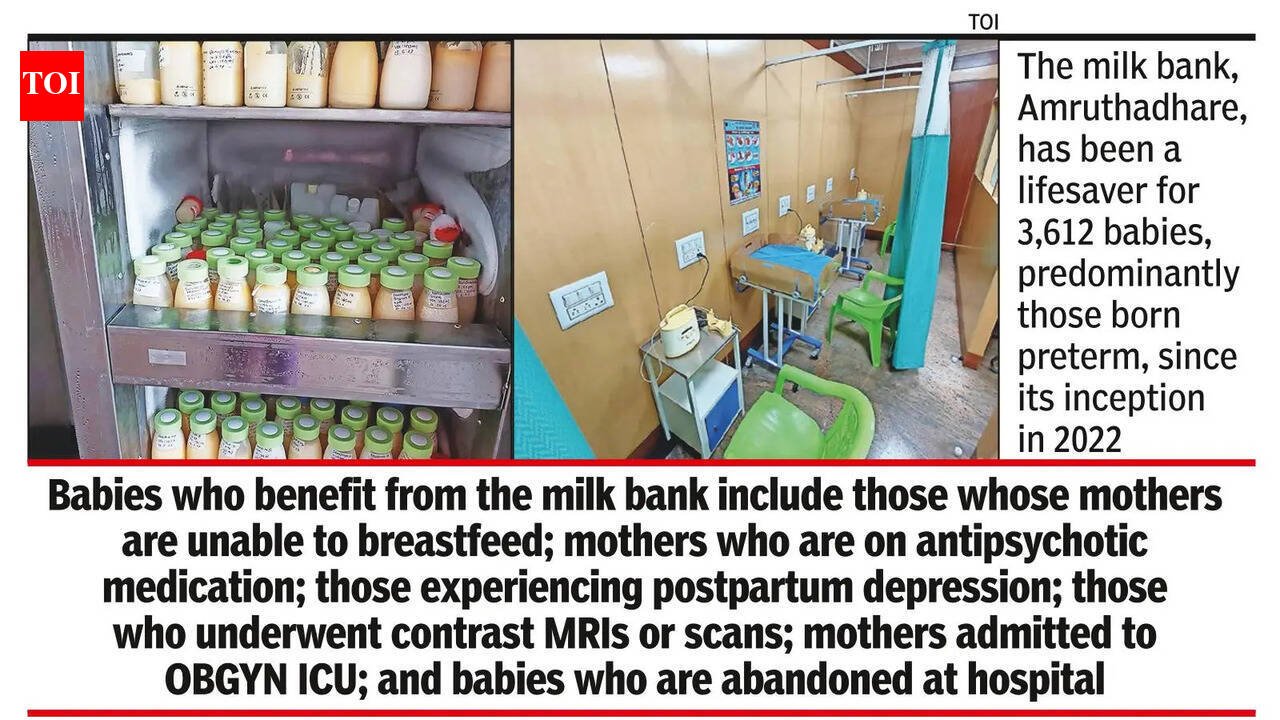
BENGALURU: The human breast milk bank at Vani Vilas Hospital, called Amruthadhare, has been a lifesaver for 3,612 babies – predominantly those born preterm – since its inception in 2022. The bank has collected a total of 863 litres of breast milk so far from more than 3,982 donors.Milk from the bank is used for babies admitted to neonatal ICUs. The hospital has four NICUs – one for preterm babies, two for in-born babies and one for outborn babies (those referred from other hospitals). Babies who benefit from the milk bank include those whose mothers are unable to express milk; mothers who are on antipsychotic medication; those experiencing postpartum depression; those who underwent contrast MRIs or scans; mothers admitted to the OBGYN ICU; and babies who are abandoned at the hospital.Breast milk in the neonatal stage is not just food – it is nutrition, immunity and protection combined. Milk banks exist to ensure that even the most vulnerable newborns do not miss out on these life-saving benefits.According to a clinician at the hospital, when the milk bank initially started, doctors observed a form of dependency among some mothers. “Babies who were ill would recover due to efforts of the milk bank. While the babies were being cared for, the mothers were at ease. However, after returning home, some mothers continued the same pattern and did not nourish their children through regular feeding. That is why we now encourage mothers to express milk at the bank when their babies are in the NICU, so that banked milk serves only as a supplement rather than the primary source of nutrition,” the clinician explained.“Even if a mother can express just a few millilitres of milk, we encourage her to feed it to her baby and supplement the rest with donor milk,” the clinician added. They also noted, mothers on a meat-based diet tend to express more milk than those on a plant-based diet.The bank follows stringent screening and storage protocols. Donors are screened for HIV, hepatitis B, Venereal Disease Research Laboratory, and RT-PCR if they have a fever. Even after screening, milk is not accepted if the donor has lesions or infections on the breast, nipple or areola.Human breast milk can be stored for up to six months under proper conditions. “The milk always gets utilised before six months as our demand and supply are currently balanced,” said Dr Savitha C, the medical superintendent.She added while most mothers require counselling before donating excess milk, awareness is increasing. “Some mothers now walk in and express their willingness to donate if they have excess milk. After thorough screening, if they meet the criteria, we accept the donation,” she said.
