


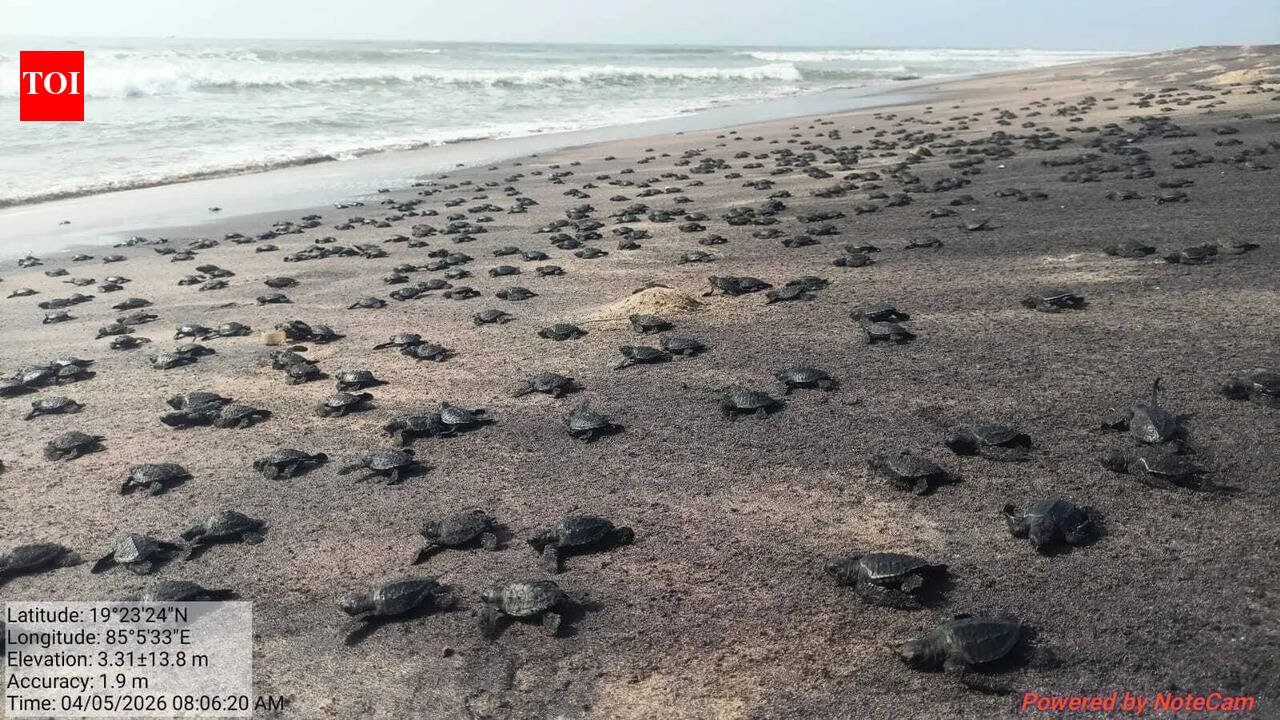
Berhampur: Centre for Ecological Science, Indian Institute of Science (IISc), along with a Bengaluru-based not-for-profit organisation, will conduct a study to determine the sex ratio of the hatchlings of Olive Ridley turtles, which emerged from the sandy beach of river Rushikulya. The forest department has allowed the organisations to conduct the study.The mass hatching, which started in the Rushikulya rookery on Monday came to an end on Friday, said Sunny Khokkar, divisional forest officer (DFO) of Berhampur. “A total 2.05 lakh Olive Ridley turtles had laid eggs in the beach during their four-day mass-nesting period from March 14 to 17, while the hatching took place in time,” he said.To understand their sex ratio, Dakshin Foundation and IISc have collected dead hatchlings during nest excavation. They will be processed and observed under microscope to identify their sex, sources said. The sex of hatchlings is generally female, when the temperature of sand is high. But this time, the temperature in the rookery varied due to rain, said a senior forest official.Senior forest officials said they did not record the temperature of the area during the hatching period this time. “It could be determined only after getting their study report on the sex ratio analysis,” said Vishwanath Neelannavar, regional chief conservator of forest (RCCF), Berhampur.Sources said both the organisations, which have been monitoring the Olive Ridley population at Rushikulya for the last several years, will submit their report to the state forest department. “Increasing temperatures of sand, associated with climate change, have begun to alter the sex ratios of hatchlings, leading to greater numbers of females,” said the forest department report of 2024-25, which was published based on their analysis.Dibya Shankar Behera, assistant conservator of forest (ACF) said the mortality of the hatchlings was less this time. Local volunteers picked up the baby turtles who diverted their path and released them into sea. “Nearby industries and NAC Ganjam have extended cooperation by dimming the street lights during the mass-hatching period,” he said.This year’s sex ratio analysis is important because Gahirmatha missed the mass nesting, while less number of Olive Ridleys turned to Rushikulya, said Rabindranath Sahu, secretary of Rushikulya Sea Turtle Protection Committee.
