


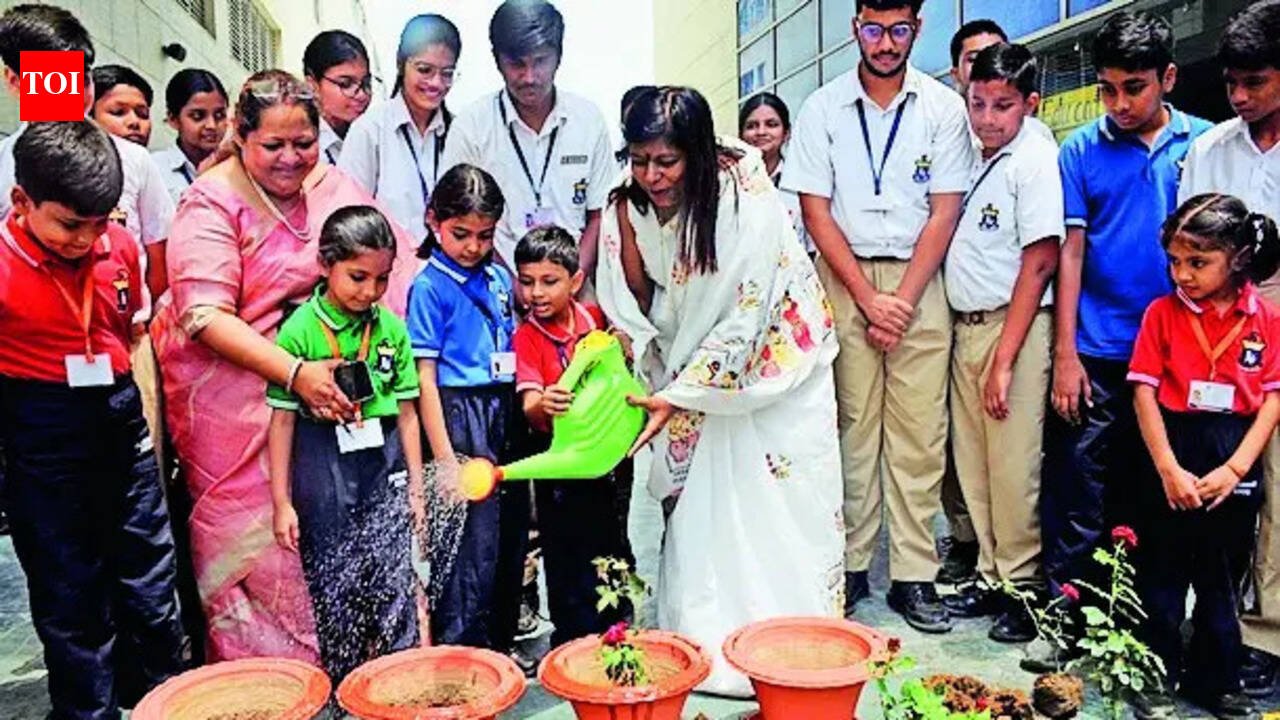
Patna: Tribhuvan School on Friday paid tribute to its founding inspiration, Tribhuvan Prasad Singh, by unveiling a newly developed hybrid rose named “Tribhuvan” during the founder’s day celebrations on the campus.Developed in 2025 by rosarians Kasturi and Sriram, the hybrid rose has also been appreciated by KSG G Gopalswami Ayyanger and Sons, Bengaluru, a prominent name in rose breeding in India. The programme included floral tributes, cultural performances, plantation of rose saplings and a special message recalling Singh’s contribution to public life and education.An eminent Indian Civil Services (ICS) officer and India’s first finance secretary, Tribhuvan Prasad Singh was known for his contribution to governance, public administration and nation-building. Born in Purnia in Bihar on May 9, 1913, he studied economics at Patna University before joining the London School of Economics. He cleared the highly competitive ICS examination in 1936.Apart from administration, Singh had a deep interest in horticulture, particularly rose cultivation, which he considered a symbol of discipline, patience and balance. He died in 1975.His family also held prominent positions in public life. His son Nand Kishore Singh served as Union revenue secretary and chairman of the 15th Finance Commission, while another son, Udai Singh, represented Purnia in Parliament. His daughters Krishna Singh and Radha Singh became IAS officers.School principal Mahua Das Gupta said, “The rose stands not only as a floral tribute, but as a living metaphor for a legacy that continues to blossom across generations.”Established in 2013, Tribhuvan School was founded on the ideals and philosophy of Singh. The institution currently has around 2,600 students from pre-nursery to Class XII.Gupta said, “Students are provided with opportunities to participate in debates, oratory events, cultural festivals, sports meets, leadership programmes, robotics activities and environmental campaigns.”She added that events such as the Oratory Conclave, annual sports competitions and student-led cultural programmes helped build confidence and leadership among students.
