


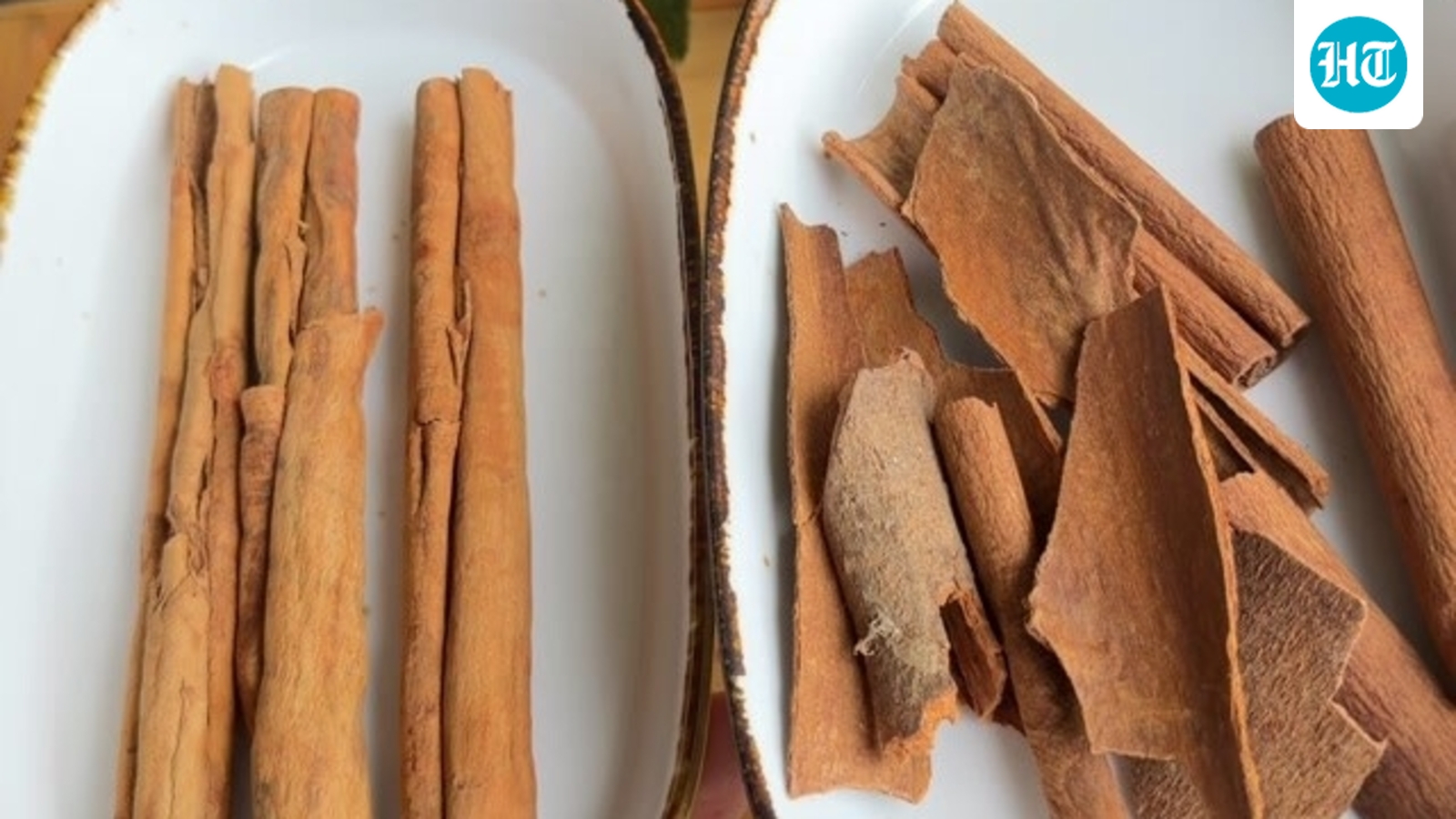
That pinch of sweet, aromatic cinnamon in your morning chai, spiced latte, or bowl of oatmeal might not be the genuine cinnamon you assume it is. In an August 6 Instagram video, Ahmedabad-based nutritionist Kiran Kukreja highlighted a misconception quietly lurking in our pantries. Also read | Harshvardhan Rane calls cinnamon his secret ‘fat burner’: Ortho surgeon reveals if it actually works
As it turns out, millions of household kitchens may be stocking an entirely different bark variety. Kiran revealed the startling reality behind the common pantry staple: “90 percent of people think they’re using real cinnamon, but they’re actually using cassia.”
While both spices sit side by side on supermarket shelves and share nearly identical reddish-brown hues, Kiran pointed out that their visual similarity is where the commonality ends. “These two look exactly the same,” she said, while cautioning that they possess different physical properties, chemical profiles, and health implications.
The hidden risks of everyday cassia
The variety most commonly sold as ‘cinnamon’ across India is actually cassia, according to Kiran. Its ubiquity is precisely why so many consumers fall into the trap of using it every day, she explained, adding, “Cassia cinnamon is the one most people use, as it’s commonly available in India.”
However, according to Kiran, relying on cassia bark for daily cooking or health remedies poses a subtle yet significant threat to long-term wellness. The primary concern stems from a naturally occurring organic chemical compound called coumarin. Kiran warned that cassia contains a much higher amount of coumarin, which, when consumed in large amounts regularly, can harm your liver’. Also read | Drink a cup of cinnamon tea every day to prevent blood sugar spikes; know all benefits
Identifying true Ceylon cinnamon
For those looking to safeguard their health without sacrificing flavour, authentic Ceylon cinnamon — often referred to as ‘true cinnamon’ — presents the ideal alternative. Kiran broke down how you can easily spot genuine Ceylon cinnamon during your next grocery run: authentic Ceylon bark is delicate and finely layered.
Kiran said, “Ceylon cinnamon is the real cinnamon. It has multiple thin, paper-like layers.” Unlike its coarser counterpart, Ceylon bark contains negligible traces of toxins, as it ‘contains much lower levels of coumarin’, per Kiran.
Why your spice choice matters for daily wellness
Making the conscious switch from cassia to Ceylon cinnamon is especially critical for people who use cinnamon as a functional health supplement. Many turn to the spice daily to manage metabolic and hormonal health conditions, but using the incorrect variety could do more harm than good over time.
Highlighting the importance of making an informed choice, Kiran advised: “So if you are having cinnamon regularly for blood sugar management, PCOS, or insulin resistance, then Ceylon cinnamon is a better choice.”
Before adding another dash of spice to your daily recipes, take a moment to inspect your cinnamon sticks, and as per Kiran, choosing fragile, paper-thin rolls over thick, hard bark could make all the difference for your liver and overall health.
Note to readers: This report is based on user-generated content from social media. HT.com has not independently verified the claims and does not endorse them.
This article is for informational purposes only and not a substitute for professional medical advice.
