



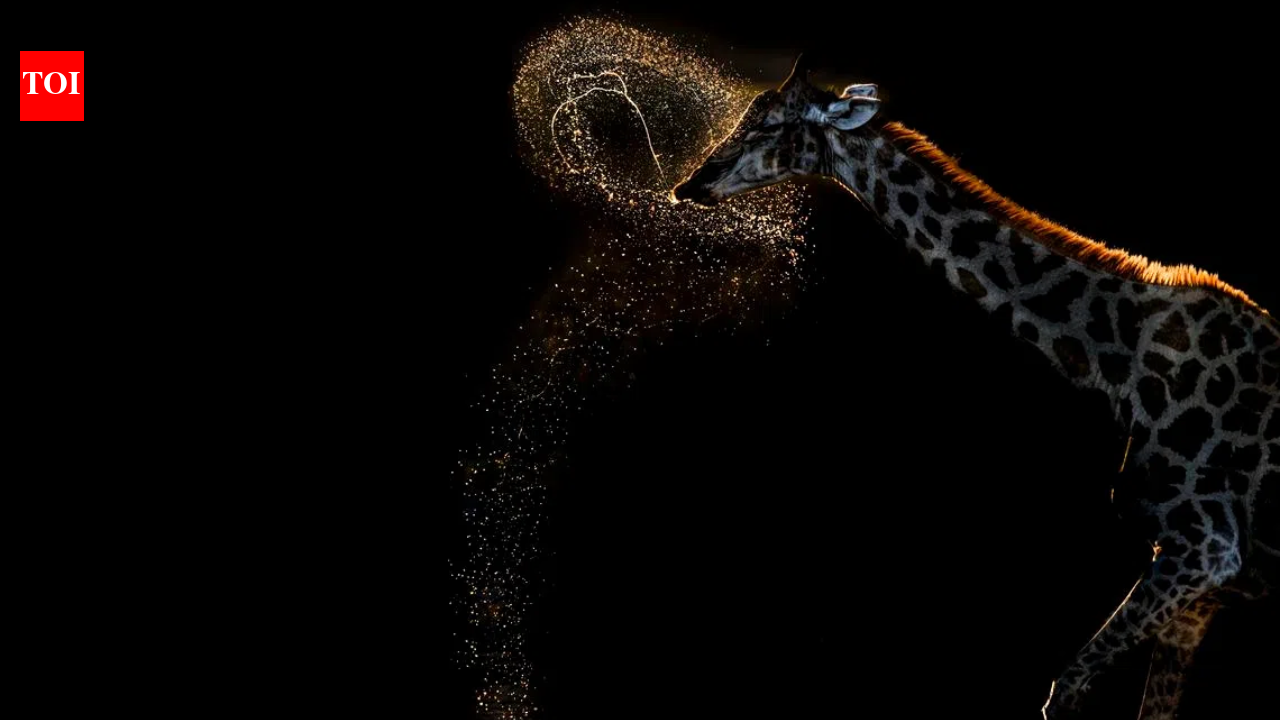
A giraffe takes a drink, raises its head and sends water droplets flying through the air. For most observers, it might be a fleeting wildlife moment. For 72-year-old Vaidehi Chandrasekar, it became an award-winning photograph. Titled ‘Water Ballet’, the image captured the water forming a near-perfect circle in the golden light of sunset in Botswana. Chandrasekar won gold in the Behaviour – Mammals category at the 2026 World Nature Photography Awards, with the organisers and The Straits Times confirming the photograph’s distinction.The image was taken in the Makgadikgadi Pans National Park, where the dry landscape and fading sunlight provided the backdrop for the unusual scene. According to the awards website, the giraffe bent its long legs to lower its neck towards the water. After drinking, it lifted its head and swished, sending a stream of water into an arc that appeared almost circular before the droplets fell back to the ground.The sunlight illuminated the airborne water and outlined the giraffe against the darker background. The result was a photograph that combined animal behaviour, timing and light in a single frame.
A rare moment at the water’s edge
Chandrasekar told The Straits Times that she had photographed giraffes before, but seeing one expel so much water was unusual. She described herself as lucky to have captured the moment. Her entry to the competition explained that she wanted to record the interplay between the golden light and the movement of the water.The photograph’s title, ‘Water Ballet’, reflects the arc created by the droplets as they moved through the air. The scene was brief, requiring the photographer to be ready as the giraffe finished drinking and raised its head.According to photography publication ‘Digital Camera World’, Chandrasekar used a Nikon Z9 mirrorless camera with a 400mm lens. The image was captured at a shutter speed of 1/1000 second, with an aperture of f/5.6 and ISO 400. The fast shutter speed helped freeze the movement of the water droplets, preserving the shape of the arc.The technical details provide context for how the fleeting scene was recorded, but the photograph’s impact also depended on the natural conditions. The low sun illuminated the droplets from behind, creating the bright outline and golden reflections that distinguish the image.
From retirement to wildlife photography
Chandrasekar, a Singapore permanent resident, became more involved in photography in 2019 after retiring from a job in systems design support, The Straits Times reported. She and her husband, who is also in his seventies, learnt photographic techniques through YouTube videos and trial and error.Wildlife photography has since taken the couple to destinations where they can observe animals in their natural habitats. Chandrasekar has travelled to photograph animals such as leopards and polar bears, while also photographing birds that visit Singapore during migration seasons.She told the newspaper that she often follows information shared by other photographers about where particular birds can be found. Fellow photographers have also helped her learn how to capture images of birds, whose constant movement makes getting the right angle challenging.The Botswana safari, however, was not without its difficulties. Chandrasekar described camping on the trip with her husband as challenging, but said they continued despite the demands of the experience. Her plans for future wildlife photography include seeing orangutans in Indonesia and penguins in Antarctica. She said that the couple had a long list of places and animals they hoped to experience while they could still travel.
A gold-winning photograph
The World Nature Photography Awards announced its 2026 winners in February, with thousands of entries submitted by photographers from 51 countries across six continents. Chandrasekar received the gold award in Behaviour – Mammals for ‘Water Ballet’, while the competition’s overall World Nature Photographer of the Year title went to Australian photographer Jono Allen for Mãhina, an image of a rare white humpback whale calf swimming with its mother in the waters around Tonga. Chandrasekar’s award was therefore a category win, rather than the competition’s grand prize.The awards cover a range of subjects, from animal portraits and wildlife behaviour to landscapes, underwater photography and the relationship between people and nature. The winning images are intended to showcase the diversity of the natural world and encourage greater awareness of wildlife and conservation.For Chandrasekar, that conservation aspect was one reason the competition appealed to her. The photographer said that she believed photographs could help people learn about animals and understand why they should be left undisturbed in their habitats. The awards programme partners with environmental organisation Ecologi to plant a tree for every entry, according to the newspaper’s report.
