



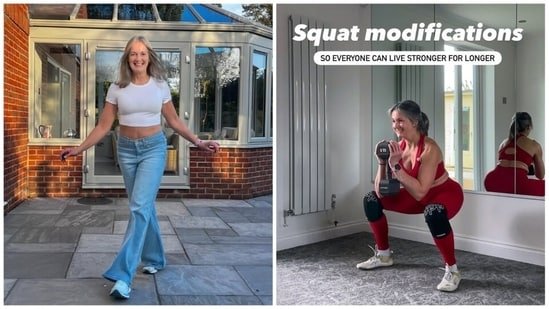
At 63, Jacqueline Hooton isn’t just a grandmother; she’s a powerhouse fitness coach on a mission to debunk the myth that strength training is only for the young. In an April 12 Instagram video, the fitness coach demonstrated that the king of exercises — the squat — is accessible to everyone, regardless of age or physical limitations such as osteoarthritis. Also read | Bryan Johnson sparks fresh health debate, says 10 squats are better than a 30-minute walk: Here’s what you should know
“You can squat,” Jacqueline insists. “You just need a modification that works for you,” she says. Her philosophy centres on the idea of functional longevity: maintaining lower-body strength required for basic independence, such as getting out of a chair or climbing stairs. By offering a spectrum of movements from barbell-loaded lifts to chair-assisted ‘exercise snacks’, she bridges the gap between high-performance training and daily mobility. Also read | Fitness coach shares 11 squat variations to burn extra fat, build strength and tone legs
8 ways to squat: from advanced to assisted
Jacqueline’s video, titled, ‘Squat modifications so everyone can liver stronger for longer’, breaks down the squat into eight distinct variations. This progression allows you to meet your body where it is today while providing a roadmap for future strength.
High-intensity and weighted
1. Barbell back squat: The traditional strength-building standard. The weight is balanced across the upper back (traps), requiring significant core stability and leg power.
2. Box squat: Jacqueline’s personal favourite for managing her osteoarthritis. By sitting back onto a box or bench, you reduce the shear force on the knees and ensure a consistent depth.
3. Goblet squat: Holding a weight (like a dumbbell or kettlebell) at chest height. This acts as a counterbalance, making it easier to keep your torso upright and your heels on the ground.
Bodyweight and mobility
4. Bodyweight squat: Using only your own mass. This focuses on perfecting the ‘hinge’ movement of the hips and knees.
5. Heels elevated squat: Placing a small wedge or mat under the heels. This is a ‘cheat code’ for those with tight ankles, allowing for a deeper squat while staying balanced.
Functional and assisted
6. Stand-sit-stand: A literal translation of daily life. You sit completely down into a chair and stand back up using only your legs.
7. Elevated stand-sit-stand (with hands): By adding a cushion to the chair and using your hands for a ‘push-off’, this version is ideal for those recovering from injury or dealing with severe joint pain.
8. Chair hold semi-squat: Holding the back of a chair for balance while performing a partial-depth squat. This builds confidence and strength in a safe, controlled range of motion.
The power of squats
A 2024 report on Mayoclinichealthsystem.org suggests that you don’t need a gruelling, hour-long session to see results. In fact, short bursts of movement — dubbed ‘exercise snacks’ — can be more effective at combating the negative effects of a sedentary lifestyle than a single gym session.
Pro tip: the report suggests that if you’re short on time, try a 30-second ‘snack’. Do 10 stand-sit-stands while your coffee brews. It re-energises your metabolism and maintains those critical large muscle groups (glutes, quads, and hamstrings) that support your hip and knee joints.
Note to readers: This report is based on user-generated content from social media. HT.com has not independently verified the claims and does not endorse them.
This article is for informational purposes only and not a substitute for professional medical advice.


