






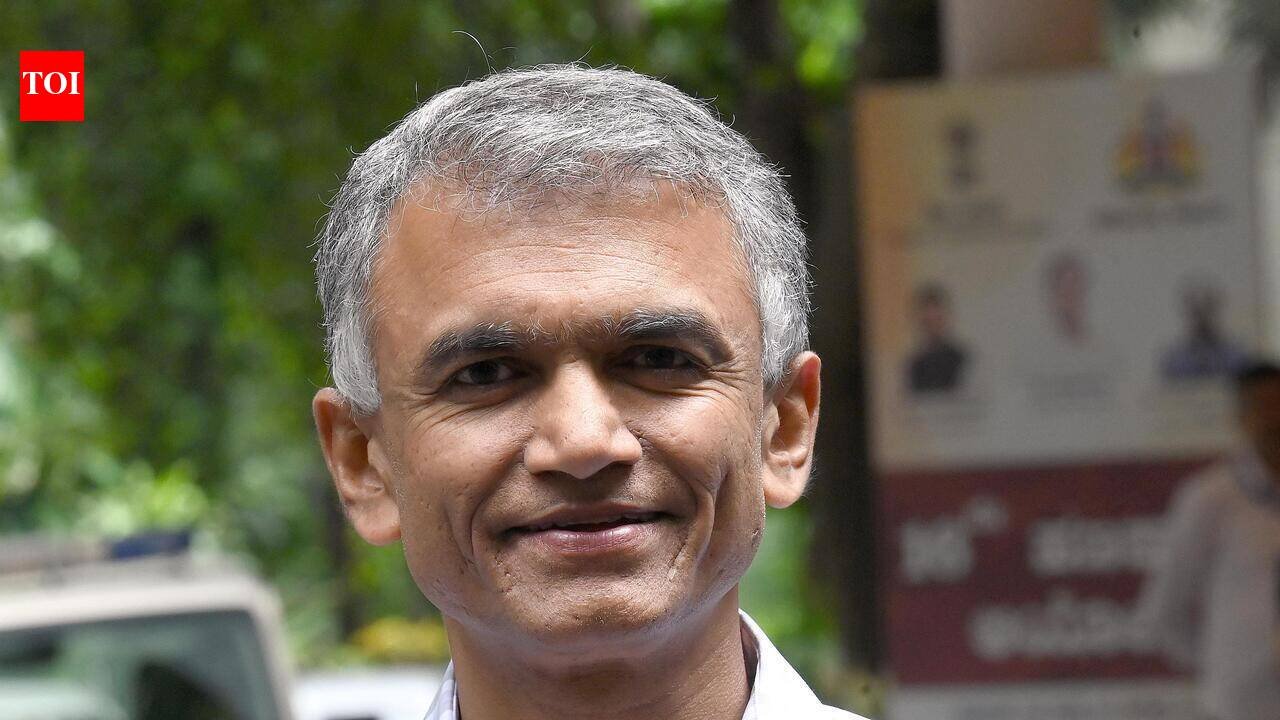
Bengaluru: Bengaluru development minister Krishna Byre Gowda says the city’s biggest property tax challenge is not a lack of revenue potential but low compliance, with only around 18 lakh properties currently paying taxes despite estimates suggesting there are between 47 lakh and 62 lakh properties.In a recent interaction with TOI, Gowda said the city’s corporations are facing financial stress because a large number of property owners remain outside the tax net or are under-reporting their liabilities while continuing to avail civic services.According to the minister, different datasets, including socio-economic surveys and electricity connection records, suggest that Bengaluru has far more properties than those reflected in tax records. While surveys estimate the number of properties at over 47 lakh, Bescom records show nearly 62 lakh electricity connections across the city.Despite this, only around 18 lakh properties are paying property taxes, he said.The minister also flagged under-reporting among existing taxpayers. Citing a sample study of 23,000 properties, Gowda said: “Our estimate is that these 23,000 properties may be underpaying around Rs 700 crore in taxes.”Gowda argued that widening tax base is crucial not only for improving civic finances but also for ensuring fairness among residents. He said compliant taxpayers often end up carrying a disproportionate burden while neighbouring properties enjoy the same civic amenities without contributing adequately.“A law-abiding citizen does not need recognition from govt. What they need is for everyone else to comply as well. It is unfair when one person pays taxes while another who enjoys the same services pays nothing,” he said.Noting that property tax guidance values haven’t been revised since 2016, Gowda said govt is currently focused on improving compliance rather than increasing rates. “By simply bringing non-tax-paying and underpaying properties into the tax net, corporations can improve their finances and deliver better services without having to depend on higher taxes from those who are already paying,” he said.As part of this effort, the state is working on integrating various civic databases, mapping properties and assigning unique identifiers to identify properties that have escaped assessment.Officials are also examining incentives and disincentives to improve compliance. According to the minister, only about 23 lakh properties have obtained khata records, highlighting the challenge of tracking a large number of properties that remain outside formal civic records despite availing services such as water and electricity connections. “The first task is identification. We need to map properties, identify who is paying, who is underpaying and who is not paying at all,” he said.The minister added that improving compliance would strengthen the finances of the city’s corporations and support investments in roads, water supply, sanitation and other civic infrastructure.


