



Most people gauge their physical health through annual blood panels, routine doctor visits, or the digits on a weighing scale. But a leading cardiologist suggested that evaluating cardiovascular baseline health doesn’t necessarily require high-tech clinical equipment or a hospital visit — it can start right at home with a few simple physical movements. Also read | Cardiologist recommends 10 medical tests to detect heart disease risk: From echo to ECG
Dr Naveen Bhamri, chairman and head of the department of cardiology at Max Super Speciality Hospital, Shalimar Bagh, and chairman and unit head at BLK-Max Super Speciality Hospital in New Delhi, in a July 31 Instagram video shared three quick self-assessment tests designed to measure cardiovascular endurance, muscular strength, and heart rate recovery:
1. The stair climb test
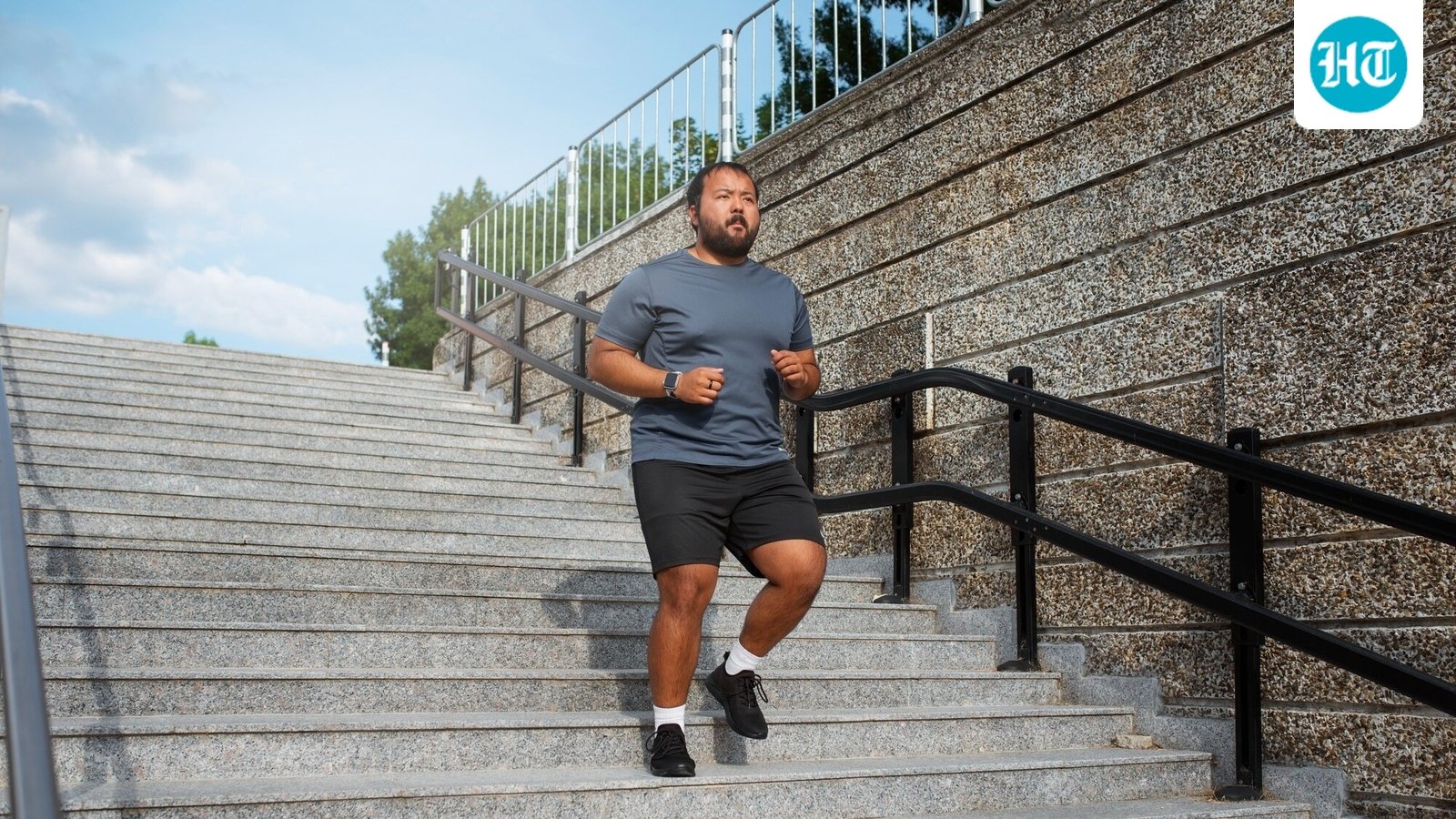
The first benchmark focused on functional aerobic capacity. Dr Bhamri outlined a straightforward challenge: “You have to climb 60 stairs within 60 seconds without stopping and without holding the railing.” Evaluating the body’s response during this rapid ascent offered an immediate window into cardiac endurance, he highlighted: “If you are not getting breathless, not experiencing chest pain, and can climb without stopping, then overall you are very fit.”
2. The sit-to-stand test
The second assessment measured lower-body strength and functional mobility, particularly for adults over 40. To perform the test, sit on a standard chair and fold your arms across your chest, he shared. Dr Bhamri explained: “Without holding the chair’s handles, if you can sit and stand more than 16 times without stopping after age 40, it means your fitness is good.” Conversely, he noted that completing fewer than 14 repetitions indicates room for improvement in overall physical condition.
3. The recovery heart rate test
The final self-test measured how efficiently the autonomic nervous system recovers after physical exertion. Dr Bhamri recommended engaging in three to five minutes of cardio — such as running, stair climbing, or walking on a treadmill — and immediately checking your baseline pulse. After resting for exactly one minute, re-check your heart rate to measure the drop. Also read | Want to know how healthy your heart is? Cardiologist Dr Sanjay Bhojraj lists 9 blood tests for ‘cardiovascular risk’
Dr Bhamri said, “If your heart rate drops by more than 25 beats, it means you have excellent recovery.” On the other hand, a drop of fewer than 12 beats suggested compromised cardiac recovery, indicating that ‘your overall cardiac fitness is not good’.
While these quick screenings provide valuable personal metrics, they serve as general wellness indicators rather than formal medical diagnoses. Anyone experiencing chest pain, severe shortness of breath, or dizziness during these checks should consult a medical professional immediately.
Note to readers: This report is based on user-generated content from social media. HT.com has not independently verified the claims and does not endorse them.
This article is for informational purposes only and not a substitute for professional medical advice.


