


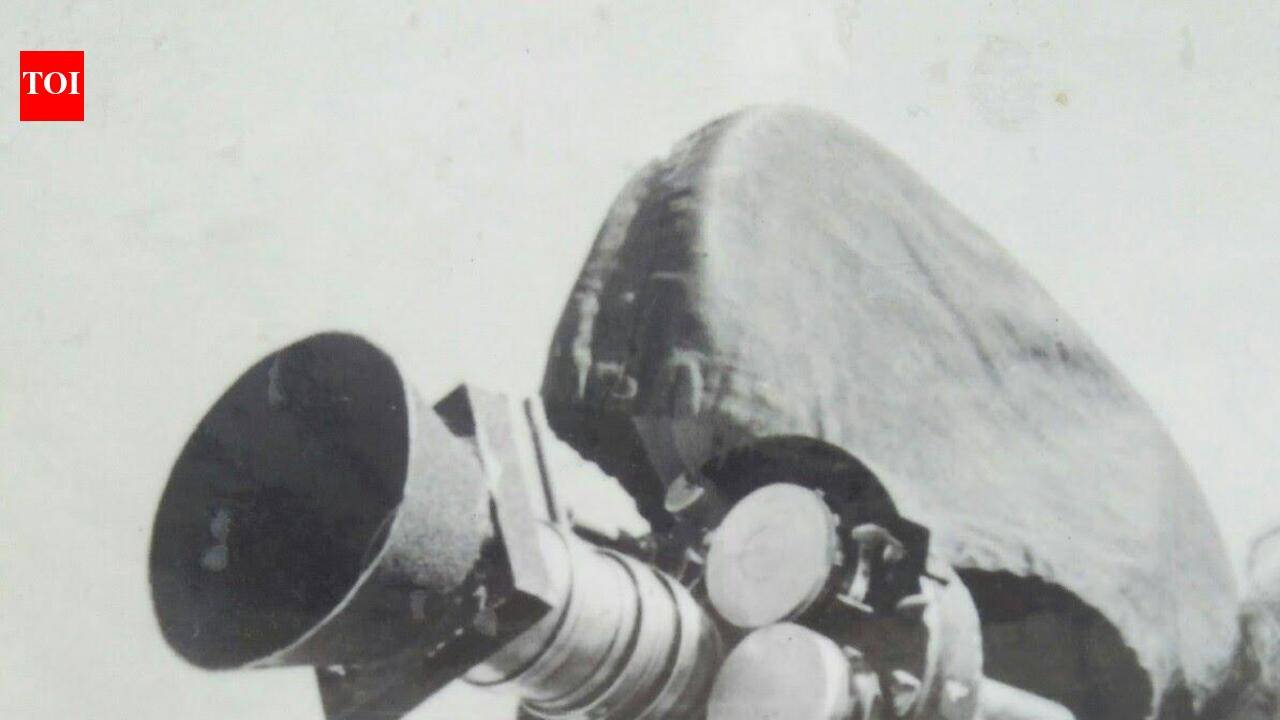
Vadodara: Decades before organ donation became a widely accepted concept, a Gujarati filmmaker used the power of cinema to challenge myths and persuade people to donate organs. His 17-minute film on eye donation not only broke a deeply rooted social taboo but also went on to win a National Award.There was a time when the very idea of organ donation was wrapped in fear and superstition. Donating eyes, people believed, meant being born blind in the next life. Giving away a kidney, they feared, meant returning to earth without one. Then, a Gujarati dared to challenge these deeply rooted beliefs — not with a sermon, but with a film.Dhiru Mistry, a Barodian, made the 17-minute film ‘Saath Kuch Na Jayega’ on organ donation in 1972. The film challenged a powerful social taboo prevalent at the time and went on to win a National Award in 1974.“It was one of the most satisfying moments as all the efforts I put into making the film paid off,” recalled 87-year-old Mistry.Mistry accepted the award from then President Fakhruddin Ali Ahmed in the company of Girish Karnad, Shyam Benegal, Satyajit Ray and Yesudas in Delhi. The film was awarded in the category of ‘Best educational and instructional film’.“I was keen to educate people about the importance of organ donation through a film. When the Gujarat government contacted me to make a film on a social issue, I requested permission to choose organ donation as the topic. Initially, they were reluctant as it was a sensitive issue, but I convinced the officials by explaining how the film could help save many lives,” Mistry told TOI.Gujarat govt allowed films only in Gujarati, but Mistry told officials that he would make the documentary in Hindi to give it a wider appeal. “The story was about how a young boy dies in an accident and an NGO tries to convince his parents to donate the deceased’s eyes. Though reluctant, the parents agree. In the climax, the dead boy’s voice tells his mother that while she can’t see him, he can see her through someone else’s eyes,” Mistry said.Shooting the film, however, was another challenge. “I wanted to shoot the part where the eyes are removed from the body. Eye donation was not very common in the 1970s and, in some cases, families of the deceased did not permit us to film the procedure. Finally, we managed to shoot the eye-removal process at a hospital in Ahmedabad,” he added.During the shooting of the film, Mistry’s grandmother, Diwali Ba, died of old age, and he donated her eyes to SSG Hospital.The film was then sent to govt and immediately struck a chord. “The film didn’t just win the National Award. Parts of it were also shown during screenings in theatres across the country. It was widely appreciated by people,” said Mistry, who has also pledged to donate his body.
