






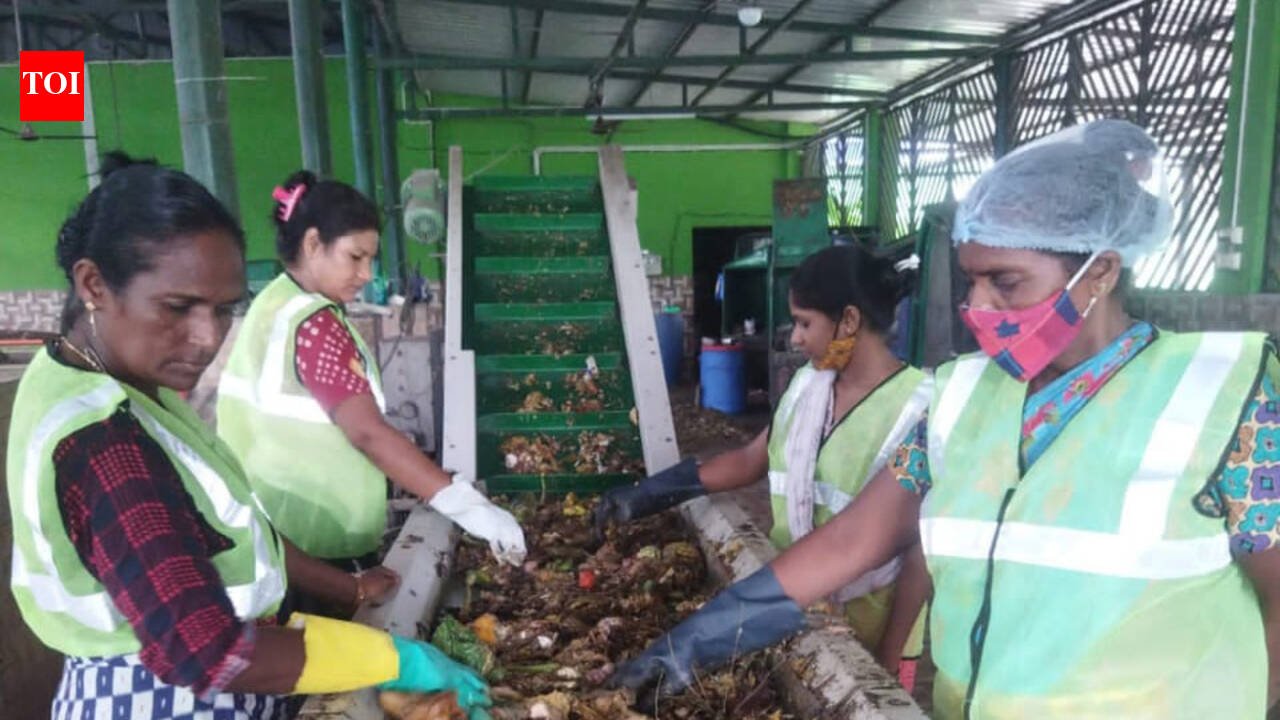
Bhubaneswar: Nearly 45% of the city’s daily garbage is now handled by women, who have taken charge of operations at micro composting centres (MCC) and material recovery facilities (MRF).What began as a mixed workforce has, over time, transformed into an all-women initiative, reshaping both the city’s sanitation system and lives of hundreds of women.The city generates 700-800 metric tonnes of waste every day. Of this, the MCCs and MRFs together process 310 metric tonnes, a significant share managed almost entirely by women. At the MCCs, wet waste is converted into nutrient-rich manure, while MRFs handle dry waste, sorting and recycling it for reuse.
CJP Jantar Mantar Protest Updates
“For handling both varieties of waste, women are quite adept. They work eight hours a day, and earn Rs 14,500 per month each, a decent income to support their families with dignity,” said N Ganesh Babu, deputy commissioner, sanitation.According to Bhubaneswar Municipal Corporation officials, a total of 746 women are employed across 37 MCCs and 24 MRFs in the city. “Initially there was a male workforce, but gradually the women took over the waste processing facilities — otherwise called wealth centres. Most of them have been given bicycles for hassle-free commuting,” Babu said.For many of these women, the shift from informal or irregular work to structured employment has been transformative. Their contribution has elevated them from being “ordinary women” to becoming breadwinners with stable incomes, enabling them to educate their children, access healthcare and live with greater dignity. The initiative has also challenged traditional gender roles, proving that women can excel in sectors often dominated by men.The BMC officials said beyond the social impact, the city’s waste management system has become more efficient and sustainable. By decentralising waste processing through MCCs and MRFs, the burden on landfills has reduced, while the production of compost and recycled materials has created new value streams. The women-led workforce has emerged as the backbone of this system, demonstrating resilience, discipline and commitment.Their labour not only keeps the city clean but also symbolises how inclusive policies can turn challenges into opportunities for social change.


