



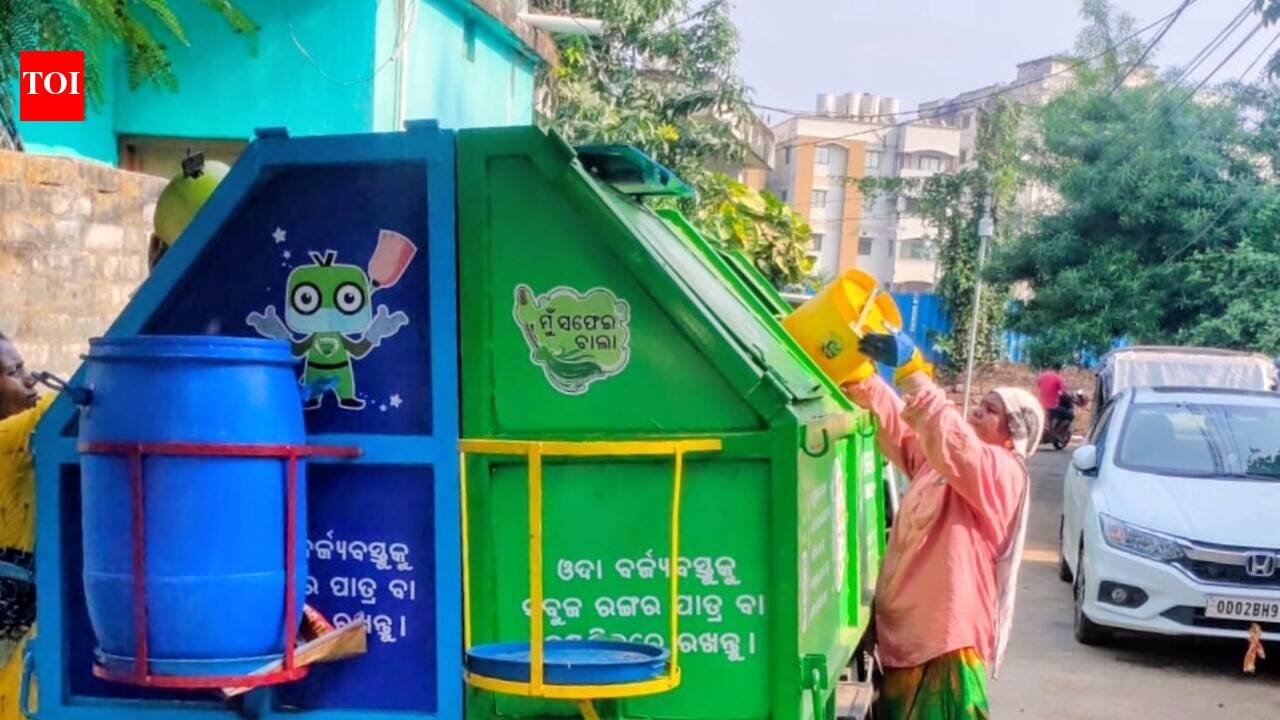
Bhubaneswar: Slow behavioural change among residents’ results in 40% of domestic hazardous waste (sanitary pads and baby diapers) proliferating in common municipal solid waste.Although Bhubaneswar Municipal Corporation (BMC) has made the provision of separate bins in its door-to-door waste collection vehicles, 40% of sanitary waste doesn’t come in a segregated form. The city generates 11 tonne of such waste every day. Segregated sanitary waste helps BMC dispose them using plasma incinerator, BMC officials said.BMC deputy commissioner (sanitation) N Ganesh Babu said 10-tonne per day capacity plasma processor has been established at the temporary transfer station (TTS) near Sainik School, for the scientific and safe management of domestic hazardous waste. “Since sanitary pads and baby pads are hazardous, they must be treated separately. We are generating awareness among people to deposit such waste in separate bins that have been provided in the waste carrying vehicles,” said Babu.BMC officials said the plasma processor is based on high-temperature plasma arc technology, capable of breaking down complex hazardous waste into inert, non-toxic residues with minimal emissions.BMC officials said swachh karmis (cleanliness workers) face difficulties while dealing with such waste. “We have been launching city activation programme across the city involving resident welfare associations, women’s and girl’s hostels and people from where bulk of such waste is generated,” Babu added.“We have separate bins to dump used sanitary pads and baby diapers but more people should develop the habit of dumping them separately. It needs behaviour change to adopt the new practice. Our moto is to free the municipal waste from hazardous domestic garbage as swachh karmis have to segregate the waste bulk at micro composting centre (MCC) with their hands,” a BMC officer said.Earlier, BMC also organised workshops to prevent bio-medical waste from mixing with the regular municipal solid waste and drain water. Owners of clinics, pathology and diagnostics, hospitals and representatives from medicine shops have been sensitised on such waste handling. Expired medicines (pharmaceutical waste), sharp waste (needles) and infectious waste (tissues, cotton and others) are mostly found mixed with municipal waste due to improper handling.


