



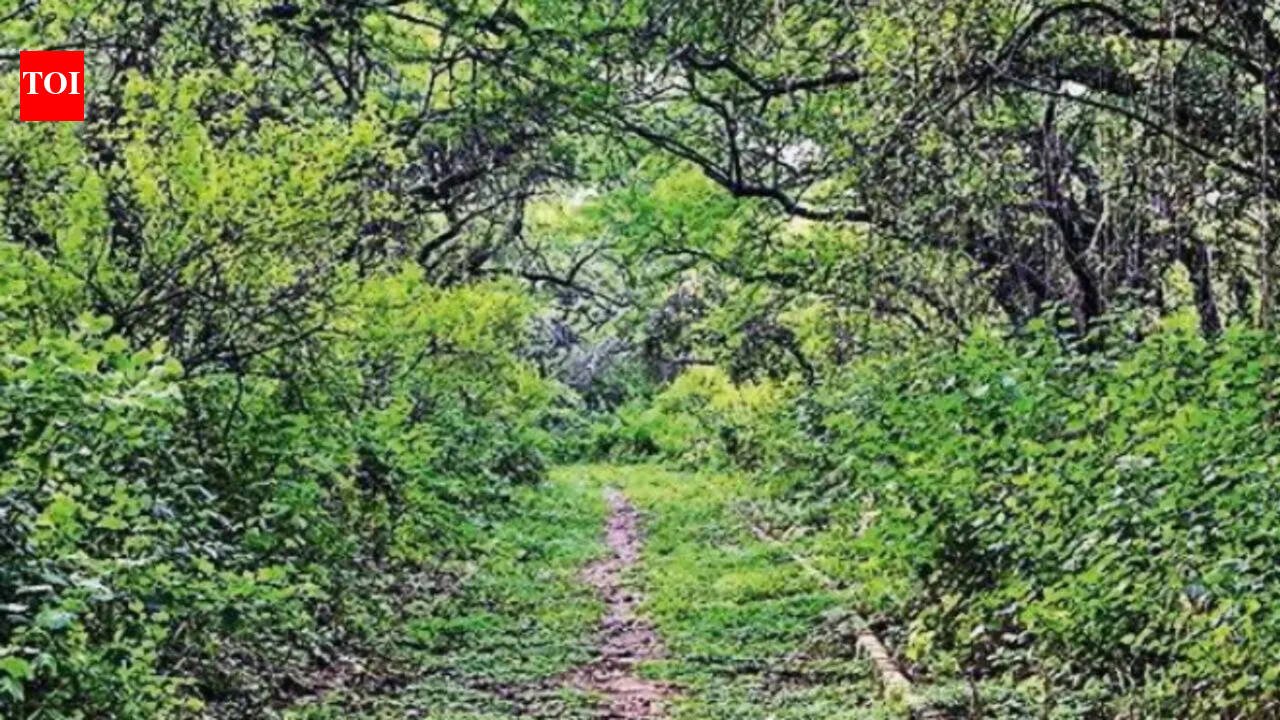
New Delhi: Providing the highest legal protection to the city’s ‘green lungs’, Delhi govt has granted reserved forest status to 673.3 hectares of Central Ridge after a wait of more than three decades.Part of the ancient Aravali range, Central Ridge – a long rocky forest area running through the heart of the city – borders iconic landmarks such as Rashtrapati Bhavan, Sardar Patel Marg and the diplomatic enclave of Chanakyapuri, and acts as a massive green buffer.A reserved forest gets the highest degree of legal protection under Indian Forest Act, 1927. The initial notification of ridge areas had been made in 1994. However, they did not receive legal protection then.Home to a wide variety of bird species and animals such as jackals and blackbucks, the area falls under the western forest division of the forest department and is largely dominated by vilayati kikar vegetation.Central Ridge, which stretches along both sides of Upper Ridge Road, is part of the ‘green lungs’ of the city due to its role in improving air quality, conserving biodiversity, strengthening groundwater levels and mitigating the impact of climate change and urban pollution.Announcing the notification under Section 20 of Indian Forest Act, 1927, chief minister Rekha Gupta said on Saturday, “The decision would prove to be a milestone in strengthening Delhi’s natural heritage, biodiversity and ecological security. Providing legal protection to Delhi’s ecologically sensitive ridge areas had remained pending for several decades.”Gupta added, “This decision reflects our commitment towards environmental conservation, expansion of green cover and securing a safe and balanced future for coming generations.” Other ridge areas of Delhi will also soon be notified as reserved forests and the process is being expedited, she said.Activities such as construction, tree felling, mining, encroachment and other non-forest uses are heavily restricted in a reserved forest area unless specifically permitted by govt. The objective is to ensure long-term conservation of ecologically significant forest land, protect biodiversity, prevent deforestation and encroachment, and maintain ecological balance.“Despite the initial notification of ridge areas in 1994, they could not receive the final legal protection for a long period. Taking decisive steps in this direction, the current govt has achieved a historic milestone in environmental conservation,” Gupta said.CM said all ridge areas of Delhi were initially notified in 1994 under Section 4 of Indian Forest Act. Subsequently, around 4,080.8 hectares of Southern Ridge were declared reserved forest on Oct 24, 2025. With the latest notification, govt has granted the reserved forest status to 4,754.1 hectares of the ridge land.A dry deciduous forestland, Delhi Ridge is divided into four major zones – Northern Ridge, Central Ridge, South-Central Ridge and Southern Ridge – which together form the extension of the Aravali range within Delhi. Its whole area houses various historical monuments, biodiversity parks and a wildlife sanctuary. A home to more than 100 avian species, the ridge is one of the best spots in Delhi for birdwatching. Its prominent role in protecting the city against the hot winds of the Rajasthan deserts has earned it the nickname, ‘lungs of Delhi’.Delhi govt has also decided to undertake large-scale plantation of native and environmentally suitable species, including neem, peepal, shisham, jamun, tamarind and mango, in vacant areas across the reserved forest regions.Gupta said that the aim was not only to increase green cover, but also to strengthen the ecology of ridge areas, conserve biodiversity, maintain soil fertility and preserve ecological balance.An official said the reserved forest status would provide stronger statutory protection to the region and help prevent encroachments, illegal activities and ecological degradation, while strengthening scientific conservation and forest management efforts.“Our objective is not merely to increase greenery, but to permanently strengthen Delhi’s environmental balance. The decision would prove to be a significant step towards ensuring clean air, a secure environment and better quality of life for future generations,” CM said.


