



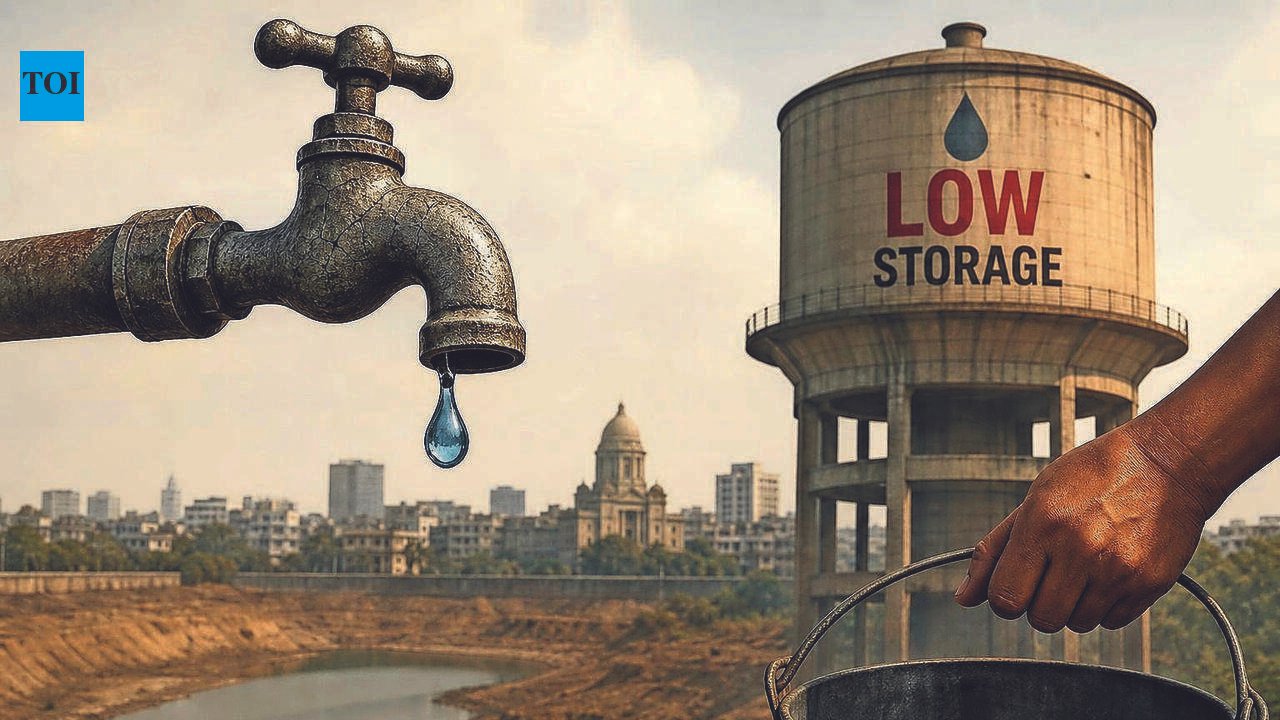
Nagpur: With Maharashtra staring at a sharply reduced water availability, following scanty rain and El Niño impact, the state govt laid down a strict priority-based water allocation plan that will directly shape Nagpur’s water management till August 2027.“Under the directives, drinking water will get the first priority, followed by industrial and agricultural requirements, with dam-wise planning to be prepared and approved before implementation,” chief engineer WRD Nagpur division Sonali Chopade told TOI. This comes in the wake of the govt ordering a minimum 10% water cut across all urban local bodies from October 16.For Nagpur city, the water allocation exercise will begin by earmarking the quantity required for drinking water from reservoirs feeding the city. Already, 259 million cubic metres have been reserved for drinking water till August 31, 2027. Officials will first set aside the required drinking water quota, followed by provision for unavoidable evaporation losses. Water lost due to siltation or reduced effective storage will also be accounted for, while assessing availability in each reservoir.The govt also directed local bodies to prevent leakages and ensure sewage treatment plants be operated at full capacity. Water resources minister Girish Mahajan said drinking water would receive the highest priority.Officials from NMC’s water works dept, however, clarified that if NMC was asked to cut supply, it would pump 74MLD less water, as per the current supply of 740 MLD.In addition to water earmarked for drinking and unavoidable losses, authorities have been directed to keep 10% available water as an emergency reserve, which will be used only for drinking water requirements in case of an exigency. This makes the drinking water component effectively the first and protected layer of the reservoir planning exercise.“Only after these requirements are met will remaining water be considered for industries and agriculture,” said Chopade, citing the govt resolution. Industries have been asked to increase recycling and reuse, with a directive to recycle at least 30% water that can be reused, thereby reducing their dependence on fresh reservoir supplies.Agricultural allocation will also follow a strict priority order. After drinking water and industrial requirements are met, water will first be earmarked for seed production. The next priority will be rabi fodder crops required for livestock. If water remains in stock, it will be allocated for rabi irrigation. Seasonal crops require water every two months and perennial crops will receive the lowest priority.The directives mean Nagpur’s reservoirs cannot be treated simply as a common pool for all users. Each dam will have to be assessed separately, taking into account designed storage, live storage, evaporation, siltation and the water required for various sectors. A detailed dam-wise water utilisation plan will have to be prepared and approved before implementation.For local bodies, including Nagpur Municipal Corporation, the state directed that 10% water should be saved through conservation and leakage control at a time when reservoir levels are under pressure.A committee headed by the district guardian minister will oversee the planning. The collector, NMC municipal commissioner and zilla parishad CEO, among other officials, will be members. The committee will approve dam-wise plans based on the prescribed priorities before they are implemented.The directives came into force from October 16 and will remain applicable till August 31, 2027, unless the situation warrants a revision earlier. For Nagpur, the immediate focus will be to ensure adequate drinking water through the prolonged summer while restricting non-essential consumption and improving conservation across sectors.WATER SUPPLY CUT: NAGPUR LIKELY TO FACE 74 MLD REDUCTIONCurrent supply: 740 MLD dailyPench system: 520 MLDKanhan system: 220 MLD10%: Minimum water cut for all urban local bodies from Oct 16First priority: Drinking water10% reserve: To be kept separately for emergency drinking-water needsSecond priority: Industrial water requirements30% recycling: Industries asked to recycle/reuse water wherever possibleAgriculture priority: Seed production — rabi fodder — rabi irrigation — seasonal/bi-monthly crops — perennial cropsLocal bodies: Asked to save 10% of their water useLeakages: Local bodies directed to plug leakagesSTPs: Sewage treatment plants to operate at full capacityPlanning: Dam-wise water allocation plans mandatoryMonitoring: District-level committee headed by guardian ministerValidity: Directives in force till August 31, 2027, subject to revision if requiredPossible reduction for Nagpur: 74 MLD dailyWRD clarification: Drinking water gets priority; no direct cut in drinking-water supply mandated
