


Israel’s repeated success in striking deep inside Iran has revived an uncomfortable question for security planners worldwide, more so after the joint Israeli-US operation managed to kill Iranian Supreme Leader Ayatollah Khamenei with pin-point accuracy within hours of the conflict erupting.How was such precise intelligence extracted from one of the region’s most fortified systems?Reports suggest that years of covert operations provided Israeli intelligence visibility far beyond the battlefield. Former Iranian president Mahmoud Ahmadinejad once claimed Israel’s Mossad had even infiltrated Iran’s own intelligence apparatus.
The implication is stark. Even powerful states can crumble from cracks within their security structures, not just external foes.For India, this lesson sits at the heart of PRAHAAR – the country’s first counter-terror doctrine.
What is PRAHAAR
PRAHAAR weaves intelligence agencies, law enforcement, cyber monitoring, and financial tracking into a unified architecture. Its core premise is simple: Modern threats rarely strike as overt invasions. They seep in quietly via networks, funding streams, and compromised systems exploiting institutional gaps.These risks hit home after the Red Fort bomb blast in Delhi’s heart, where investigators exposed “white collar” terrorism.Unlike traditional militant cells, these actors embed themselves deep inside legitimate systems and act as financial intermediaries, logistics handlers, or digital operators – silently enabling violence and evading conventional radars.The Israel-Iran conflict thus transcends distant geopolitical drama. It shows how infiltration and internal vulnerabilities can dictate modern warfare and outcome. PRAHAAR is India’s answer to these threats, which brew within as fiercely as across borders.
PRAHAAR in focus
At a moment dominated by headlines from West Asia, why turn the lens inward to India’s security doctrine?Because in today’s interconnected order, no major conflict is entirely foreign. Its shockwaves travel through economies, cyberspace, diaspora networks and security ecosystems alike.While the Iran vs Israel-US confrontation continues to be viewed largely through the lens of conventional military escalation, it has also revealed the quieter but equally consequential dimension of modern conflict like intelligence penetration and institutional vulnerability. Reports surrounding the crisis suggest that Israel’s intelligence agency, Mossad, has carried out sustained covert operations within Iran, ranging from long-term espionage networks to cyber-enabled reconnaissance and targeted sabotage. Such operations have exposed gaps within Tehran’s security architecture and triggered introspection within its establishment about internal resilience. The episode is a reminder that contemporary conflicts are no longer confined to visible battle lines; they unfold through infiltration, digital subversion and shadow networks that test the depth of a nation’s internal safeguards.
A doctrine, not a directive
For decades, India has battled cross-border terrorism emanating from neighbouring Pakistan. The scars are deep and recent. The policy comes months after India’s decisive military action against Pakistan-based terrorist groups following the April 2025 Pahalgam carnage and a bomb blast at the heart of Delhi near Red Fort. Yet PRAHAAR is not framed as a retaliatory document. It elevates the government’s “pro-active and intelligence-guided” approach into doctrine.The name itself is an acronym: Prevention, Response, Aggregation of capacities, Human rights and rule of law, Attenuation of radicalisation, Aligning international efforts, and Recovery (PRAHAAR). Each letter represents one of seven pillars: Prevention, response, aggregation, human rights, attenuating radicalisation, aligning international efforts, and recovery.
Why PRAHAAR matters today
Together, they create a structure that aims to criminalise all terrorist acts and to starve terrorists, their financiers and supporters of funding, weapons, safe havens and cyber resources.At the outset, the document makes a clear ideological assertion. “India does not link terrorism to any specific religion, ethnicity, nationality or civilisation.” It acknowledges, however, that there has been a history of “sponsored terrorism from across the border” and notes that some states in the region have used terrorism as an instrument of state policy. This dual stance is deliberate. It seeks moral clarity without communal shorthand.
White-collar terrorism: The invisible enabler
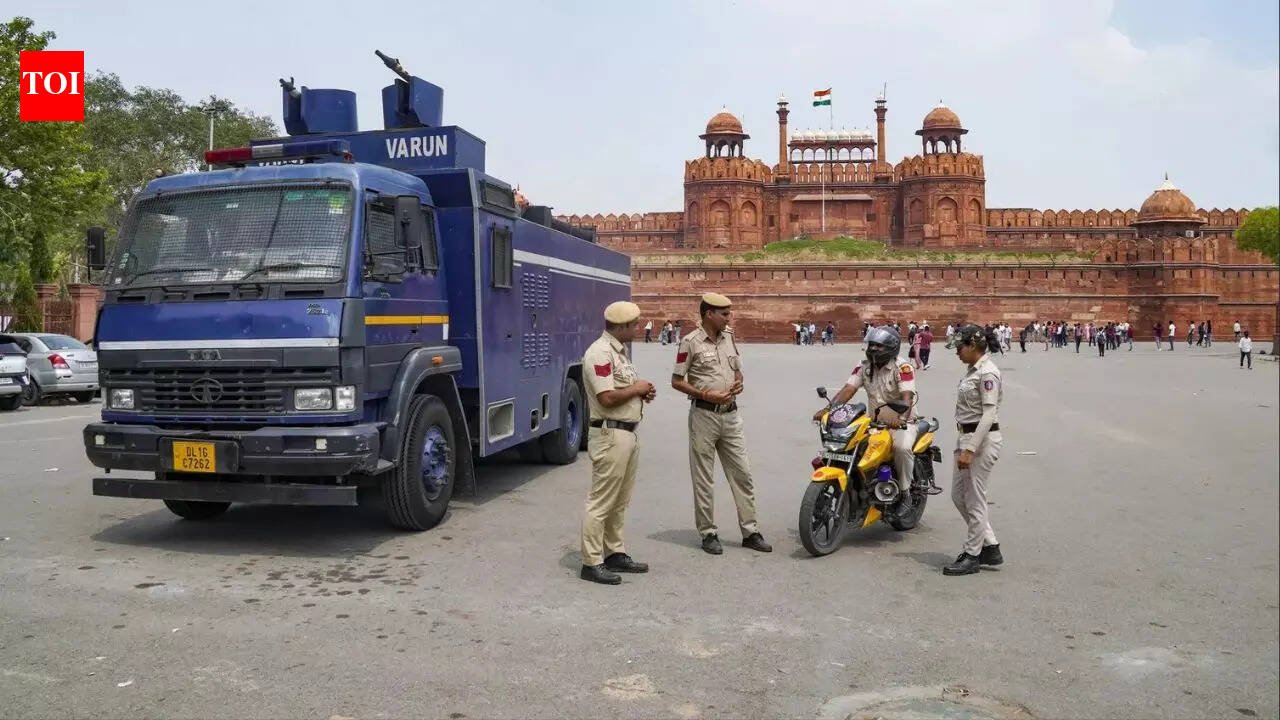
The 2025 Delhi car explosion on 10 November 2025 also revealed an uncomfortable truth about modern terrorism that its architects are not always shadowy militants operating from remote hideouts. Investigators probing the car bomb near Red Fort found alleged links to individuals embedded in professional and urban networks, including medical professionals and facilitators operating through legitimate channels. The episode revealed the contours of what security agencies increasingly describe as white-collar terrorism. A phenomenon where educated individuals, financial intermediaries, or professionals provide the logistical backbone for extremist networks while maintaining outwardly ordinary lives.This is precisely the space where a comprehensive doctrine like PRAHAAR becomes significant. Traditional counter-terror frameworks were largely designed to intercept armed militants or dismantle militant camps. White-collar terror, however, thrives in grey zones through financial transfers, professional cover, digital coordination and urban logistics. By framing out the integrated intelligence sharing, financial tracking and inter-agency coordination, PRAHAAR seeks to expand the focus from merely responding to attacks to dismantling the invisible ecosystems that enable them. In doing so, the doctrine attempts to confront a reality the Red Fort attack laid bare that the most dangerous terror networks today may be embedded not at the margins of society, but within its most ordinary institutions.
The expanding threat canvas
The threat profile outlined in PRAHAAR is expansive and technologically complex. It refers to “neighbours” deploying terrorism, highlighting threats from jihadi outfits as well as global groups such as Al-Qaeda and Islamic State of Iraq and Syria.“There has been a history of sporadic instability in the immediate neighbourhood of India, which has often given rise to ungoverned spaces. Besides, few countries in the region have sometimes used terrorism as an instrument of state policy,” the document states.But the battlefield has shifted. Drones are used for smuggling arms into Punjab and Jammu and Kashmir. Organised criminal networks provide logistics and recruitment channels. Social media platforms and encrypted messaging applications offer propaganda and operational anonymity. The dark web and crypto wallets provide what the policy describes as a cloak of invisibility.
The changed faces of terror
“Disrupting/Intercepting terrorist efforts to access and use CBRNED (Chemical, Biological, Radiological, Nuclear, Explosive, Digital) material remains a challenge for Counter Terrorism (CT) agencies. The threat of state and non-state actors misusing drones and robotics for lethal purposes remains another area of concern,” the policy notes.Cyber-attacks by both state and non-state actors further blur traditional lines. “Criminal hackers and nation states continue to target India through cyber-attacks.” Counter-terrorism is now as much a digital contest as a physical one.
Intelligence as the first line of defence
At the heart of PRAHAAR lies an intelligence-guided prevention model. The Multi-Agency Centre and the Joint Task Force on Intelligence housed within the Intelligence Bureau function as nodal platforms for real-time input sharing. The emphasis is clear. Pre-emption over reaction.The doctrine institutionalises vertical and horizontal coordination between central agencies and state police forces. It calls for proactive disruption of cyber activities and continuous dismantling of overground worker networks.
Stress on disrupting funds
Border management across land, air and sea is reinforced through modern surveillance tools. Critical sectors including aviation, ports, railways, defence, atomic energy and space are identified as strategic assets requiring layered protection.When prevention fails, a graded response kicks in. Local police are the first responders, supported by specialised state units and central forces. The National Security Guard acts as the nodal national counter-terror force under the Ministry of Home Affairs for major attacks and capacity building. Investigative deterrence is anchored by the National Investigation Agency and state police, with high prosecution rates highlighted as a preventive measure in themselves.
Law, liberty and the long view
PRAHAAR’s architects are keen to distinguish it from purely hard-power doctrines. The document frames counter-terrorism as a values-based commitment grounded in constitutional safeguards and global norms. National security and civil liberties are presented as mutually reinforcing, not antagonistic.The principal legal instrument remains the Unlawful Activities (Prevention) Act, supplemented by newer criminal codes and financial regulations. The policy calls for associating legal experts at every stage of investigation, from the registration of FIRs to prosecution, to strengthen cases and reduce procedural lapses. Multiple layers of judicial redress are emphasised as safeguards against misuse.
The shadow of terror
Radicalisation receives particular attention. The policy advocates a graded police response, with legal action dependent on the level of radicalisation. It also recognises the need to address socio-economic conditions that make vulnerable youth susceptible to recruitment. Education, constructive engagement and de-radicalisation programmes within prisons form part of this dual-track strategy.Community and religious leaders, moderate preachers and NGOs are positioned as partners in awareness campaigns. The idea is not merely to arrest, but to attenuate the conditions that enable terrorism.
A national template against terror
The doctrine is already shaping institutional reforms. In Delhi, a revamped Anti-Terror Squad is being conceptualised under PRAHAAR. Designed to protect the capital from hostile state and non-state actors, the proposed unit will move beyond reactive policing towards a specialised, intelligence-led offensive.Organised into subunits for operations, intelligence, investigation, cyber and technical support, the Delhi ATS will also target the terror-gangster nexus. The policy recognises how local criminal syndicates are recruited by foreign-based handlers for logistics and high-profile hits. Dismantling financial lifelines and invoking legal instruments against organised crime are central to this effort.Similar units exist in Maharashtra, Gujarat and Uttar Pradesh, with Haryana preparing to follow. The aim is uniformity of structure, resources, training and investigation methods across states. Standard operating procedures seek to ensure that coordination is not personality-driven but system-driven.
Global partnerships in a fragmented world
Terrorism rarely respects borders. PRAHAAR stresses the need to align international efforts through extradition treaties, Mutual Legal Assistance Treaties and cooperation under United Nations norms. Bilateral and multilateral engagements are presented as essential complements to domestic action.India’s engagement with partners in intelligence-sharing and cyber cooperation reflects this outward-looking pillar. The document reiterates the push for a comprehensive global framework on international terrorism.It is here that the wider geopolitical climate becomes relevant. The ongoing conflict involving Iran, Israel and the United States is fundamentally an inter-state confrontation, not an act of terrorism. Yet such crises can create secondary effects. Regional wars often generate ungoverned spaces, proxy engagements and online radical narratives that travel far beyond their immediate geography.PRAHAAR does not cite the Middle East crisis, nor should it. But its insistence on international cooperation and vigilance against technology-enabled radicalisation reflects an understanding that global instability can complicate domestic security environments. In that sense, the doctrine is attuned to an era in which the boundaries between local and global threats are porous.
Recovery and resilience
The final pillar of PRAHAAR focuses on recovery through a whole-of-society approach. Doctors, psychologists, lawyers, NGOs and community leaders are mobilised to reintegrate affected communities after attacks. Public-private partnerships and technological investments are positioned as future safeguards against misuse of information and communication technology.Resilience is framed as India’s strongest long-term defence. The policy acknowledges gaps and calls for periodic legal amendments, stronger state-level capacities and better integration of legal expertise.In moving counter-terrorism from episodic reaction to sustained architecture, PRAHAAR represents a doctrinal consolidation of India’s decades-long experience. It blends intelligence dominance, legal architecture, technological upgrades and international diplomacy into a single framework.
