


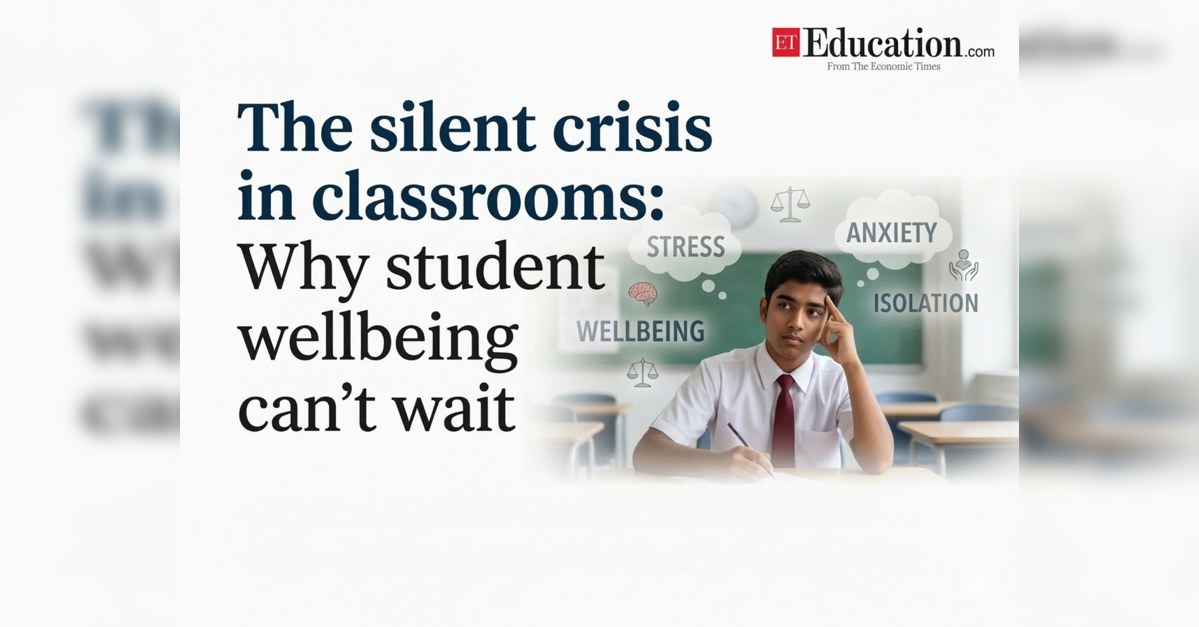
For generations, classrooms have been places where young minds were expected to absorb knowledge, master subjects and prepare for examinations. Yet behind the quiet rows of desks and bustling corridors lies a deeper reality that is often overlooked. Every student enters the classroom carrying not only books and notebooks, but also hopes, fears, expectations and sometimes silent struggles that rarely find space in report cards.
In recent years, this invisible emotional world of students has begun to receive the attention it deserves. Conversations around student wellbeing, mental health, and emotional resilience are no longer limited to counselling rooms or occasional awareness programmes. They are increasingly shaping how schools and universities design their environments, support systems and learning cultures.
The modern learner is navigating a complex landscape. Alongside academic expectations come social comparisons, digital exposure, career uncertainty and rising performance pressure. While education systems have traditionally measured success through marks and rankings, educators are now recognising a deeper truth. Students learn best when they feel safe, valued and emotionally supported.
As the celebrated Indian author and Nobel laureate Rabindranath Tagore once observed,
“The highest education is that which does not merely give us information but makes our life in harmony with all existence.”
In many ways, the growing focus on student wellbeing reflects this very philosophy. Education must nurture not only intellect but also balance, empathy and inner strength.
Across India’s education ecosystem, leaders are therefore calling for a shift in perspective. Instead of asking only how well students perform academically, institutions are beginning to ask a more important question. How well are students coping, growing and thriving as individuals?
To understand how institutions can better support students’ emotional wellbeing today, ETEducation reached out to leading voices across India’s education landscape. What emerges is not merely a conversation about mental health. It is a deeper reflection on empathy, inclusion, mentorship and the responsibility of education systems to nurture resilient and confident young minds.
Redefining success beyond marks
For Jyotsna Saxena, CEO, Aditya Birla Group of Schools, the idea of success in education must evolve to reflect the emotional realities students face today.
“Schools today must navigate a complex emotional landscape while creating a safe, inclusive, and supportive environment for every child. This requires redefining success to value well-being, resilience, and character alongside academics. By sensitising teachers, collaborating with professionals, engaging parents in realistic expectations, and avoiding a culture that equates pressure with performance, schools can become truly psychologically safe ecosystems. The schools of the future should be known not for the highest scores, but for flourishing students, growing minds while protecting hearts.”
Her perspective reflects a growing shift within the school education landscape. For decades, academic results often dominated the narrative of educational success. Today, however, educators increasingly recognise that sustained learning thrives only when students feel emotionally secure.
This also requires schools to build stronger partnerships with parents and communities so that expectations around achievement are balanced with care for students’ emotional health and personal growth.
Building more humane campuses
While schools shape early experiences, universities play an equally crucial role as students transition into adulthood. For Dr CA Achyut Dani, Director General & Provost, JG University, institutions must consciously move towards building more humane and compassionate academic environments.
“To better support students’ emotional wellbeing, schools and universities must move beyond rigid academic systems and consciously nurture more humane campuses. Institutions should embed mental health education in the curriculum, provide accessible counselling, and train educators to recognise emotional struggles early. Equally important is creating environments rooted in love, affection, humility, humbleness, and inclusivity, where every student feels heard, respected, and valued. By encouraging open conversations, mentorship, and peer support while reducing unnecessary pressure, educational institutions can help students grow not only intellectually, but also as emotionally resilient and compassionate human beings.”
Such insights highlight the need for systemic change within educational institutions. Mental health cannot remain an occasional initiative. Instead, it must be integrated into the curriculum, campus culture and everyday interactions that shape the student experience.
Mentorship, dialogue and emotional intelligence
Students today face pressures that extend far beyond textbooks and examinations. The rise of digital platforms, competitive career landscapes and evolving social expectations have added new layers of complexity to student life.
For Dr Tapash Kumar Ganguli, Director General, NICMAR, institutions must therefore focus on creating holistic student experiences that nurture both academic and emotional development.
“Educational institutions are increasingly providing holistic student experiences. While it is important for students to maintain academic rigour, it is equally important to support a student’s overall wellbeing through mentorship and safe spaces for dialogue. Institutions must help students develop resilience, digital discipline and emotional intelligence, which are increasingly essential to navigate the pressures of modern education and careers.”
His perspective emphasises the importance of equipping students with life skills that extend beyond academic knowledge, enabling them to navigate challenges with resilience and confidence.
Creating safe spaces to seek help
Even as awareness grows, one of the greatest barriers to student wellbeing remains stigma around discussing emotional struggles. Many students hesitate to seek help, often fearing judgement or misunderstanding.
According to Dr Meera Mathur, Director & Chairperson, Mohanlal Sukhadia University, Udaipur, institutions must take proactive steps to create safe and supportive environments where students feel comfortable reaching out.
“The ability to maintain the emotional wellbeing of students is the need of the hour for both school and university students.
First of all, there is a need to develop an inclusive environment. Students should clearly know whom to contact, whether a counsellor or a senior teacher. Regular messages should also be circulated in WhatsApp groups about the causes and warning signs of student distress and suicide. If any student is experiencing anxiety, distress or emotional difficulties, opportunities for discussion and support should be made available.
Special sessions are also important. In order to help students share their burden in a safe and confidential environment, we must work to break the stigma around discussing emotional challenges.
Institutions should also focus on early identification of students who may be struggling, perhaps through dedicated support spaces or counselling mechanisms.
Introducing Social Emotional Learning (SEL) programmes into the curriculum is equally important so that students can develop essential life skills.
Encouraging healthy teacher-student relationships is another critical step.
These measures can certainly contribute to improving the emotional wellbeing of students.”
Her suggestions highlight the importance of visible support systems, structured programmes and open communication channels that ensure students never feel alone during difficult moments.
The power of empathy in everyday learning
While policies and programmes matter, the emotional climate of classrooms is often shaped by the everyday interactions between teachers and students.
For Dr Sunita Gandhi, Chief Academic Advisor, City Montessori School, emotional safety forms the very foundation of effective learning.
“If a child walks into a classroom carrying fear, anxiety, or loneliness, learning becomes difficult. Our responsibility as educators is to first lighten that emotional load. When students feel safe, heard, and supported, they naturally become more curious, creative, and engaged in the learning journey.
This means schools and universities must intentionally build environments where emotional wellbeing is nurtured every day. Teachers should be encouraged to listen with empathy and create spaces where students feel comfortable expressing themselves. Even small acts of kindness, understanding, and encouragement can make a profound difference in a child’s confidence. When emotional safety becomes part of the learning culture, students not only learn better but also grow into resilient and compassionate individuals.”
Her reflection underscores a simple but powerful idea. Sometimes the most meaningful interventions are not large initiatives but small acts of understanding and kindness that make students feel seen and supported.
Towards a more compassionate education system
As conversations around student wellbeing continue to gain momentum, a clear message is emerging across India’s education community. Academic excellence and emotional wellbeing are not separate goals. They are deeply interconnected.
Schools and universities that prioritise empathy, inclusivity and holistic development are not only creating healthier learning environments but also preparing students to face the uncertainties of the future with strength and confidence.
Because in the end, the true purpose of education is not merely to produce high achievers, but to nurture balanced, compassionate and resilient human beings who are ready to navigate life with confidence and purpose.
As APJ Abdul Kalam once said,
“Education should help students build character, strengthen the mind and expand the intellect.”
For schools and universities across India, placing student wellbeing at the heart of education may well be the most important step towards shaping not only successful learners, but stronger and more humane societies.
