


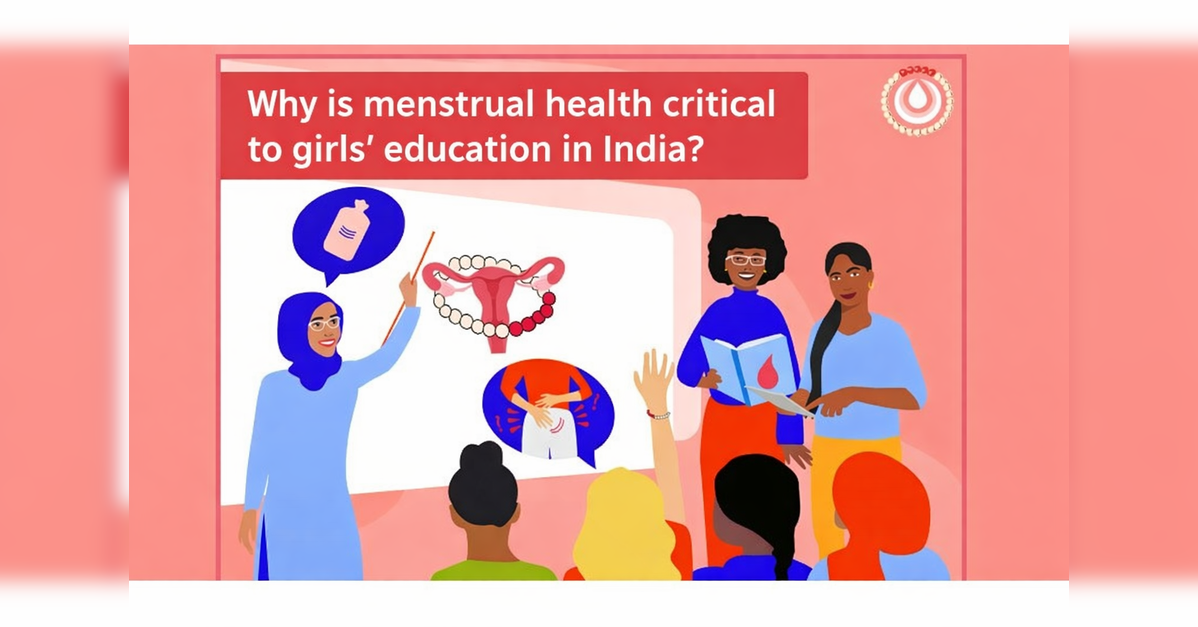
A recent parliamentary intervention by Raghav Chadha has once again brought menstrual dignity into the national spotlight, underscoring a critical yet often overlooked barrier within India’s education system. With over 350 million women and girls lacking access to adequate menstrual hygiene, the issue is no longer confined to health alone; it is fundamentally linked to school attendance, learning continuity, and educational equity.
The impact is most visible within school environments, where access to safe and functional sanitation directly influences whether girls can participate fully in their education. Despite well-established policy frameworks such as the Rashtriya Kishor Swasthya Karyakram, the Menstrual Hygiene Scheme, and the Swachh Bharat Swachh Vidyalaya Guidelines, gaps in on-ground implementation continue to limit their effectiveness.
Data highlights the scale of the challenge. According to UNESCO, nearly 1 in 10 girls in India miss school during their menstrual cycles, disrupting learning and classroom engagement. Meanwhile, findings from the National Family Health Survey indicate that although access to hygienic menstrual products has improved, significant regional disparities persist, further widening gaps in educational access and outcomes.
The infrastructure paradox: Built but not usable
India’s investment in school WASH infrastructure has been substantial, yet the challenge lies not in construction but in consistent functionality and maintenance. As Dr Alka Kapur, Principal, Modern Public School, Shalimar Bagh, explains, many schools have toilets and handwashing stations in place, but without sustained upkeep, these facilities become non-functional over time. She points out that maintenance requires continuous resources and attention, and the absence of clear roles among authorities often leads to weak monitoring systems. This results in a situation where infrastructure exists on paper, but the last mile remains unaddressed, limiting its real-world impact.This gap between provision and usability is further underscored by Dr Gayathri Vasudevan, Chief Impact Officer, Sambhav Foundation, who observes that while the policy architecture is robust, execution continues to fall short. She notes that vending machines are often installed but not refilled, incinerators are procured but not maintained, and toilets are built but sometimes remain locked. According to her, the issue is not a lack of intent but the absence of systems that ensure daily functionality, including trained staff, replenishment budgets, and accountability mechanisms.
Adding to this perspective, Devyani Jaipuria, Educationist & philanthropist, Pro Vice Chairperson of DPS International, Gurugram, and Delhi Public School, Gurugram, and is Chairperson of Dharav High School, highlights that the real disconnect lies in translating infrastructure into a meaningful user experience. She emphasises that even when facilities exist, factors such as lack of water, privacy, or proper disposal systems can discourage usage. In her view, the focus must shift from simply providing infrastructure to ensuring that girls feel comfortable, safe, and dignified while using these facilities.
Beyond infrastructure: Breaking the silence
While physical infrastructure is critical, the cultural dimension of menstrual health remains equally important. A major contributor to stigma is the continued exclusion of boys from these conversations.
Dr Vasudevan points out that separating boys when menstruation is discussed reinforces the idea that it is a subject to be hidden, teaching girls secrecy and boys disengagement. She stresses that gender-inclusive education is not aspirational but essential, as a lack of awareness among boys often translates into perpetuation of myths and stigma later in life.
Dr Kapur echoes this by emphasising that educating boys helps normalise menstruation as a natural biological process, fostering empathy and reducing teasing or discrimination. She believes that inclusive awareness initiatives can create an environment where girls feel supported and comfortable.
Similarly, Devyani Jaipuria notes that exclusion breeds curiosity and misinformation, which are the roots of stigma. She highlights that schools have a unique opportunity to normalise these conversations early, and when handled thoughtfully, co-educational awareness can build emotionally aware, respectful individuals and a more inclusive school culture.
Period poverty: A barrier to equity
The impact of period poverty extends far beyond hygiene—it directly affects attendance, learning continuity, and long-term opportunities. Studies indicate that girls may miss several days of school each month due to a lack of access to menstrual hygiene products or facilities, leading to significant cumulative learning loss.
Dr Vasudevan explains that missing three to five days of school every month can translate into up to fifty lost instructional days annually, affecting academic performance and increasing the likelihood of dropout. She also highlights that the issue goes beyond attendance, as anxiety and discomfort can prevent girls from fully engaging in the classroom.
Dr Kapur adds that these disruptions not only create learning gaps but also impact confidence and participation, ultimately affecting educational continuity. She stresses the need for stronger policy implementation, dedicated funding, and community support to ensure that girls can manage menstruation without disrupting their education.
Devyani Jaipuria further contextualises the issue by noting that repeated absenteeism gradually affects a student’s sense of belonging and confidence within the academic environment. Citing UNESCO data, she highlights that the cumulative effect of missed school days can widen performance gaps and influence long-term outcomes, including workforce participation. In her view, period poverty must be understood as a fundamental issue of educational equity rather than just hygiene.
From intent to impact: The road ahead
While India’s policy framework on menstrual health is comprehensive, the need of the hour is systemic integration and sustained execution.
Dr Kapur emphasises that strengthening implementation through better capacity building, clear role definitions, and regular monitoring can help bridge existing gaps. She also underscores the importance of integrating menstrual health into the school curriculum to normalise the conversation.
Dr Vasudevan points to the need for stronger coordination, noting that menstrual health responsibilities are often spread across departments without a single point of accountability. She stresses that infrastructure must be complemented by maintenance, and awareness must be embedded into institutional systems rather than treated as one-time interventions.
Devyani Jaipuria concludes that the shift must be from isolated efforts to integrated systems. She highlights the importance of aligning infrastructure, awareness, and community engagement, while also referencing National Family Health Survey data that indicates persistent disparities in access. According to her, lasting change will require empathy, consistency, and sustained engagement across stakeholders.
Ensuring dignity, enabling opportunity
As India continues its journey toward inclusive education, menstrual health must be positioned as a central pillar of student well-being and equity. Bridging the gap between policy intent and on-ground reality will require not just investment, but accountability, cultural change, and systemic alignment.
Ensuring that every girl can attend school with dignity is not just a matter of infrastructure; it is a step toward unlocking equal opportunity and shaping a more inclusive future.
