
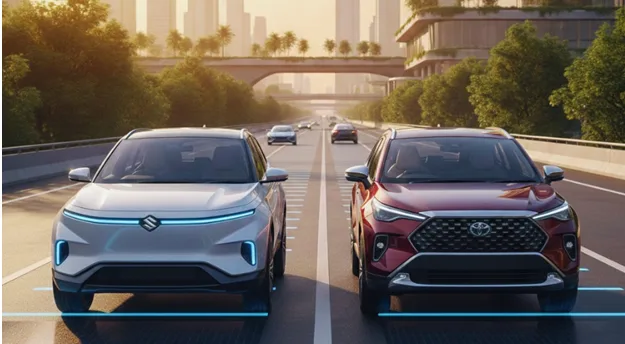
Looking at a shiny new Electric Vehicle (EV) and then glancing back at a Hybrid, wondering which one won’t make you regret your decision two years down the line? It is a classic 2026 dilemma that I see almost every Indian car buyer facing today.
With petrol prices refusing to budge and charging stations popping up like mushrooms after a monsoon rain, the choice isn’t just about “going green” anymore. According to the articles on the automobile industry, it’s about your daily commute, your weekend trips to the hills, and how much money stays in your pocket.
Technology Choice
When you and I talk about technology, it’s easy to get lost in fancy words like “powertrains” or “regenerative braking.” But let’s keep it simple. An Electric Vehicle is essentially like your smartphone on wheels; you plug it in, charge the battery, and it runs until it’s empty. There’s no engine, no gears to shift, no oil, and almost no noise. It’s pure, futuristic, and incredibly smooth to drive in our bumper-to-bumper city traffic.
On the other hand, a Hybrid is a bit of a “best of both worlds” situation. Think of it as a car with two hearts: a petrol engine and an electric motor. The best part? You don’t usually have to plug it in. The car is smart enough to charge its own battery while you drive or brake. In 2026, the best hybrid cars in India, like the one in the Maruti Suzuki e-Vitara (EV) or the Toyota Hyryder (Hybrid), have become so refined that you won’t even feel the switch between battery and petrol.
So, who wins? Honestly, it’s a tie because it depends on you. If you love the idea of never visiting a petrol pump again and you enjoy that instant, “rocket-like” acceleration every time the light turns green, the EV tech will feel like magic. But if you hate the idea of waiting for a car to charge or worrying about a battery percentage, the Hybrid tech is your best friend. It gives you the efficiency of an electric motor with the trust of a petrol engine.
Cost & Maintenance
I’ll be honest with you: buying an EV usually feels more expensive at first. Even in 2026, the batteries make the “sticker price” a bit higher than that of a regular car. However, this is where the EV starts winning you back (and your wallet).
First, let’s talk about “fuel.” Charging an EV at home is incredibly cheap. While a hybrid still needs petrol (even if it uses very little), an EV runs on electricity that costs a fraction of the price. Over 5 years, if you drive a lot, say, 1,200 km a month, you could save enough on fuel to fund a pretty fancy family vacation! According to 2026 industry data, the running cost of an EV can be as low as ₹1.2 per km, whereas a hybrid still sits around ₹4-5 per km.
Then there’s the maintenance. I love EVs for this. They have a few moving parts. There’s no engine oil to change, no spark plugs to worry about, no fan belts, and no complicated exhaust system. A hybrid, with both an engine and an electric system, is more complex. You still have to go for regular oil changes and engine check-ups. You are essentially maintaining two systems instead of one. For me, the peace of mind (and the lighter bills) of having a “simple” machine makes the Electric Vehicle the clear winner here.
Infrastructure
This is where we have to be practical about living in India. Yes, by 2026, our highways, like the Delhi-Mumbai Expressway and the Bangalore-Chennai corridor, will have some great fast-charging points. But let’s be real. Have you ever worried about finding a petrol pump? Probably not. They are everywhere, from the busiest metros to the smallest villages in the Himalayas.
With a Hybrid, you have “zero range anxiety.” You can drive from Mumbai to Goa without once looking at a charging map. If you run low on fuel, you pull into any station, fill up in five minutes, and you’re back on the road. It feels familiar and safe.
While EV charging is getting better every day, you still have to “plan” your trips. You have to hope the charger is working and that there isn’t a long queue of cars ahead of you. If you live in an apartment where your society hasn’t installed chargers yet, owning an EV can be a daily struggle. Because of this freedom to go anywhere at any time without a second thought, the Hybrid wins the infrastructure round in the hybrid vs electric car debate.
Resale Value
I know we don’t like to think about selling our “new” car the day we buy it, but in India, resale value is king. We want to know whether we’ll get a good chunk of our money back if we sell the car in five years. Traditionally, we Indians trust what we know. Because hybrids still have a petrol engine at their core, people in the second-hand market feel very comfortable buying them. They know how to fix them, and they aren’t worried about the “health” of a giant battery.
With EVs, the second-hand buyer is often a bit nervous. Even in 2026, they wonder, “What if the battery dies in two years? It will cost a fortune to replace!” Even though battery technology today is amazing and often comes with 8-year warranties, that “fear” still exists in the market. Consequently, a used Toyota or Maruti Hybrid usually holds its value much better than an EV of the same age. If you plan to upgrade your car every 3-4 years, the Hybrid is the safer bet for your money.
Conclusion
So, which one “wins” in 2026? According to the articles on the automobile industry, the answer is simpler than you think. If you live in a city, have a fixed parking spot where you can install a charger, and mostly drive to the office and back, you should go Electric. You will save a mountain of money, enjoy a silent ride, and feel good about helping the environment. However, if you are like me and love spontaneous road trips, or if you don’t want to spend your Sunday afternoon waiting at a charging station, the Strong Hybrid is the hero you need. It gives you incredible mileage (often 25-28 kmpl!) without ever making you worry about where the next “plug” is.
