
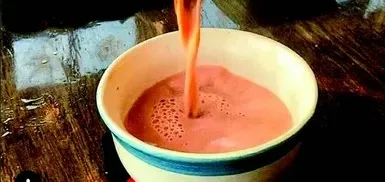
Srinagar: For generations, Noon chai Kashmir’s iconic salted pink tea has been far more than a beverage. It is a marker of hospitality, a source of warmth, and a daily ritual sipped in the morning, shared with guests, and poured again during long winter afternoons. Yet as gastric cancer continues to feature prominently in the Valley’s disease burden, medical researchers are increasingly examining whether this deeply ingrained dietary habit could be part of a larger public health puzzle.
Medical experts remain cautious, but the question is no longer dismissed outright: Is frequent consumption of Noon chai linked to stomach cancer?
A region with a distinct cancer pattern
Doctors and epidemiologists have long observed that Kashmir records a higher incidence of gastrointestinal cancers particularly gastric cancer compared to many other parts of India. While genetic susceptibility and infection with Helicobacter pylori (a common stomach bacterium known to damage the stomach lining over time and cause ulcers) are globally recognised risk factors, local researchers argue that Kashmir’s distinct dietary practices also deserve closer scrutiny.
Among these practices, Noon chai stands out due to two defining features: its high salt content and its frequent, often lifelong, consumption sometimes several cups a day over decades.
What the research shows
One of the earliest structured academic discussions on the subject appeared in the International Journal of Case Reports and Images (2013), in a review led by Kashmiri researchers including Dr. Imtiaz Wani . The paper did not claim that Noon chai directly causes gastric cancer. Instead, it highlighted strong epidemiological parallels between high dietary salt intake and increased gastric cancer risk. The authors noted that traditional preparation methods of salted tea could expose consumers to nitrosamines and related compounds, substances internationally recognised as carcinogenic.
More recently, a prospective hospital-based study published in the International Surgery Journal (2024) added fresh data to the debate. Conducted at Sher-i-Kashmir Institute of Medical Sciences, the study examined dietary patterns among gastric cancer patients. A significant majority reported long-term, regular consumption of Noon chai. Crucially, the researchers observed that many of these patients did not test positive for H. pylori infection, suggesting that dietary salt exposure could act as an independent contributing factor rather than merely an associated risk.
These findings align with global research trends. Large international reviews, including those cited by the World Health Organization, consistently show that excessive salt intake damages the stomach lining, promotes chronic inflammation, and increases vulnerability to carcinogenic changes. While such studies are not specific to Noon chai, excess sodium weakening inner most layer of stomach remains the same.
Temperature, chemistry, and habit
Researchers also point to another concern: temperature. Drinking very hot beverages has been classified by international cancer research bodies as a probable cancer risk factor. In Kashmir, Noon chai is often consumed steaming hot, particularly during winter, potentially intensifying the damaging effects of salt on the stomach lining.
Laboratory analyses referenced in Kashmiri medical literature has also found that traditionally made salted tea may contain chemicals that can form cancer-linked substances when consumed regularly over many years.
While the exact quantities and real-world impact remain debated, scientists agree that repeated exposure daily, over many years warrants caution.
What experts are and aren’t saying
Importantly, no credible study claims that Noon chai alone causes gastric cancer. Oncologists stress that gastric cancer is a multifactorial disease shaped by genetics, infections, smoking, overall dietary patterns, and environmental exposures.
Doctors say the research points to a link but not direct proof between long-term high salt intake, including from salted tea, and a higher risk of cancer.
“Cultural foods are not enemies,” a senior gastroenterologist at SKIMS explains, “but moderation and awareness matter, especially when science repeatedly flags excess salt as harmful.”
A conversation, not a condemnation
Public health experts caution against framing the issue as an attack on tradition. Noon chai remains culturally invaluable and nutritionally simple. However, many specialists now recommend reducing salt concentration, limiting daily frequency, and allowing the tea to cool slightly before consumption, small adjustments that could reduce long-term risk without abandoning heritage.
The larger message
As research continues to evolve, Noon chai has become characteristic of a broader public health challenge balancing cherished traditions with emerging scientific evidence. The current body of research does not call for alarm, but it does call for informed choices.
In a region where food carries deep emotional and cultural meaning, science makes one thing clear: too much salt is harmful. Whether it comes from preserved foods or a cup of pink tea , moderation is the safest approach.
