


The failure of the first direct talks between Iran and the United States in almost five decades to produce any breakthrough has resulted in greater uncertainty about the fragile truce in West Asia, though observers believe the negotiations brokered by Pakistan have left the door open for further engagements that could help address the existing tensions.

The US team led by vice president JD Vance and the Iranian delegation led by Parliament Speaker Mohammad Bagher Ghalibaf left Islamabad on Sunday after 21 hours of talks that gave no indication of the way forward, and triggering fears of the resumption of the intense conflict that has already disrupted global oil and gas supplies and battered the energy infrastructure in several West Asian countries.
As Vance put it, the American terms for an agreement – the “best and final offer” – included an Iranian commitment never to seek a nuclear weapon, while Ghalibaf made it clear that the US never gained the trust of the Iranian side.
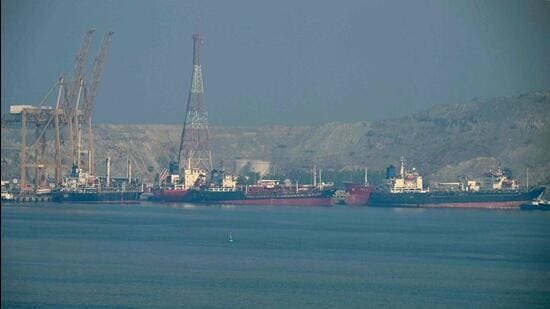
Matters have been further complicated by US President Donald Trump’s decision to blockade ships entering and leaving Iranian ports – a move clearly aimed at squeezing Iranian oil exports but one that could easily trigger a fresh confrontation with the Iran’s Islamic Revolutionary Guard Corps (IRGC) and further disrupt merchant shipping through the crucial waterway.
Iran’s military, in a statement through the state-run IRIB news agency, has warned that “no port in the Persian Gulf and the Sea of Oman will be safe” if the US targets Iranian ports as part of its blockade. It also described the US blockade as illegal and “an act of piracy”, and reiterated that Tehran alone will control the Strait of Hormuz even after the war ends.
Gaddam Dharmendra, a former ambassador to Iran and a senior fellow at Carnegie India, said that the ceasefire between Iran and the US is valid for about another 10 days, allowing the technical teams of both sides to work on the proposals that were presented at the talks in Islamabad over the weekend.
“For the US, the demands include zero percent enrichment of uranium by the Iranians and the opening of the Strait of Hormuz, while the Iranians want the removal of sanctions, unfreezing of their assets and an enduring ceasefire,” he said. “The US blockade of Iranian ports appears to be a pressure tactic but we will have to wait and see.”
Differences between the US and its European allies over the West Asia conflict too have become more pronounced, with UK Prime Minister Keir Starmer saying on Monday that Britain is “not supporting a blockade” of Iranian ports. Italy’s deputy prime minister Matteo Salvini said last week that his country will not send warships to help police the Strait of Hormuz unless it is authorised by the United Nations.
“Both the US and Iran have taken maximalist positions, even though the move to hold the first direct talks since the Iranian revolution in 1979 is itself significant. We shouldn’t completely rule out further contacts between the two sides,” said Ausaf Sayeed, a former ambassador to Saudi Arabia and Yemen who closely tracks developments in West Asia.
“The two sides may still be using back channels for talks and there is the possibility of the ceasefire being further extended,” he said. “Besides, Trump has indicated that he wants a piece of the cake of the possible toll being collected from ships using the Strait of Hormuz.”
Both Dharmendra and Sayeed said it would be unrealistic to expect Iran to give in to the US demand to completely roll back its nuclear programme. “Iran is a signatory to the Nuclear Non-Proliferation Treaty and even the International Atomic Energy Agency (IAEA) is not saying that the country is close to having a [nuclear] bomb,” Sayeed said.
The West Asia crisis, observers believe, will also lead to a re-evaluation of the security partnership between the US and key states such as Kuwait, Saudi Arabia and the United Arab Emirates (UAE), especially after the manner in which Iran successfully targeted American military bases in the region and destroyed aircraft, radars and other infrastructure.
“We already see the hedging by Saudi Arabia, which has concluded a mutual defence agreement with Pakistan. Recent developments will spur a rethinking in the Gulf, with strategic observers already pointing out how the US military presence had failed to protect these countries, and instead made them a target for the Iranians,” Sayeed said.
“The way Iran withstood the US is being seen as a victory and this has caused a deep dent to the US’s image. There is bound to be a new alignment in West Asia,” he said.
