


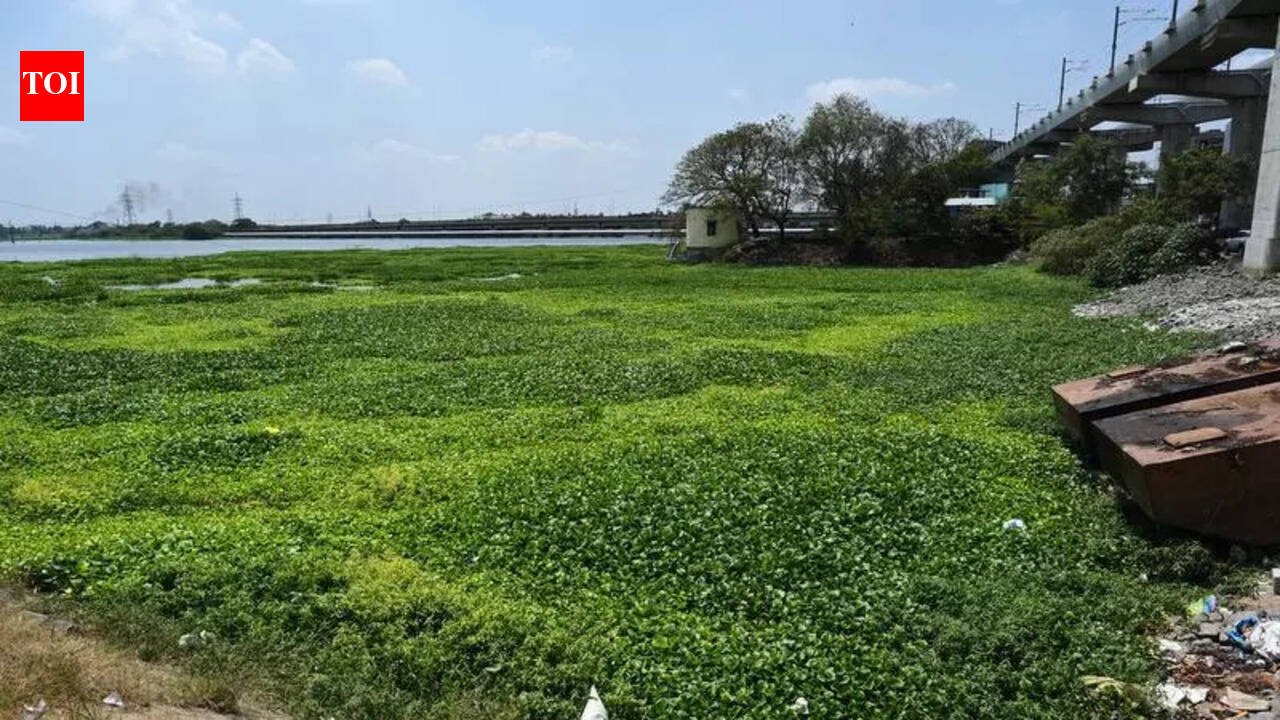
Chennai: The 250-acre Porur lake, which holds some of Chennai’s drinking water, is choking under a thick spread of water hyacinth fertilised by untreated sewage. This near-impenetrable mass cuts off sunlight and reduces dissolved oxygen levels, killing vital microorganisms that naturally cleanse the water. Experts warn the water will turn unfit to drink. D Narasimhan, former associate professor of Botany at Madras Christian College, said biocontrol measures should be deployed. The alternative, spraying chemical weedicides, would further contaminate the water body.The water resources department (WRD) removes the hyacinth every so often, but officials said the invasive weed grows back with alarming speed. They are worried that water hyacinth is now spreading in Red Hills and Chembarambakkam reservoirs, the city’s drinking water mainstays. Engineers said that unless sewage discharge into these water bodies is stopped, any clean-up exercise will remain cosmetic and temporary. A senior WRD engineer said there was a systemic failure in urban infrastructure as sewage was routinely diverted by residents into stormwater drains, constructed by Greater Chennai Corporation, in areas lacking underground drainage.These stormwater drains ultimately empty into the water bodies, creating nutrient-rich conditions ideal for the explosive growth of water hyacinth. The civic body’s failure to plug these illegal inflows has directly contributed to the deterioration of Porur lake, said the WRD engineer.While Metrowater maintains that supplied water undergoes treatment and relies on natural oxidation processes within the reservoir, environmentalists argue that such assurances ring hollow as Porur lake continues to degrade.
