


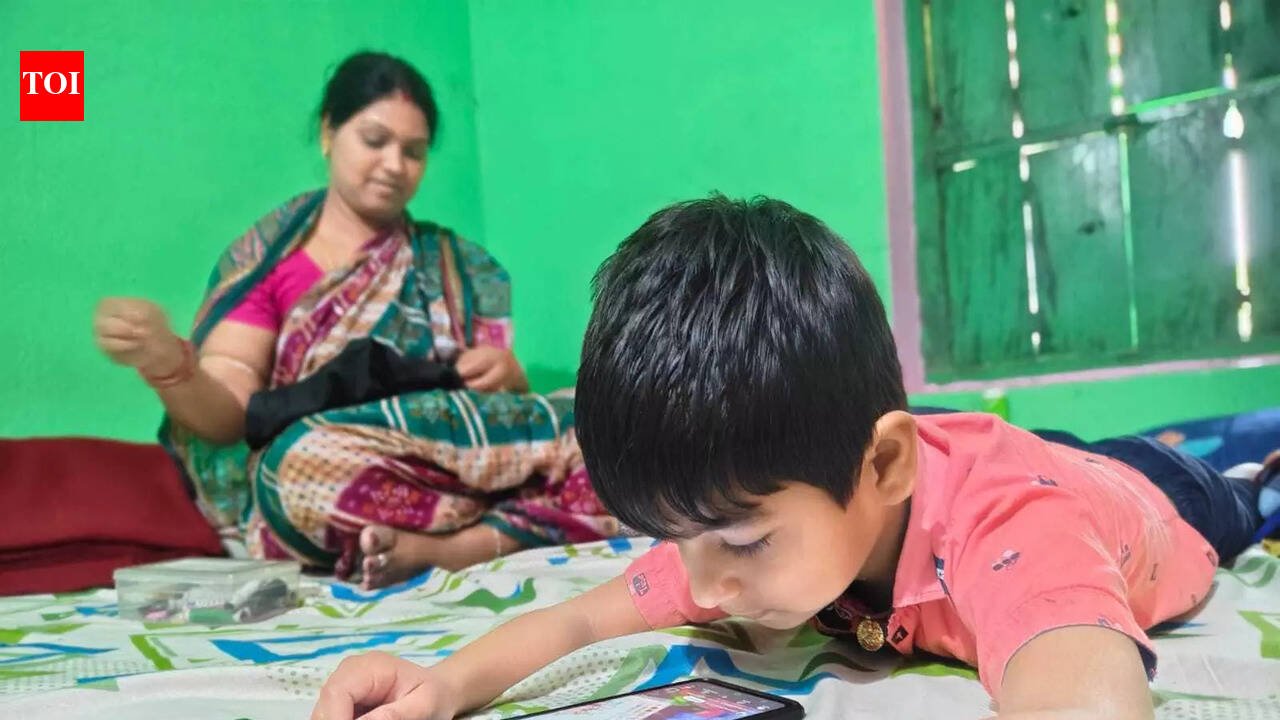
BHUBANESWAR: In many homes, the glow of cell phone screens has begun replacing the warmth of conversation. Parents often complain that children respond to them with shrugs, irritation or silence, spending hours scrolling, gaming or watching videos. What worries psychiatrists is not only the time lost, but what seems to be fading with it —empathy, emotional sensibility, and the ability to stay connected with family members and friends. Psychiatrists say the pattern is showing up in clinics with increasing regularity. With one in five cases, they see of early sleep disorders, social phobia, maladjustment and increasingly haughty or arrogant behaviour having clear link with digital dependence, psychiatrists advise using gadgets just as “tools rather than substitutes for life”.
The concern, they say, is that excessive screen exposure is not merely a habit but a behavioural loop that can reshape routines, relationships and coping skills. Dr Samrat Kar, senior psychiatrist, explained that when demands on a child’s mind and body exceed their internal resources, imbalance creeps in. In clinical terms, he said, “When pressure is more than resources, psychotic and somatic imbalance set in.” He pointed to the physical strain of prolonged viewing as well.
Dr Samrat Kar
“Eyes have a certain tolerance level and have a natural reaction to stress. When children or teens cross the limits, it can manifest in many complications,” he said.Beyond the eyes, psychiatrists describe a deeper pull. Screens, they say, can excite the brain’s reward system, encouraging repetition and making offline life feel dull by comparison. Over time, teens may feel alienated from the natural environment and less interested in real-world interactions, even within own homes.Clinicians are flagging a rise in attention deficit hyperactivity disorder symptoms associated with heavy screen usage. What was once around 10 such cases a week is now three to five a day at some clinics.Doctors say the trend sharpened since Covid, particularly among children in key neurodevelopmental years — roughly ages two to 10 — who spent long periods indoors with reduced socialization and fewer outdoor routines.“Because of excessive TV watching, social and familial detachment is seen. Irritability and cranky behaviour is also found. Such dependence may lead to outbursts and a rebellious nature,” said a senior consultant psychiatrist.Consultant psychiatrist Dr Lagnajit Dash said the cost is often paid in relationships and resilience.
Dr Lagnajit Dash
“Being attached to families is probably the biggest gift a person has, but in today’s time we are ruining that gift through screen addiction,” he said, adding that human interaction shapes how people handle stress and adversity. When phones become an “extended self”, he warned, coping methods diminish, leading to low tolerance, interpersonal deficits and temperamental issues.
