


Some hobbyists collect Pokemon cards and action figurines. Scrapbook girlies hoard aesthetic journals and washi tape. Smug K-pop fans show off photocards. Hipsters have vinyl record collections. Trend-chasers have stashes of themed Labubus.
Hold on to your lipgloss: Makeup enthusiasts have entered the game. They’re buying cosmetics just because they’re cute or limited-edition. Reels have moved on from What’s In My Bag to What’s On My Bag – a dangling bunny-shaped lipgloss, a sunscreen spritz, a heart-shaped mirror. “Consumers want novelty and design-focused beauty drops,” says Adwaita Nayar, co-founder of Nykaa. Here’s how beauty brands play the collectibles game.
Short-contact therapy
For years, competition in the beauty industry was based on how well a product was formulated. The buzz centred around hero ingredients, new-and-improved formulas and what a product could do for you, says Sanshi Aggarwal, the founder of Flossy Cosmetics. “Today, makeup formulas can only vary so much – slightly longer wear, a softer texture, or ingredient differences. Beyond a point, innovation in formulation is incremental.” Packaging, on the other hand, can tap into internet trends and pop-culture. At the moment, cuteness sells.
So, Flossy Cosmetics sells a beaded strap ( ₹125) so that their lip tints ( ₹599) can dangle visibly from a bag, purse, phone case, or key chain. They launched it in October 2024, right after Hailey Bieber’s Rhode lip balm phone case went viral. “We saw a huge spike in orders – customers were buying four to seven charms at a time, to use it for other products or even as a fashion accessory,” says Aggarwal. They also sell an adhesive mirror that you can stick to the back of your phone case. It’s a smart branding move – makeup usually stays inside your bag, but a charm or a mirror with the brand’s logo can create visibility. “What you use on your face or display on your car’s dashboard or on the outside of your purse signals who you are and where you belong.”
Riya Pant, founder of beauty brand Blur India, says beauty products have to deliver some kind of “unboxing” experience. “Younger consumers care about how a product feels when it arrives.” So, her team includes handwritten-style notes, stickers, and notes from the mascot for the new milk-themed perfume range. “These small details create emotional recall and make the brand memorable.”
Special drops
Beauty brands say that special drops drive emotion-led sales and cause hype online, which means more visibility for the brand. When Bridgerton S4 came out in January, Nykaa was ready with its Bridgerton-themed creamy matte lipsticks, nail colours and a face-and-eye palette. Fans snatched it up. “It was one of our fastest-selling limited-edition drops,” says Nayar. Their data showed that four lipsticks and two face palettes were being sold every minute in the first few days. “Timing matters. We’re constantly tracking what viral moment or social media hype can be transformed into a beauty drop.”
Nykaa also collaborated with Naagin Hot Sauces in December – an unexpected crossover that Nayar says was done for the drama. “The global plumping gloss trend is about heat and sensorial thrill. Naagin, as an indie hot-sauce brand, brought recognisability, humour and attitude, so we decided to tap in on the trend with them.”
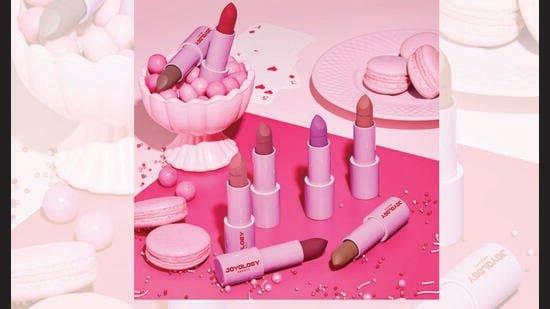
Packaging matters, as do product names. A transparent lipgloss or a quirky perfume bottle must make the buyer want to photograph it and share it as an Insta story or YouTube haul. Biju Kassim, the customer-care associate and CEO of Beauty at Shoppers Stop, says that they launched their in-house brand, Joyology Beauty, in December 2024 to provide whimsical, playful makeup for younger consumers. On Instagram, they place their products alongside Sally Rooney books. They post themed collages featuring Sabrina Carpenter and Tyla. Flossy Cosmetics has a lipstick collection called In Therapy, while Blur India has a line of glosses called Dude, Don’t Touch My Gloss. “The idea came from the fact that people ask to borrow your lip products, which is not hygienic,” says Pant. “We built a narrative around owning your product and not sharing it.”
Sold out
Because the new drivers for sales are cuteness, brands stay on their toes. “Younger consumers don’t have the kind of brand loyalty that older generations. Instead, they connect with how a brand makes them feel and how it fits their identity,” says Aggarwal. So, if another brand makes a cuter lipgloss, customers will gravitate towards it without a backward glance.
As or older, more loyal buyers, it’s a different challenge. “Fun and whimsical products shouldn’t be limited to people under 30. Even someone in their late 30s or 40s can enjoy a well-designed, joyful product – but the challenge is figuring out what that looks like,” says Pant.
Kassim says there’s a fine balance between being cute and being childish. Cross that line, and your product seems like something you’d buy for your tween. “A beauty brand should feel both playful and sophisticated. You’ve got to be creative, but also credible at the same time.”
From HT Brunch, March 28, 2026
Follow us on www.instagram.com/htbrunch
