


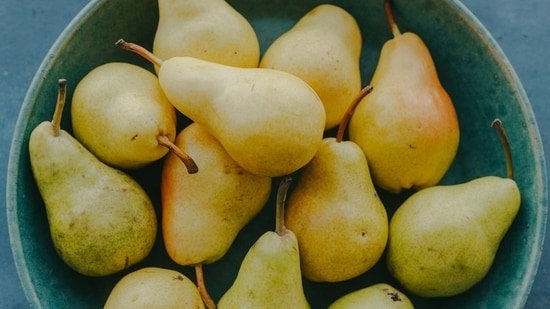
Pears are often overlooked in the world of superfoods, but they are actually one of the most gut-friendly snacks you can eat. Packed with soluble fibres that nourish beneficial gut bacteria, this humble fruit quietly supports digestion and overall gut health. But what if you could make pears even better for your microbiome? A surprisingly simple kitchen trick could help unlock more of the fruit’s gut-boosting potential.
Dr Karan Rajan, a UK-based surgeon and popular health content creator, has shared a simple hack that may make pears even more nutritious and gut-friendly than they already are. In an Instagram video posted on March 8, the surgeon explains the freeze-thaw method and how it can help make the fruit’s nutrients more bioavailable, potentially enhancing its overall health benefits.
The freeze-thaw hack
According to Dr Rajan, pears are rich in pectin, a soluble fibre that acts as prebiotic fuel for beneficial gut bacteria. However, you can make pears even more nutritious, by unlocking the pectin fibre trapped inside cell walls through the freeze-thaw method. He points out that the prebiotic fibre in fresh fruit is usually trapped inside cell walls or bound in the middle lamella. But when you freeze and thaw them multiple times, the cell walls rupture, unlocking the fibre and making it more bioavailable.
The surgeon explains, “If you want to improve your gut health, you might want to try freeze-thawed pears. Pears are rich in pectin, that’s a soluble fibre that feeds beneficial gut bacteria. But freeze-thawed pears might have even more gut health gains. In fresh fruit, much of the pectin is locked inside intact cell walls or bound in the middle lamella. Your gut bacteria can access some of it, but not all of it. When you freeze and thaw a pear multiple times, the cell walls rupture completely and a lot of the pectin that’s trapped inside those cell walls get freed up and becomes water-soluble and thus easier to ferment. Suddenly the surface area increases dramatically, so your gut bacteria can access and ferment the fibre even more efficiently.”
Fermentation of pectin
Dr Rajan highlights that pectin fibre is fermented by two key species of beneficial gut bacteria – Bifidobacterium and Faecalibacterium prausnitzii. Nourishing these microbes with pectin helps support a healthier and more balanced gut microbiome. The surgeon adds that when pectin is fermented by these bacteria, it produces butyrate, an important short-chain fatty acid that helps strengthen the gut barrier and protect the lining of the colon.
He explains, “Pectin fibre is preferentially fermented by bifidobacterium and faecalibacterium prausnitzii. These are keystone bacterial species and feeding them means a healthier gut. Pectin fermentation produces butyrate, which is your gut’s favorite fuel because butyrate powers colonocytes, the cells lining the colon, and strengthens the gut barrier.”
How does the freeze-thaw hack help?
Dr Rajan explains that when the fibre has already been mechanically broken down through the freeze-thaw process, it becomes easier for gut bacteria to access it and extract a greater amount of beneficial metabolites once the fruit reaches the digestive tract. He also reassures that this hack is completely safe, as it essentially accelerates the fruit’s natural ripening process, making the fibre more bioavailable. According to the surgeon, three to four freeze-thaw cycles are the sweet spot, allowing you to maximise fibre availability without the fruit turning overly mushy.
He emphasises, “Because the fibre is mechanically pre-broken down, the bacteria can extract even more metabolites from the same amount of fruit. You’re getting more prebiotic bang for your buck per pear, and this is completely safe. You’re not doing anything weird to the fruit; you’re just accelerating what happens naturally during ripening. You’ve just made the fibre more bioavailable. The more freeze-thaw cycles, the more cell wall breakdown you get, but three to four cycles is the sweet spot where you get maximum fibre accessibility without turning it into mush.”
Note to readers: This article is for informational purposes only and not a substitute for professional medical advice. It is based on user-generated content from social media. HT.com has not independently verified the claims and does not endorse them.
