


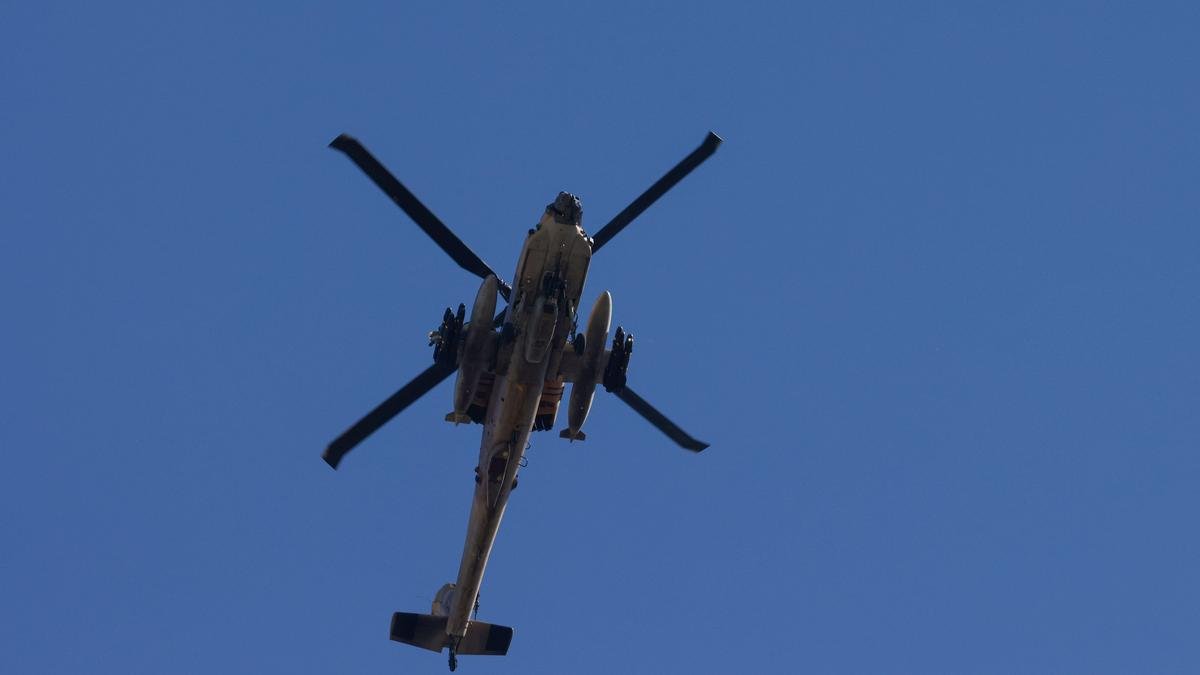
A United States army helicopter crashed near the Strait of Hormuz, and President Donald Trump said the two crew members aboard were not injured in the incident near the strategic waterway that Iran has effectively closed during the war.
What caused the crash remained unclear on Tuesday (June 9, 2026) morning in West Asia, which was still reeling after Iran and Israel exchanged fire the previous day in the biggest blow yet to the straining ceasefire in the Iran war. Iranian state media, relying on foreign reporting, acknowledged the crash without elaborating.
West Asia war updates on June 9, 2026
Since the U.S. and Israel began striking Iran on Feb. 28, the war has shaken the global economy, driven up energy prices around the world and made many basics, including food, more expensive. Officials have been unable to turn the April ceasefire into a deal to permanently end the conflict, particularly as Israel intensifies and expands its military campaign in Lebanon against the Iranian-backed militia Hezbollah.
Trump, speaking to journalists at John F. Kennedy International Airport in New York after watching the NBA Finals on Monday night, acknowledged the crash.
“The pilots are fine. Yeah,” Trump said. “Nobody injured. We are going to issue a report tomorrow. But the pilots are fine.” The New York Times first reported that a US Army Apache attack helicopter went down near the strait in unclear circumstances. The US military’s Central Command and the Defense Department did not immediately respond to requests for comment from The Associated Press.
Apache helicopters have been a key asset for the American military as it enforces a blockade on Iranian crude oil shipments and tankers, seeking to pressure Tehran into reaching a deal. The helicopters also have been used by the United Arab Emirates to shoot down Iranian drones during the Iran war.
Trump insists an Iran deal is coming
Mr. Trump also expressed renewed optimism over negotiations with Iran.
“We have a good chance” of signing a deal in “two or three days,” Mr. Trump said. But he didn’t provide any details on why there was reason for new optimism. Mr. Trump has repeatedly predicted that a deal is near over the two months since the U.S. and Iran agreed to an initial ceasefire.
“We’re very close to having a very, very good, strong, powerful deal,” the President said. “If we go and bomb — which we could do very easily if we want, and we spend another two or three weeks bombing — they’ll have nothing left whatsoever. But you won’t have the strait open for months.” He added, “If we do the bombing, you know, a lot of people are going to be killed. Who wants to do that? I don’t.” Mediators, led predominantly by Pakistan, have been trying for weeks to get a deal across the line. However, both Iran and the U.S. have taken hard-line positions.
The U.S. wants to see Iran give up its stockpile of highly enriched uranium, which is believed still to be entombed in the country after American airstrikes in the 12-day war in 2025. But Iran is refusing that and demanding relief from sanctions. It also wants the release of frozen assets even before a final agreement is in place, something rejected by Mr. Trump.
Trump tells Netanyahu to be careful
U.S. and Israeli officials said Trump and Israeli Prime Minister Benjamin Netanyahu spoke on Monday (June 8, 2026).
In an interview with Axios, Mr. Trump said he warned Netanyahu that if the Israeli leader went back to war with Iran, he might find himself fighting alone. “I said, ‘Bibi, you better be careful, or you will be on your own very soon,’” Mr. Trump said.
An Israeli military official said Israel was prepared to continue operations for “as long as it takes”, while Iranian officials struck a similarly defiant tone.
A military source quoted by the semi-official Tasnim news agency said Tehran was ready for a prolonged conflict and could renew strikes against U.S. interests in the region.
Iranian Foreign Ministry spokesperson Esmaeil Baghaei said Tehran was exchanging messages with Washington in an atmosphere of “extreme suspicion.” Tehran has long said any peace deal with the U.S. depends in part on an end to fighting in Lebanon, which Israel invaded in March in pursuit of Hezbollah fighters who had fired across the border. Israel has never halted its Lebanon campaign, which has killed thousands of people, saying the conflict should be treated separately from any U.S.-Iranian ceasefire. Hezbollah has also continued its attacks.
Tehran has continued to block most shipping through the Strait of Hormuz, which before the war carried a fifth of the world’s crude oil and liquefied natural gas. Washington has imposed its own blockade of Iranian ports. Mr. Trump has said any peace deal must ensure Iran cannot develop a nuclear weapon. Iran’s demands include the lifting of international sanctions, the release of billions of dollars in frozen assets and recognition of its control of the strait.
Published – June 09, 2026 09:38 am IST
