


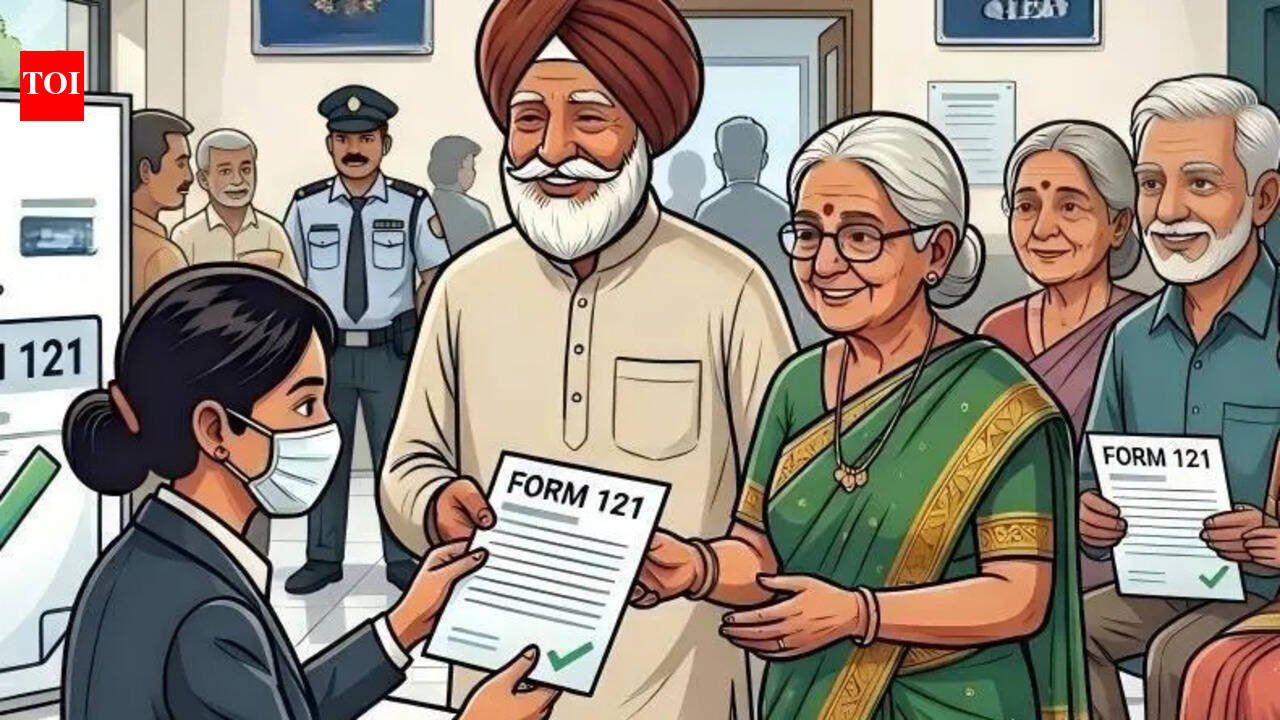
Ahmedabad: Retirees, pensioners, and anyone relying on bank interest or post-office deposits should take note of a quiet but significant tax change. Forms 15G and 15H — long the go-to declarations for avoiding TDS — are being replaced by a single new Form 121 from April 1 under the Income Tax Act, 2025. The new form comes with updated eligibility rules, a new two-year ITR disclosure requirement, and a specific provision for those turning 60 during the financial year. Tax experts say filing early in April is key to avoiding unnecessary deductions right from the start.The change affects a wide range of taxpayers, but is especially relevant for retirees and pensioners. Tax experts say the new form is designed for individuals whose estimated tax liability for the financial year is nil, allowing them to self-declare so that banks, post offices, and other deductors do not withhold TDS on specified incomes.One important provision benefits those turning 60 this year. International tax expert Mukesh Patel said, “A key point for senior citizens is that resident individuals who turn 60 at any time during the financial year will be treated as senior citizens for the entire year for the purpose of filing the declaration. This means taxpayers celebrating their 60th birthday during the year can still use Form 121, as long as their estimated total tax payable is zero.”He added that under the new tax regime, senior citizens can have nil tax liability on income up to Rs 12 lakh, thanks to available rebates. This threshold extends to Rs 12.75 lakh where the standard deduction for salary or pension income applies, making the form particularly useful for those living off bank interest, post office deposits, or pension.For non-senior citizens, Hindu Undivided Families, Associations of Persons, and Bodies of Individuals, the bar is stricter. Their total income must not exceed the basic exemption limit: Rs 4 lakh under the new tax regime, or Rs 2.5 lakh under the old one. Form 121 can be filed against a range of income types: interest on securities, bank and post-office deposits, dividends, rental income, insurance commission, insurance-related payments including bonuses, and withdrawals from recognised provident funds. It cannot, however, be used to avoid TDS on professional fees, technical services, or contract payments.There is also a new disclosure requirement. Taxpayers filing Form 121 must now provide income tax return details for the previous two years, including acknowledgement numbers and reported income. Tax professionals warn this raises the stakes for anyone filing an incorrect declaration.Patel cautions, “Form 121 simplifies the process on paper, but taxpayers must be watchful and alert because eligibility still depends on estimated income, choice of the appropriate tax regime and earnings such as capital gains chargeable to tax at special rates, which are not eligible to the benefit of tax rebate.”Experts advise taxpayers to first check whether TDS would even apply to their income. If bank interest falls below the prescribed threshold, filing Form 121 may not be necessary at all. For those who do need to file, early submission in April is recommended so that tax is not deducted right at the start of the financial year.
