


In Bengaluru’s apartment communities, environmental change rarely arrives in form of grandiose plans and sweeping declarations – it begins quietly, with a handful of residents working hard to find green solutions to practical irritations of community living. In most gated communities, green drives are slowly introduced as a solution to recurring problems such as overflowing wet waste, piles of delivery bags and cardboard boxes, overwhelming number of disposable plates after events, and rising electricity bills for common areas. These practical interventions slowly evolve into a broader sustainability effort across the city – some of the common challenges of community management are changing how people consume, reuse and conserve resources. Disposables Are Out, Steel Plate Banks Are In In Cascading Meadows in TC Palya, sustainability started through steel plates, tumblers, spoons, and cups. The apartment community procured steel utensils for common events, eliminating single-use plastics and paper items. Slowly, the idea expanded, and the residents can now borrow these utensils for functions at home too. “Residents invested in the utensils once and have used them for multiple events since then,” says Neelima Gudipati, a resident. The success of the initiative is not based on strict enforcement rather on quiet consistency, via reminders on residents’ groups, support of the management committee and systems to make sustainable behaviour easy. Once such a system exists, people tend to follow it. Solar Power Becomes Normal, Not Exception At Century Saras Apartments, solar energy is no longer just an eco-friendly project and has become part of daily life. The community installed a solar rooftop plant in 2020 for common facilities. “Choosing to use solar energy has enabled us to save Rs 40.4lakh till now,” says Satish Mallya, president of the Bangalore Apartments Federation, who lives in the complex. “We’ve signed a power purchase agreement (PPA) for 25 years with BESCOM. Excess solar energy is exported to their grid,” he adds. This community uses solar energy for common utilities like sewage treatment plant (STP), water treatment plant (WTP), elevators, and lighting in common areas. Composting Lessons, Reuse of Glass Bottles In many communities in the city, the earliest environmental battle was over proper disposal of wet waste. Ferns Paradise in Doddanekkundi has been composting waste since 2014. The composting system came under pressure during the Covid- 19 pandemic as wet waste volumes surged and the common composting area began to feel inadequate. A group of residents stepped in and mentored around 70 households to start composting at home and trained housekeeping staff to support assisted home composting. The move not just lowered pressure on the central composting pits, but also created a more resilient model, where responsibility was distributed instead of concentrated in one corner of the apartment complex. Many apartments in the city, including Mantri Webcity, Hennur, La Plazzo, Sarjapur and Siroya Environ, Hebbal have created systems for recovery of dry waste. Glass bottles are stored separately and collected by REVERSE, a circular economy startup that cleans and sends the bottles back to brands for reuse. At Skylark Esta in Hoodie, Siroya Environ in Hebbal and Natasha Golfview in Domlur, glass bottle collection drives have received an overwhelming response. Discarded Clothes, Cardboard Boxes Can Raise Funds Communities across the city are going back to sustainable activities of 1970s and 1980s, where households used to exchange old clothes for steel utensils and get money for used paper and cardboard boxes. Bhuvana Greens Apartments in Kasavanahalli organises a clothes collection drive every year. “Our housekeeping staff pick what they need. The rest, we donate to charity,” says Valli Srinivasan, a management committee member. Similarly, discarded cardboard boxes from online deliveries can be turned into a revenue stream. Recently, a social media post on how discarded cardboard boxes generated Rs 2.37 lakh in a community in the last financial year garnered a lot of attention.The scale is striking, but so is the lesson. Housekeeping staff in Terrace Garden Apartments are allowed to collect and sell the packing boxes and retain the money as an additional incentive, says Ramesh Padmanabhan, president of the management committee. “Carry bags are folded and sent to one of our residents who runs a home bakery. She uses them for deliveries, thereby ensuring that the bags get reused at least once more,” he adds. Greening Communities, Not Just Beautifying Them Green efforts are not just confined to waste management. A tree committee active since 2005 in Ferns Paradise has spent two decades shaping the landscape.
A greening drive at Ferns Paradise, Doddanekundi
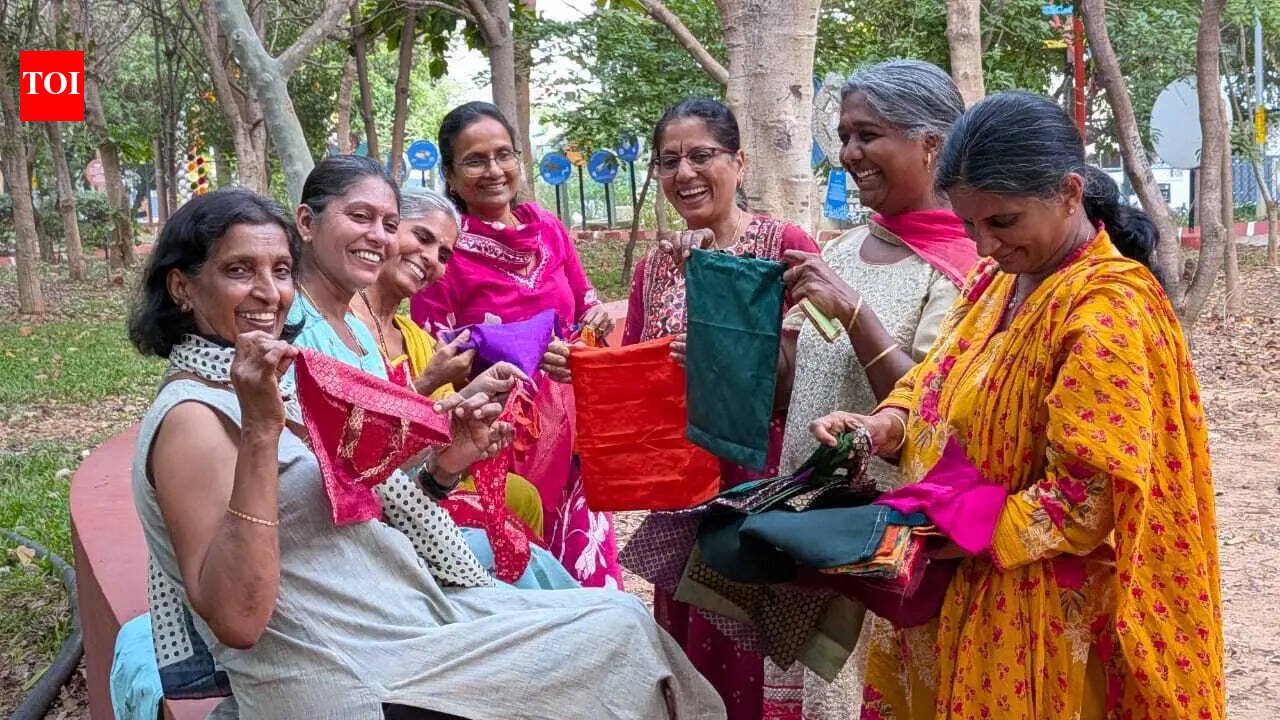
Residents planted more than 1,000 trees, mostly native, biodiverse species instead of ornamental monocultures. They created a Miyawaki forest corner. They monitored trimming and cutting to protect the green cover from routine over-pruning. Their work built ecological identity and in 2023, the layout won recognition by the govt of Karnataka and the Lalbagh Botanical Garden. Upcycling Unused Tamboola Blouse Pieces Tamboola blouse pieces, often given as return gifts during festivals and functions, get accumulated over time in many households. HSR Citizen Forum began collecting these unused blouse pieces specifically for upcycling around late 2024. They are sent for stitching and turned into cloth bags. “We convert a culturally familiar, commonly accumulated fabric item into something practical that can replace polypropylene or plastic bags,” says Pushpa Venkatesh, a volunteer, adding that these bags are especially useful for gifting as well as for everyday shopping. VOICE BOX We are planning to open a tool library in our community. We collect items that residents need only occasionally—tool kits, spanners, screwdrivers, ladders, trolleys, battery jumper sets, stretchers—and make them available as shared resources. It is not just about saving money. It is about reducing unnecessary consumption by recognising how many household purchases are for one-time or few minutes use.
M Prakash | Resident, Raintree Boulevard, Jakkur
