


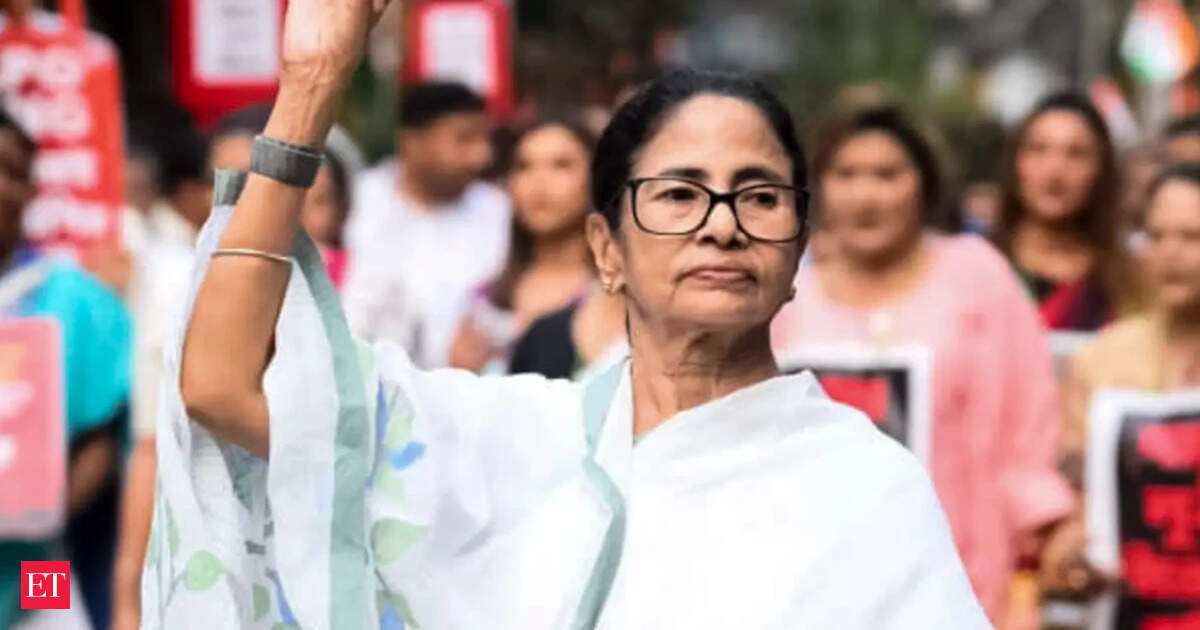
As West Bengal heads into the assembly election battle, TMC faced one of its most critical organisational exercises in recent years, crafting a candidate list that can sustain the party’s dominance after 15 years in power and blunt anti-incumbency.
Before announcing the list of candidates, Banerjee said, “Before I announce the candidate list, I thank the people of Bengal… I dedicate Maa Maati Manush Banglar Sanskriti to all, and release the candidate list of 294 seats.”
Also read: West Bengal BJP candidate list 2026: First list of 144 candidates out; Suvendhu Adhikari fielded in two seats; Check complete roll
Abhishek Banerjee announced that among TMC’s 291 candidates for West Bengal polls, 52 are women, 95 are SCs-STs and 47 belong to the minority section.
Check the list TCM candidates for West Bengal elections:
- Firhad Hakim in Kolkata Port
- Kunal Ghosh in Beleghata
- Jyotipriyo Mallick in Habra seat
- Mamata Banerjee in Bhabanipur
She added that TMC will contest 291 of 294 seats in Bengal assembly, remaining three will be fought by Anit Thapa-led BGPM in Darjeeling hills.
In a message to the Bharatiya Janata Party (BJP), she said, “Why are you afraid? Don’t create a gas crisis if you want to fight; come to the ground in a proper way. ECI, you did a brilliant game… BJP has no chance. This time your seats will decrease as compared to the last time. This is the fight of Astitva of West Bengal. Bengal will win. ‘Dilli ka laddu’ will not win…”
Ahead of the announcement of list of candidates, a former BJP panchayat chief, who was known to be close to senior party leader Suvendu Adhikari, rejoined the TMC.
Pabitra Kar, a former panchayat pradhan of Boyal-1 gram panchayat in Nandigram-2 block of Purba Medinipur district, rejoined the Trinamool Congress amid speculations that he may be pitted against the leader of the opposition in Nandigram seat in the upcoming assembly polls.
The TMC, in a social media post, said Kar was “dissatisfied with the BJP’s anti-people stance”.
To focus on local political equations, TMC’s selection process was a crucial test to its ability to balance experience with youth. The party has been one of the major opposition hurdles to the Election Commission’s SIR exercise ahead of the polls.
West Bengal will go under assembly elections for 294 seats in two phases on April 23 and April 29. The question is will Banerjee’s candidate list help her secure a fourth consecutive mandate. In the 2021 assembly elections, the TMC won 215 of the state’s 294 seats, while the BJP bagged 77.
Party insiders earlier told PTI that the selection process is guided by a mix of political calculations: the performance of sitting MLAs, their perceived ‘winnability’, the need to inject younger faces into the organisation and the challenge of countering fatigue against long-serving legislators.
As per the news agency’s TMC sources, the party leadership has been analysing constituency-level feedback, internal surveys and organisational reports to assess whether to retain incumbents or introduce new faces, particularly in seats where dissatisfaction against individual MLAs has surfaced.
The party’s innovative candidature was also evident in the TMC MLAs elected in 2021, from which 90 were first-time legislators.
About 55 to 60 of those are now serving their second term, while roughly 30 to 35 have been elected three times. Around 15 to 18 are four-term legislators and nearly 10 have won five terms.
TMC vice president Jaiprakash Majumdar had said the guiding principle for the party remains electoral viability.
“Mamata Banerjee has an unmatched understanding of West Bengal’s political landscape. She knows which candidates have the strongest connect with voters and who is best positioned to win. Ultimately, winnability and public acceptance will determine the final list,” Majumdar told PTI.
“The leadership appears keen to introduce a younger brigade in constituencies where anti-incumbency against sitting MLAs is visible. At the same time, the party has always relied on leaders with strong grassroots networks, so the final list is likely to balance experience with generational transition,” Political analyst Suman Bhattacharya said.
