


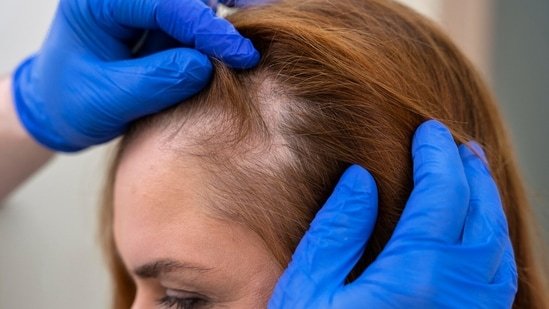
Are you noticing an alarming amount of hair shedding? Finding clumps of hair on your pillow, brush, or shower drain? You may also be seeing your hair density gradually drop, with volume falling flat despite using volumising products. If your hair suddenly feels thinner, limp and less full than before, don’t be quick to brush it off as a bad hair day because of the greasy texture.
But it is important to understand when your hair needs actual medical intervention and when it just needs a quick fix with dry shampoo for a bad hair day. After all, not every day can be blamed on a bad hair day.
Identifying the cause is critical, so we spoke to Dr Shiv Singh Shekhawat, health expert at Traya Health, who spotlighted three reasons why hair thinning may occur. He stated that hair is one of the body’s earliest internal indicators when the body undergoes nutritional shifts, hormonal changes, illness, or lifestyle disruptions.
You may reach out for the haircare products that promise to treat hair fall, and they might offer temporary help. But if you want to address the problem at its root, you cannot rely on products alone.
Here are some of the reasons he listed out:
1. Telogen Effluvium
The first reason is a reaction to a stressful period, both physical and mental stress. “Telogen Effluvium or TE, a delayed reaction your hair has to physical or emotional shocks,” he explained. Many may not be able to trace back to TE because of the timing, which the doctor explained is tricky. “The excess fall typically starts 8–12 weeks after the trigger.”
But the doctor assured one should not worry, as this shedding is temporary. He gave a timeline of three to six months, within which things should get back to normal. But during that time, you can support these lifestyle habits: get proper sleep, eat balanced meals, do gentle hair care, and avoid heavy styling. If you follow these diligently, the cycle resets smoothly.
2. Nutritional deficiency
Hair fall can also indicate an improper diet, where you may be lacking essential nutrients. On both ends of the modern diet spectrum, whether it is a sedentary lifestyle with poor food choices or a hyper-fixated diet that cuts out entire food groups like carbs, you may be at risk of nutritional deficiencies. And often, your hair health is one of the first places where these imbalances show up.
Dr Shekhawat explained, “Nowadays diet tend to fall short on essentials like iron, vitamin D, vitamin B12, and adequate protein intake. These nutrients directly influence hair strength and growth. When levels dip, the hair shaft weakens, shedding increases, and new growth slows down.”
3. Hormonal fluctuations
Hormonal fluctuations, especially in women, are another powerful driver of diffuse thinning.
The doctor named the responsible issues: “PCOS, postpartum hormonal shifts, thyroid imbalances or increased sensitivity to androgens like DHT can all disrupt the hair cycle.”
Alongside hairfall, here are other signs which may point towards hormonal issues:
Note to readers: This article is for informational purposes only and not a substitute for professional medical advice. Always seek the advice of your doctor with any questions about a medical condition.
