


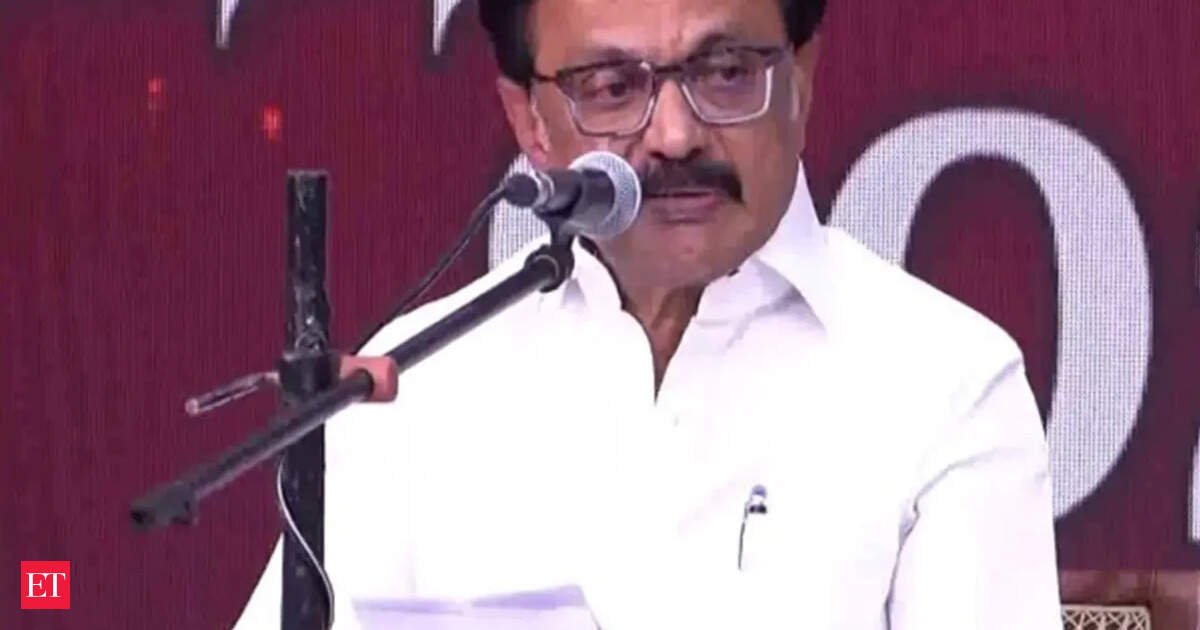
Calling the manifesto the party’s “superstar”, Stalin said the government would build on its existing schemes with “deeper impact and wider reach”.
At the centre of the welfare push is the doubling of monthly assistance for women heads of families from ₹1,000 to ₹2,000, benefiting over 1.37 crore recipients, while old age pension will be raised to ₹2,000. In a key electoral counter to Edappadi K Palaniswami’s promises, the DMK announced the Illathu Arasi scheme, under which women will receive ₹8,000 worth coupons to purchase or replace household appliances of their choice.
The manifesto also promises continued free electricity support for over 20 lakh beneficiaries along with meter-less pump sets, distribution of laptops to 35 lakh higher education students, and expansion of the breakfast scheme from Classes 1-5 to Class 8. It has offered interest-free loans of up to ₹5 lakh for women self-help groups and raised health insurance cover to ₹1 lakh.
On the economic front, the party aims to attract ₹18 lakh crore in investments and expand employment opportunities through new Tidel Parks. For farmers, it has pledged modern pump sets under the free power scheme, alongside a plan to build 10 lakh houses over five years. The DMK chief assured to enhance the procurement price of paddy to ₹3,500 per quintal and the procurement price of sugarcane to ₹4,500 per tonne.
Pitching his government’s record, Stalin said Tamil Nadu had reached the “top in development” under DMK rule, while accusing the BJP of attempting to obstruct welfare initiatives. He is set to launch the party’s campaign from Tiruvarur on Tuesday. The DMK has announced candidates for 164 seats, allocating the remaining 70 to its allies in the Secular Progressive Alliance.
