


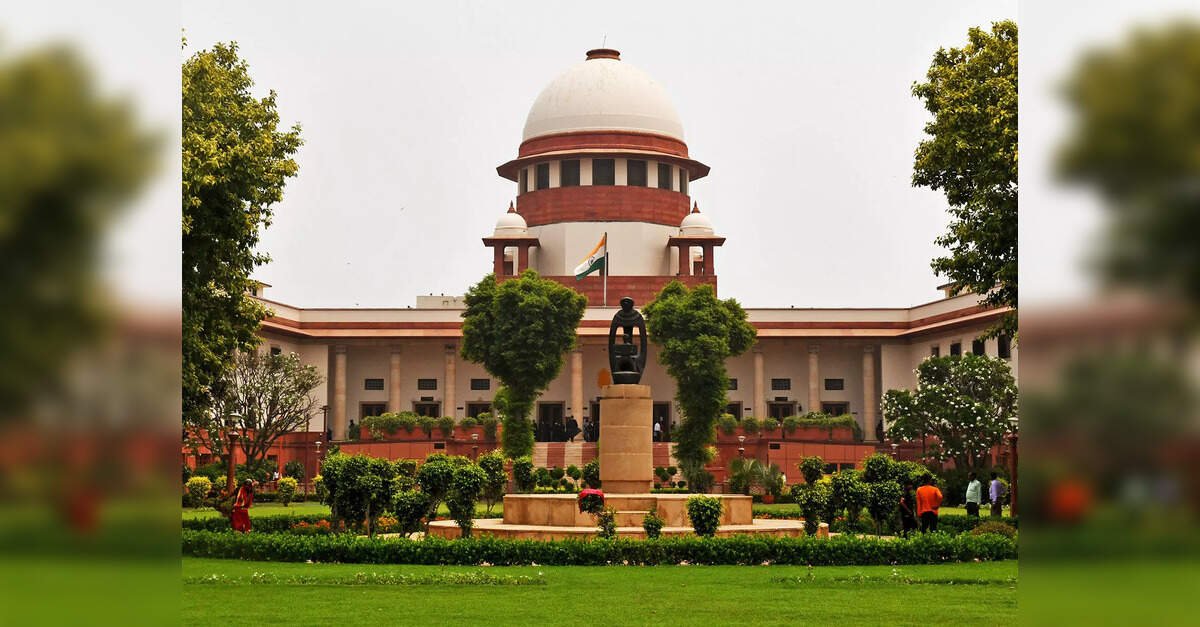
The Supreme Court on Thursday said that simultaneous Corporate Insolvency Resolution Process (CIRP) proceedings are maintainable against both a principal debtor and its corporate guarantor for the same debt.
A bench comprising justices Dipankar Datta and Augustine George Masih held that there is no statutory bar under the Insolvency and Bankruptcy Code (IBC) preventing a financial creditor from initiating parallel actions to recover its dues.
“The Judge is not to innovate at pleasure. He is not a knight errant roaming at will in pursuit of his own ideal of beauty or of goodness,” Justice Datta wrote in the opening of the 47-page judgment.
“Thus, whilst approving that the IBC is not a recovery proceeding, we negate the contention that CIRP can be prohibited against a guarantor or co-borrower only on that ground.
“It seems prudent that the rationale of a creditor obtaining a guarantee for its debt must be realized to its fullest. A financial creditor, vested with rights under the Code, must be able to exercise it. Equally so, the adjudicating authority has the obligation to examine the application independently, on its own merits,” Justice Datta said.
The verdict reaffirmed the fundamental principle of the Indian Contract Act which says the liability of a surety (guarantor) is “co-extensive” with that of the principal debtor.
It said that the very purpose of a guarantee would be defeated if a creditor were forced to wait for one insolvency process to conclude before starting another.
“The interpretation… would mean that the guarantor would be exempt, in the interregnum, from paying the debt, which the IBC does not provide for,” the verdict said.
The bench said the IBC is a “well-thought” policy framework and that “wearing the legislative hat” would be an act of “judicial exploration”.
The ruling arose from a batch of appeals involving major financial institutions, including ICICI Bank and the State Bank of India (SBI), against various infrastructure and real estate firms.
It allowed the appeals by ICICI Bank and SBI where insolvency against guarantors had been previously blocked.
It rejected the appeals by corporate directors who sought to stop parallel proceedings against their companies.
