


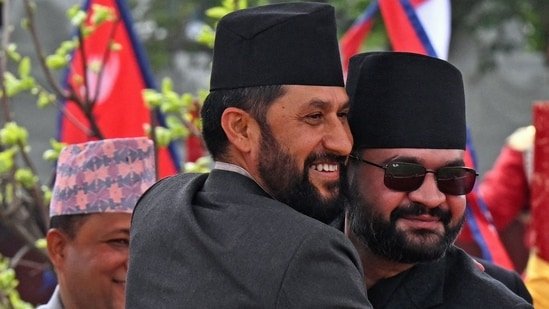
Sudan Gurung, who was earlier removed from the post of Nepal’s interior minister, was reportedly reinstated on Tuesday after an official investigation into his finances found no wrongdoing, paving the way for his return to office.

“Prime Minister Balendra Shah reappointed Gurung as home minister,” Shah’s media adviser Dipa Dahal told AFP.
Stepped down to allow a “fair investigation”
Gurung had resigned from the post on April 22, only weeks after assuming office, saying he wanted to ensure a “fair investigation” into questions surrounding his financial investments. Reports had raised concerns over whether he had failed to disclose certain investments, prompting the government to order a review.
Also read | Nepal home minister Sudan Gurung resigns over financial misconduct in big jolt to Balen Shah’s govt
The committee tasked with examining the allegations has now cleared him, leading to his return to the cabinet.
Who is Sudan Gurung?
Sudan Gurung emerged as a prominent figure after Nepal’s Gen-Z protest movement in September and later entered electoral politics. He won from Gorkha in the March 5 elections, securing a place in Parliament before being appointed home minister by Prime Minister Balendra Shah ‘Balen’ on the day the new government assumed office.
Also read | Nepal PM to expand cabinet, Sudan Gurung to be reappointed as home minister
During his initial tenure, Gurung drew attention by taking action against several high-ranking officials, including ordering arrests, news agency ANI reported. However, his time in office soon came under scrutiny following allegations linked to his financial investments.
Why did he resign?
On April 22, Gurung resigned as home minister after allegations surfaced connecting him to share transactions involving controversial businessman Deepak Bhatt, who was under investigation in a money laundering case.
He submitted his resignation to Prime Minister Balendra Shah and announced his decision through social media.
Pressure mounted after documents showed that Gurung held shares in Star Micro Insurance and Liberty Micro Insurance, companies associated with Bhatt and under investigation following his arrest. Reports also suggested that voices within the ruling RSP had begun demanding his resignation over concerns about a possible conflict of interest.
Gurung rejected the allegations
Responding to the controversy, Gurung denied concealing financial information and defended his asset declarations.
“I would not hide NRs 2.5 million worth of shares when my total declared assets exceed NRs 20 million. This is simply a matter of classification,” he had written on social media on April.
He maintained that the shares in Star Micro Insurance and Liberty Micro Insurance had been acquired before he assumed office and were already part of his declared investment portfolio. Gurung also argued that merely being a shareholder did not imply direct association with every individual connected to a company.
Addressing concerns over a possible conflict of interest, he stated that the investigation into Bhatt was being conducted by the Department of Money Laundering Investigation under the Ministry of Finance and not by the Home Ministry.
Separately, Gurung dismissed the allegations and media reports linked to him as “sponsored rumours.”
While he said the investments had been made through a bank loan, he had not separately disclosed that fact in the asset declarations submitted to the Office of the Prime Minister and Council of Ministers, which were made public last week.
Likewise, his investments worth NRs 2.5 million each in Star Micro Insurance and Liberty Micro Insurance, held as a founding shareholder, were not disclosed separately. Instead, he stated that they were included within a broader figure of NRs 27.45 million listed under shares traded in the securities market.
It was later disclosed that these companies had not yet begun public trading, raising questions about how those shares had been categorised in the declaration.
(With inputs from agencies)
