



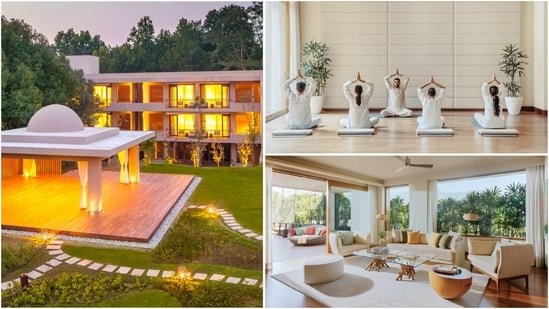
Tucked into a private valley where the Mussoorie hills rise sharply to the north and the city of Dehradun rests to the east, there is a place where architecture completely surrenders to nature. This is Six Senses Vana, a 21-acre sanctuary where towering Sal trees, holistic healing practices, and mindful living come together to create a true escape from urban chaos.


When I first read the brief about the trip, my Gen Z skepticism was on high alert, I pictured a “wellness center” as a clinical concept best left for older demographics, assuming my casual spa days and workout routines were all the self-care I needed. But after a short flight from Delhi and a scenic drive through Rajaji National Park, I found a soulful retreat that completely shattered my preconceptions and redefined what it means to actually heal a tired mind and body. (Also read: Bhopal’s best-kept wildlife secret lies just an hour from the city: 100 bird species, 18 mammals and not a single TV )
Step inside Six Senses Vana
My journey started with a short flight from Delhi to Dehradun’s Jolly Grant Airport, followed by a scenic drive through winding roads framed by dense greenery and distant hills. For someone prone to motion sickness, mountain drives are usually more ordeal than pleasure. Fortunately, the thoughtful team had stocked the car with dried ginger, handmade candies, and a refreshing tamarind drink. By the time my nausea subsided, the landscape outside had transformed into a moving postcard, mist-covered mountains, endless stretches of forest, and glimpses of the wilderness surrounding Rajaji National Park.


Nestled in its own secluded valley, Six Senses Vana feels worlds away from the noise of everyday life. Originally established as Vana Malsi Estate in 2014 by founder Veer Singh and later brought under the Six Senses umbrella in 2023, the retreat has retained the soul that made it special in the first place.
Designed by Spanish architecture firm Esteva i Esteva Arquitectura, the property embraces a restrained aesthetic. Buildings blend seamlessly into the landscape through muted tones, natural materials, and open spaces that invite the outdoors in. The moment I stepped inside, the soundtrack of city life disappeared. In its place came birdsong, rustling leaves, and the gentle sound of flowing water. The silence felt almost unfamiliar, a reminder of how rarely we experience true stillness.
Like many first-time visitors, my instinct was to immediately pull out my phone and document everything. I quickly learned that Vana encourages guests to disconnect. Phones remain on silent mode and are restricted to shared spaces, a simple rule that subtly nudges visitors back into the present moment. Here, every detail reflects a deeper philosophy: nature is not separate from us; we exist within it.
I stayed in one of the retreat’s forest suites, where floor-to-ceiling windows framed uninterrupted views of towering Sal trees. The interiors were understated yet elegant, dressed in soft creams and earthy browns that mirrored the surrounding landscape. Even the stone bathtub overlooked the forest canopy. Mango and litchi trees dotted the grounds outside my balcony, and I was warned—half jokingly—to keep the doors shut unless I wanted a curious monkey dropping by for a visit.


Living the ‘Vanavasi’ life
Perhaps the most charming part of the experience was trading my everyday wardrobe for Vana’s signature kurta-pyjamas. Every guest receives comfortable cotton attire, a woven tote bag, and slippers, becoming what the retreat affectionately calls a “Vanavasi”, a forest dweller. There was something unexpectedly liberating about putting away fashion choices and embracing simplicity for a few days.
My wellness journey officially began with a detailed consultation with a doctor who assessed everything from physical health markers and lifestyle habits to stress levels and emotional well-being. Based on this conversation, a personalised itinerary was created for my stay. The schedule included a mix of therapies, movement sessions, and restorative treatments designed around my individual needs rather than a one-size-fits-all wellness formula.


A Swedish massage on the first day eased away the fatigue of travel, but it was during subsequent sessions that the retreat’s holistic approach truly revealed itself. A combination of personal training, Yogayam, Tibetan therapies, and acupuncture exposed just how much tension I had been carrying in my body. During one session, my instructor pointed out significant tightness in my lower back, a consequence of spending long hours seated at a newsroom desk. It was a wake-up call. The discomfort I had normalised as part of my profession was, in fact, my body asking for attention.
The following day focused on restoration through guided meditation, an Ayurvedic massage, and a 24-karat gold facial. While the facial left my skin glowing, the meditation left a deeper impression. For perhaps the first time in months, my mind felt quiet. Not distracted, not planning, not processing a dozen unfinished tasks, just still.


Watsu, food and the philosophy of slowing down
Yet the most memorable experience awaited me on my final day.
My itinerary listed a treatment called Watsu, a form of aquatic bodywork performed in warm water. As someone who isn’t particularly comfortable in pools, I approached it with equal parts curiosity and skepticism. Within minutes, however, my reservations dissolved. Guided by a skilled expert, I floated weightlessly while gentle stretches and movements released tension I didn’t even know I was holding. The experience felt surprisingly emotional, part meditation, part therapy, part surrender. Suspended in water, I experienced a sense of calm that is difficult to put into words. For a few moments, I felt completely free of the mental clutter that often accompanies modern life.


Food at Vana follows the same philosophy as its therapies: intentional, balanced, and deeply personal. Portions are mindful rather than excessive, and meals are designed according to each guest’s wellness goals. Ingredients are seasonal, locally sourced wherever possible, and transformed into dishes that prove healthy eating need not be restrictive or boring. Every plate felt carefully considered, encouraging nourishment rather than indulgence.
What struck me most about Six Senses Vana was how seamlessly wellness is woven into every aspect of the experience. It is present not only in the treatments but also in the architecture, the food, the silence, the rituals, and the people who make the retreat feel welcoming rather than intimidating. Luxury here isn’t defined by extravagance. It is defined by attention, attention to detail, to health, to nature, and to the individual.


As my car pulled away toward Dehradun airport, I found myself reflecting on how dramatically my perception of wellness had changed in just a few days. I had arrived thinking it was a space reserved for older generations; I left understanding that wellness is an essential investment in ourselves, particularly in a world that constantly demands our attention.
Back in the newsroom, deadlines will continue to arrive, notifications will inevitably pile up, and life will resume its familiar pace. But whenever the noise feels overwhelming, I know I will think back to that moment in the warm water, floating beneath a canopy of calm. More than a luxury escape, Six Senses Vana offered something far more valuable: the reminder that slowing down is not a weakness, but a necessity.
How to reach: Six Senses Vana is about 60 minutes from Dehradun’s Jolly Grant Airport and 30 minutes from Dehradun Railway Station. It is a 5–6 hour drive from Delhi, while Rishikesh and Haridwar are both within a 90-minute drive.
Price: Packages start from ₹1.3 lakh per night (subject to change), with a minimum three-night stay. Rates include all meals, wellness consultation, one treatment per guest per night, airport transfers, access to wellness facilities, and curated group activities.
This article was produced following a hosted three-night stay by the author at Six Senses Vana, upon editorial invitation.


