


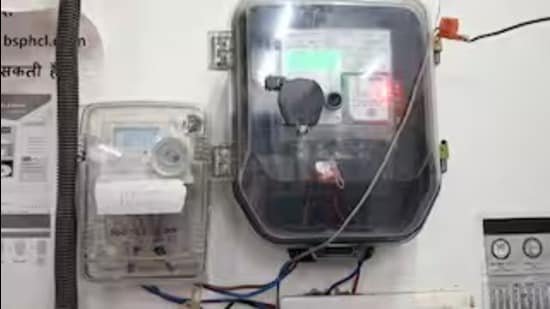
Around 8.7 million electricity consumers in Bihar using smart prepaid meters (SPMs) will face a differential tariff structure from April 1, with power usage during evening peak hours attracting a 10%–20% premium, while daytime consumption will fetch rebates of up to 20%.

The move follows the introduction of time of day (ToD) tariff by the Bihar Electricity Regulatory Commission (BERC) as part of the 2026–27 tariff order. Notably, the regulator has not approved any overall hike in electricity tariffs across consumer categories.
“All non-agricultural consumers with contract demand of more than 10 kilo-watt (kW), or those with smart meters irrespective of load, will mandatorily come under the ToD regime,” said Amir Subhani, chairman BERC, announcing the order on Wednesday.
BERC has divided the day into three consumption periods, with 9am to 5pm classified as off-peak hours, 5pm to 11pm as peak hours, and 11pm to 9am as normal load hours.
Domestic consumers in rural (DS-I) and urban (DS-II) categories using smart prepaid meters will receive a 20% rebate on the base tariff of ₹7.42 per unit (without state government subsidy) during off-peak hours, effectively bringing the rate down to ₹5.94 per unit. During peak hours between 5pm and 11pm, they will be charged a 10% premium, taking the rate to ₹8.16 per unit, while consumption during the normal period from 11pm to 9am will be billed at the normal tariff of ₹7.42 per unit.
Similarly, non-domestic service (NDS) and low-tension industrial service (LTIS) consumers, excluding agriculture, will receive a 20% rebate during off-peak hours on the base tariffs of ₹7.79 per unit (without state government subsidy) for rural NDS and LTIS consumers and ₹7.73 per unit for urban NDS consumers. However, they will pay a 20% premium on the normal energy charges for electricity consumed during peak hours; the standard tariff will apply during the normal period.
“The ToD tariff has been introduced in line with the Centre’s Electricity (Right of Consumers) Rules, 2023, to balance electricity demand and supply,” said Arun Kumar Sinha, BERC member (technical). He said the state generally remains power-surplus during the daytime and often sells excess electricity on power exchanges, but faces a deficit during evening peak hours.
Sinha added that the differential pricing intends to encourage consumers to shift their electricity consumption pattern to off-peak hours between 9am and 5pm and reduce consumption during peak hours from 5pm to 11pm.
Officials also noted that the off-peak period coincides with “solar hours”, when electricity generation from solar power plants is higher, making daytime power more readily available and cost-effective, as solar power is comparatively cheaper than thermal power.
The South Bihar Power Distribution Company Limited (SBPDCL), responsible for electricity distribution in 17 districts of southern Bihar, including Patna, Gaya and Nalanda, currently has 2,941,351 smart prepaid meter consumers. The remaining around 5,758,649 consumers come under the North Bihar Power Distribution Company Limited, which serves 21 Bihar districts.
