
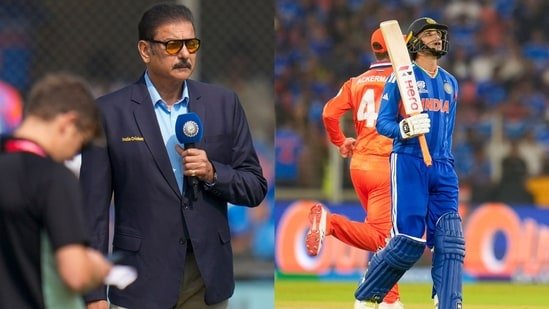
India can afford to keep faith in Abhishek Sharma because the tournament hasn’t punished them for it yet. Three ducks in three appearances is a brutal headline for any opener. However, India still walked into the Super 8s of the T20 World Cup 2026 unbeaten, which is exactly why the conversation has shifted from survival to timing.
The timing is where Ravi Shastri has planted his flag. Speaking on the ICC Review, Shastri argued India shouldn’t treat Abhishek’s run of zeros as a crisis, but as a warning sign for everyone else – because a quiet powerplay weapon can turn into the loudest problem once the knockouts begin.
“I look at it as a positive that Abhishek Sharma has got three zeroes. So, save your best for the important periods in the tournament. Teams will be a little worried that he’s not got runs,” Shastri said.
It is a deliberately counterintuitive framing, but it fits Abhishek’s role in this India side. He isn’t picked to compile; he’s picked to break the first six overs. When a batter with that mandate fails three times, the instinct is to overcorrect – tweak his method, push him into safety mode, or even tinker with the XI. Shastri’s message is the opposite: don’t blink first because the upside is still tournament-shaping.
“I think the positive is that in every game, there has been someone who stood up. It has been Ishan Kishan, sometimes Suryakumar Yadav, in the first game. Tilak Varma has played his part. He’s got off to starts but I still think the best of him is still to come,” said Ravi Shastri.
That supporting cast matters because it protects Abhishek from becoming a selection debate every other day. If your middle order is constantly rescuing you, you start chasing stability. If the rest are already delivering, you can keep the opener’s brief intact – even if it looks ugly on the scorecard.
Why Shastri thinks India won’t tinker with Abhishek
Shastri also pulled the conversation toward balance, not batting alone – especially with dew becoming a factor as the tournament moves deeper. That is where India’s composition becomes the bigger story than one player’s early numbers: they want depth with enough bowling options to stay flexible.
“When there’s dew around, you need that extra bowling option. Whether it’s a Shivam Dube, whether it’s a Hardik Pandya bowling his full quota of overs, whether it’s Tilak Varma who might roll his arm for an over or two, you need those options. I don’t think they’ll tinker with the side. I think the team that played in the last game was a good side,” Shastri added.
In other words: India don’t need Abhishek to justify his place with cautious 25s. They need him to remain a threat – the kind that forces opponents to plan for chaos even when his tournament runs column reads zero. And with India opening Super 8s against South Africa, Shastri’s broader point lands: this is no longer group-stage comfort cricket.
“They have got depth in batting. India have got depth in batting. I think this is a cracking contest. This is two of the strongest teams, one would say, playing in this tournament…,” Shastri further added.
For India, the hope is simple: the ducks stay in the past, the intent stays the same – and Abhishek Sharma’s first real innings arrives exactly when the tournament stops offering second chances.
