


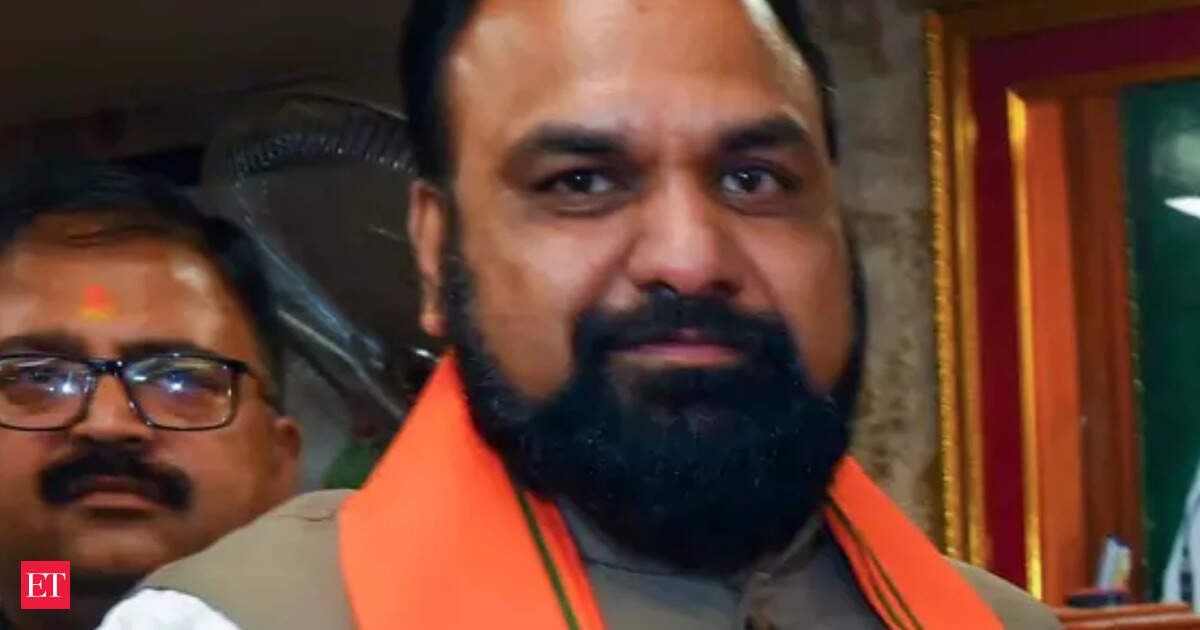
Choudhary currently serves as Deputy Chief Minister and holds the Home portfolio, and comes from a politically influential family. His father, Shakuni Choudhary, was a prominent figure in Bihar politics. Choudhary Senior’s standing provided Samrat early exposure to grassroots mobilisation and the state’s complex electoral dynamics.
Entering politics at a young age, Choudhary built his career through a combination of organisational roles, electoral contests and ministerial assignments. His political journey includes stints with the Rashtriya Janata Dal and the Janata Dal (United) before aligning with the BJP, reflecting the fluid alliances characteristic of Bihar’s coalition-driven landscape.
Rise within BJP
Choudhary’s political trajectory saw a decisive shift after he joined the BJP, where he rose quickly through the ranks. His appointment as president of the party’s Bihar unit in 2023, succeeding Sanjay Jaiswal, marked a turning point and signalled the party leadership’s confidence in his ability to expand its social base.
He is widely regarded as a key Other Backward Classes (OBC) face within the BJP, representing the influential Kushwaha/Koeri community. This positioning has made him central to the party’s strategy of broadening its appeal beyond traditional upper-caste support.
Also read | Posters declaring Samrat as new Bihar CM put up outside Patna BJP office
Known for his combative political style, Choudhary has often adopted an aggressive stance against rivals. His symbolic gesture of wearing a turban during the BJP’s break with JD(U), vowing to remove it only after the party returned to power, reinforced his image as an assertive leader.
Role in government
Following political realignments in the state, Choudhary was elevated to the post of Deputy Chief Minister and entrusted with key responsibilities, including the Home department. His tenure has been marked by a focus on administrative reforms, particularly in areas such as traffic management, policing efficiency and institutional capacity-building.
He has also been associated with governance initiatives aimed at improving transparency and attracting investment, including efforts to streamline Corporate Social Responsibility (CSR) flows into development and welfare projects. Additionally, he has played a role in monitoring the implementation of large-scale state projects, pushing for timely execution.
Electoral profile
Choudhary has maintained a strong presence in electoral politics, contesting from constituencies such as Tarapur in Munger district. His political profile reflects both grassroots engagement and statewide visibility.
Like many politicians in Bihar, his election affidavits have drawn scrutiny over issues such as declared assets, educational qualifications and pending legal cases. However, these have not significantly dented his political standing, as his role in both party organisation and governance continues to expand.
Political positioning
Choudhary’s political approach blends assertive rhetoric with organisational discipline. He has been a vocal critic of opposition leaders, including Rahul Gandhi, while aligning closely with the BJP’s broader narrative centred on development, nationalism and social justice.
His messaging seeks to combine caste-based mobilisation with the party’s national agenda, positioning him as a bridge between regional social dynamics and the BJP’s wider political strategy.
Coalition dynamics
A key aspect of Choudhary’s political journey is his evolving relationship with Nitish Kumar. Once a sharp critic, he now operates within a coalition framework that requires careful coordination.
Also read | Nitish Kumar takes Rajya Sabha oath
Managing this balance is particularly important in sustaining the “Luv Kush” social coalition of Kurmis and Koeris, which remains crucial to electoral success in Bihar. His ability to navigate this dynamic will be central to his prospects as a future chief ministerial candidate.
Strengths and challenges
Choudhary’s emergence as a frontrunner for the top post is underpinned by several factors, including his strong OBC support base, organisational experience as former state BJP president, and administrative exposure as Deputy CM.
At the same time, challenges remain. The BJP’s alliance with JD(U) complicates any immediate leadership shift, while controversies and the need to expand his appeal beyond specific caste groups could test his statewide acceptability. Internal competition within the BJP also adds another layer of complexity.
Choudhary’s rise reflects the evolving contours of Bihar politics, where caste equations, coalition compulsions and national party strategies intersect. From a regional leader with a political legacy, he has emerged as one of the BJP’s most significant faces in the state.
Whether he ultimately succeeds Nitish Kumar will depend on a set of critical factors that includes alliance equations and the BJP’s long-term plans. For now though, Choudhary has moved firmly into the centre of Bihar’s political discourse, positioning himself as a key figure in the state’s leadership transition.
