


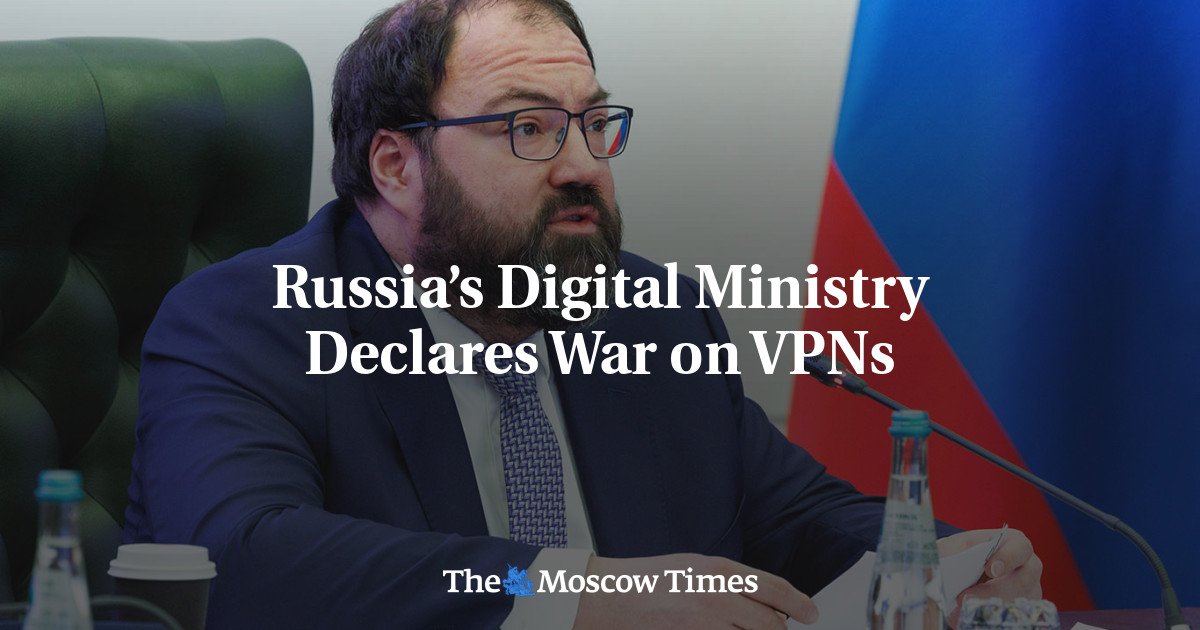
Russia’s Digital Development Minister Maksut Shadayev said Monday that the government will begin cracking down on the use of virtual private networks, or VPNs, a common tool that Russians have increasingly turned to in recent years to get around internet surveillance and censorship.
“We have an obligation to fulfill the tasks that have been set before us. In this case, the task is to reduce the use of VPNs,” Shadayev said in a chat for IT professionals on the state-backed messenger Max.
Shadayev linked the push to what he described as “long, difficult and ultimately unsuccessful” talks with foreign tech companies over compliance with Russian laws, which require that firms maintain a physical presence in the country.
His comments came after reports suggested that President Vladimir Putin had ordered the Digital Development Ministry to explore new ways to limit VPN use.
According to those reports, Shadayev asked mobile internet operators to charge customers who exceed 15 gigabytes of international data traffic per month starting May 1.
Because VPNs work by routing a user’s internet connection through servers outside Russia, thus allowing them to appear as if they are browsing from abroad and access blocked websites, that kind of measure would effectively make VPN use more expensive.
In addition, Shadayev reportedly told Russian tech companies like Yandex and Wildberries to restrict access to their platforms if they detect that a user is connected to a VPN.
The minister on Monday publicly acknowledged that the proposed penalties for VPN use have “sparked a storm of emotions,” but defended them as a “difficult compromise.”
“We understand all the consequences, but all other options are significantly worse,” Shadayev said.
He also said that officials discussed the possibility of making VPN use a criminal offense subject to administrative fines, but dismissed the idea as a “blunt solution which we categorically dislike.”
Downloads of VPNs surged in Russia after authorities started blocking Western social media platforms and scores of Russian independent news outlets following the 2022 invasion of Ukraine.
Authorities in 2023 launched a campaign to warn the public about what they say are the dangers of using VPN services. Observers said the campaign was aimed at stifling free speech and limiting access to independent news sources.
The proposed restrictions on VPNs follow months of mobile internet disruptions across the country and government-imposed slowdowns of popular messaging services WhatsApp and Telegram.
A Message from The Moscow Times:
Dear readers,
We are facing unprecedented challenges. Russia’s Prosecutor General’s Office has designated The Moscow Times as an “undesirable” organization, criminalizing our work and putting our staff at risk of prosecution. This follows our earlier unjust labeling as a “foreign agent.”
These actions are direct attempts to silence independent journalism in Russia. The authorities claim our work “discredits the decisions of the Russian leadership.” We see things differently: we strive to provide accurate, unbiased reporting on Russia.
We, the journalists of The Moscow Times, refuse to be silenced. But to continue our work, we need your help.
Your support, no matter how small, makes a world of difference. If you can, please support us monthly starting from just $2. It’s quick to set up, and every contribution makes a significant impact.
By supporting The Moscow Times, you’re defending open, independent journalism in the face of repression. Thank you for standing with us.
Continue
Not ready to support today?
Remind me later.
×
Remind me next month
Thank you! Your reminder is set.
