


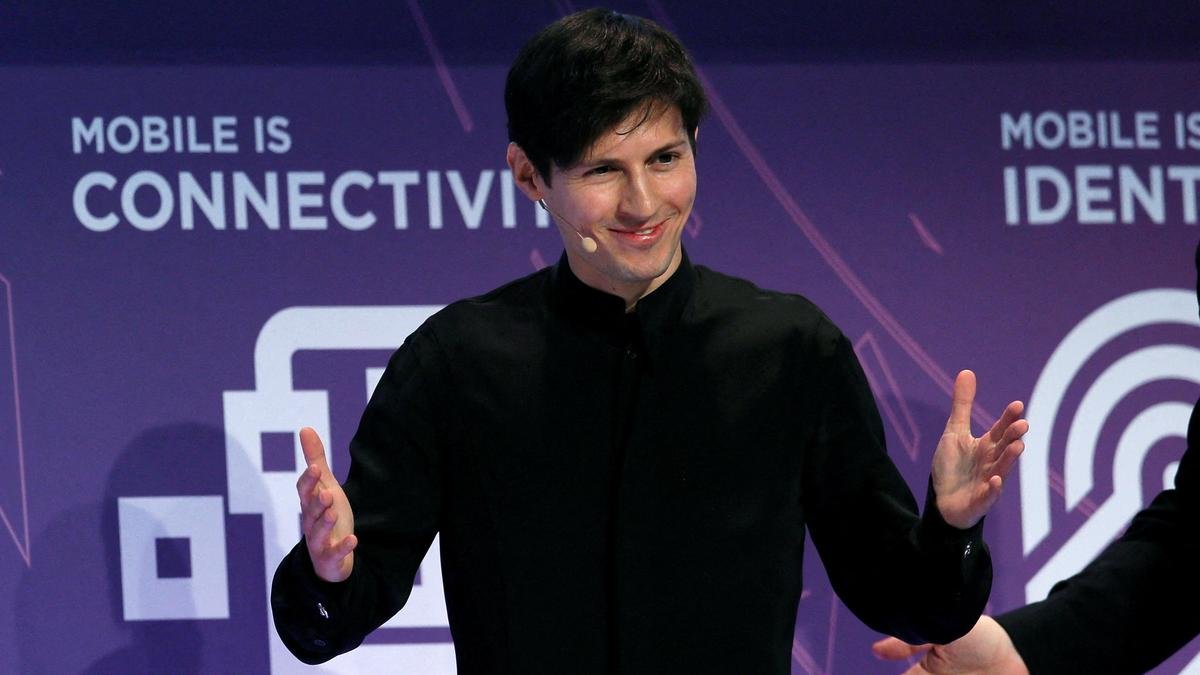
Founder and CEO of Telegram, Pavel Durov. File picture
| Photo Credit: Reuters
Pavel Durov, the founder of the Telegram messaging app, said on Tuesday (February 25, 2026) that the Russian government had opened a criminal investigation against him on charges of “aiding terrorism.”
Mr. Durov, who was born and began his career in Russia, accused Moscow of fabricating pretexts to restrict access by Russians to the Telegram service as part of an attempt to “suppress the right to privacy and free speech.”
“A sad spectacle of a state afraid of its own people,” Mr. Durov wrote on social media.
Russian media outlets had begun circulating unconfirmed reports earlier in the day that a criminal investigation had been opened against Mr. Durov by Russia’s Federal Security Service, or FSB.
Also Read | Telegram’s Pavel Durov says proposed Spanish social media restrictions seek to censor critics
It comes two weeks after Russia’s communications watchdog, Roskomnadzor, announced it would restrict the Telegram app, accusing the company of refusing to comply with Russian law.
The move triggered a rare wave of public outcry, including widespread criticism from pro-Kremlin military bloggers, who warned that Telegram was widely used by Russian troops fighting in Ukraine and restricting its service would derail military communications.
However, Russian officials have continued to portray Telegram as a security risk. Digital development Minister Maksud Shadayev told Russian news wire Interfax that foreign intelligence agencies could be reading messages sent through Telegram by Russian soldiers on the front line.
When asked about the case, Kremlin spokesperson Dmitry Peskov said on Tuesday (February 24, 2026) that the FSB had gathered information on a “large number of violations” by Telegram, as well as content that could “potentially pose a danger to our country.” He said Telegram had been unwilling to cooperate with the authorities.
“Based on this, the relevant agencies are taking measures they deem appropriate,” Mr. Peskov said.
Russian authorities have targeted YouTube and imposed restrictions on popular messaging platforms, blocking Signal and Viber and banning online calls on WhatsApp and Telegram. In December, restrictions were imposed on Apple’s FaceTime video calling service.
While it’s still possible to circumvent some of the restrictions by using virtual private network services, many of them are routinely blocked too.
At the same time, Russia actively promotes the “national” messaging app known as MAX, which critics say could be used for surveillance. The platform — touted by developers and officials as a one-stop shop for messaging, online government services, making payments and more — openly declares it will share user data with authorities upon request. Experts also say it doesn’t use end-to-end encryption.
Mr. Durov has faced criminal investigations elsewhere. In 2024, he was arrested in Paris over allegations that his platform was being used for illicit activity, including drug trafficking and the distribution of child sexual abuse images.
Published – February 25, 2026 12:51 am IST
