


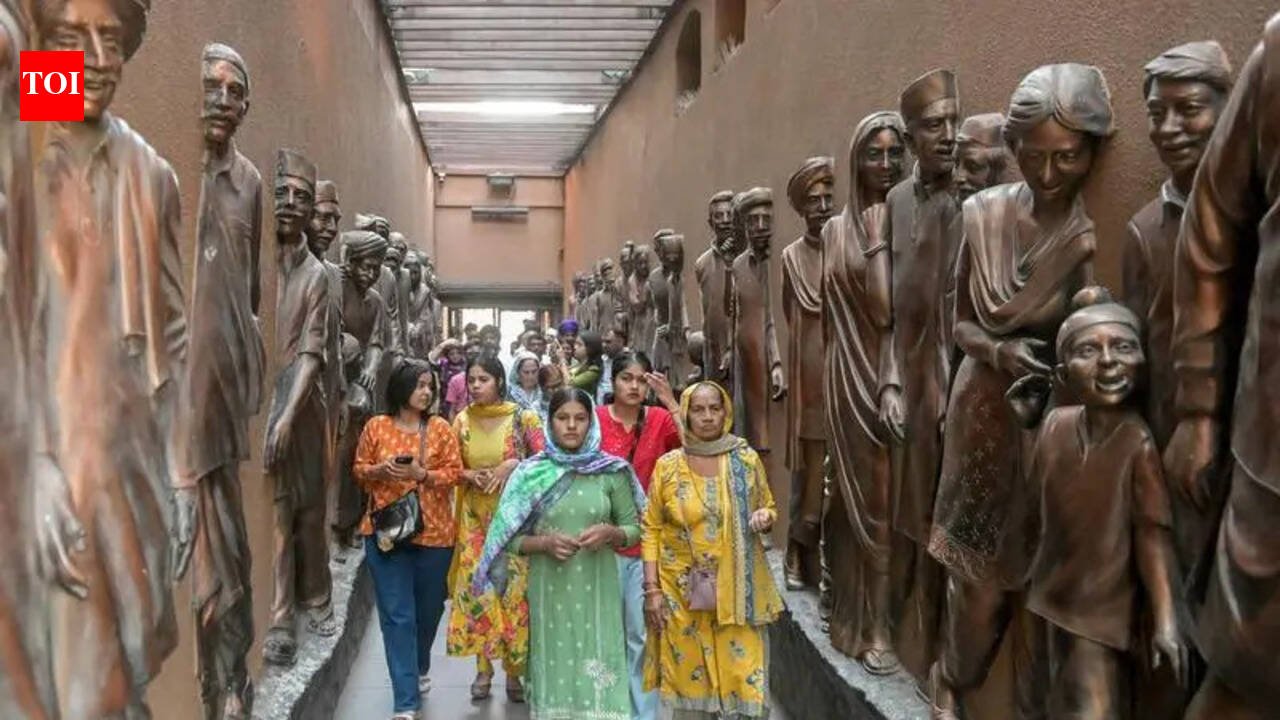
Chandigarh: Compensation after the Jallianwala Bagh massacre was calculated through a formula that tied the value of life to income, age and dependents. It produced payouts ranging from a few thousand rupees for deaths to under Rs 100 for minor injuries, allowed some injured persons to receive more than families of the dead, drew objections within the colonial administration, and triggered sharp public debate over “blood money”, a research study has found. The study by Rudresh, conducted under the guidance of Prof Manju Malhotra at Panjab University’s department of history, is based on compensation registers, proceedings of the Punjab Disturbances Compensation Committee (Langley Committee), and official correspondence from 1920-22. According to the research, compensation exceeding Rs 21.3 lakh was sanctioned, with an additional Rs 1.3 lakh later approved, taking the total beyond Rs 22 lakh. Of this, 218 death claims and 146 injury claims related specifically to Jallianwala Bagh were accepted, along with claims from Lahore, Gujranwala, Kasur and other districts. The committee adopted a structured method, using annual incomes, typically between Rs 300 and Rs 500, to estimate future earning capacity and convert it into a lump sum. This meant compensation was linked primarily to economic productivity rather than the circumstances of death. As a result, most families of those killed received between Rs 2,500 and Rs 10,000. Injured persons were categorised into temporary, partial permanent and permanent disability. Minor injuries drew Rs 60 to Rs 800, while severe disabilities, such as amputations, attracted significantly higher payouts—occasionally up to Rs 60,000. The study notes this framework led to uneven outcomes, with some injured individuals receiving more than families of the deceased because permanent disability was treated as a continuing economic loss. Case records included occupation, dependents and income, followed by a “capitalised value” and a fraction—often one-half or three-fourths—to arrive at the final amount. Compensation was distributed among dependents, typically allocating half to widows and dividing the rest among children, with minors’ shares often earmarked for investment. Among the 244 families that accepted compensation, 94 had children below 18 years, and several widows were under 25. Over time, the scope expanded beyond deaths and injuries to include property damage, flogging, bombing incidents—particularly in Gujranwala—and losses during martial law. Payments ranged from small sums for damaged goods or livestock to larger awards for permanent disability. Despite the structured system, the policy remained contested within the colonial administration. The govt recorded there was “no justification” for compensating cases where firing had been declared justified and maintained such payments should not be seen as approval. Yet, the Punjab government proceeded, viewing compensation as necessary to manage public sentiment. Public response was divided. Many families, particularly from economically weaker backgrounds, accepted compensation out of necessity. Others rejected it as “blood money”, arguing that it reduced loss to a financial transaction. Contemporary newspapers criticised recipients, while some acknowledged the payments, though limited, were essential for survival. The study also points to administrative gaps: many victims or families failed to apply in time due to lack of awareness, fear or displacement. More than 60 late applications were recorded but largely rejected, even where funds remained unspent. It argues that compensation was not merely humanitarian relief but a calculated strategy to restore the colonial state’s image after extreme violence. It draws parallels with cases such as the Croke Park massacre and the Mau Mau rebellion, where financial settlements were used to manage political fallout. The findings underline how compensation after Jallianwala Bagh was not just an administrative exercise, but a contested process that quantified loss, reflected policy contradictions and exposed the limits of colonial accountability. BoxTotal amount exceeded Rs 22LTotal compensation exceeded Rs 22 lakh218 death and 146 injury claims accepted for Jallianwala BaghDeath payouts ranged from Rs 2,500 to Rs 10,000Compensation for minor injuries was between Rs 60 and Rs 800. In rare severe cases up, it was up to Rs 60,000Annual incomes that were used in calculations were Rs 300 to Rs 500Compensation was linked to earning capacity, not nature of violenceInjured in some cases received more than families of the deceased244 families accepted compensation, 94 had children below 18Scope later extended to property damage, flogging, martial law lossesOver 60 late claims largely rejected
