


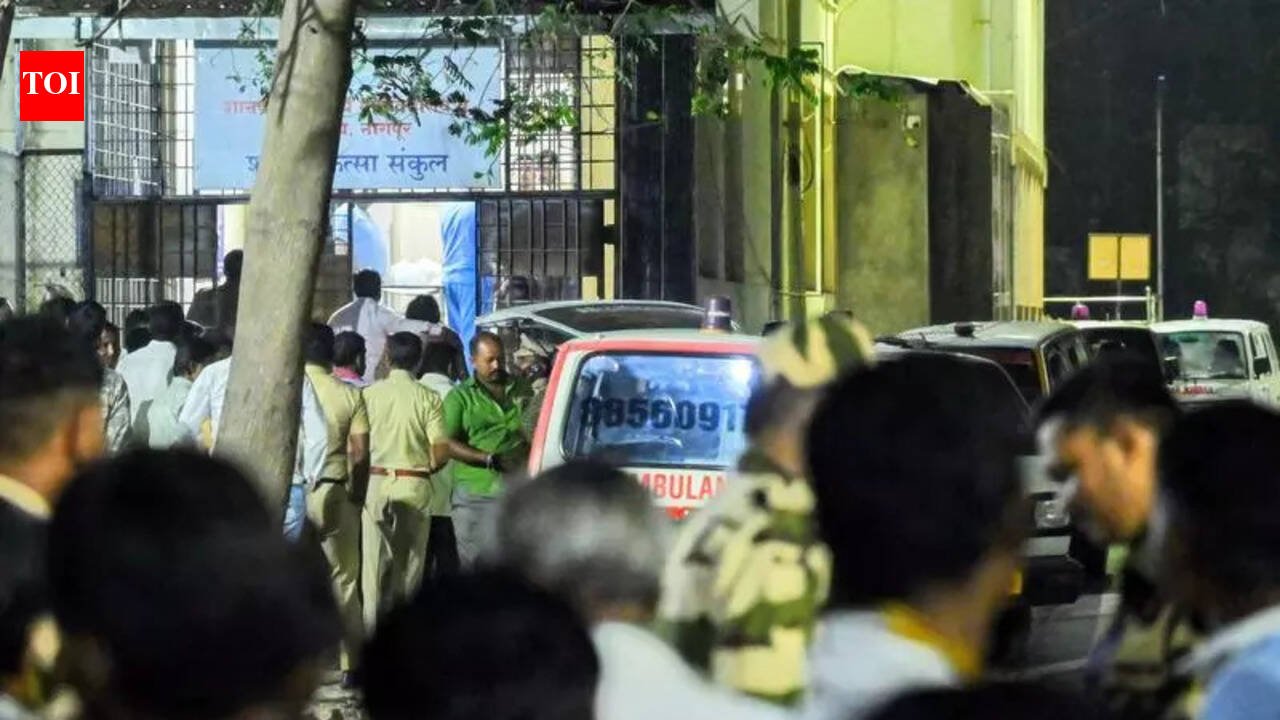
Nagpur: For the 19 families, the long wait outside Govt Medical College And Hospital (GMCH) mortuary ended on Monday evening — thanks to a Regional Forensic Science Laboratory (RSFL) team that refused to rest round-the-clock until every victim was identified. The bodies recovered were severely mutilated, charred, and fragmented, making visual identification impossible and necessitating advanced DNA matching.The RFSL on Monday completed DNA profiling and positively identified all 19 victims of Sunday’s devastating explosion at an ammunition and explosives factory in Raulgaon village, Kalmeshwar tehsil, within a mere 23 hours.With collector Dr Vipin Itankar camping at the GMCH with dean Dr Raj Gajbhiye, the RFSL’s DNA team raced against time. Itankar was learnt to follow up with RFSL for early reports.The mourning relatives of the blast victims from the Kalmeshwar-based ammunition manufacturing unit, waiting impatiently outside the GMCH, were finally able to return to their respective villages with the mortal remains of the highly mutilated, charred, and severed bodies to perform the last rites. The explosion, which ripped through the high-risk Nonel crimping and packing section around 7am on March 1, claimed 19 lives — many of them women — and left more than 20 others injured, some in critical condition. A dedicated five-member RFSL DNA team, led by director Dr Vijay Thakare and deputy director Ashwin Gedam, was mobilised immediately. The DNA team began operations at 6pm on Sunday, with scientific officers rushing to GMCH to collect samples from the remains.The team worked tirelessly through the night, completing the analysis by 5pm on Monday. The identification reports were swiftly delivered, allowing mortuary staff to match profiles, reassemble remains where feasible, and release the bodies to grieving families.This unprecedented turnaround — from sample collection to full identification in under 24 hours — brought much-needed solace to families who kept a painful vigil outside the GMCH mortuary since Sunday. “We waited in agony, unsure who was who,” one relative recounted. “Now we can finally mourn and perform the last rites with dignity.”Other analysis and investigations continued as another five-member toxicology team analysed viscera to exclude factors such as intoxication under the influence of alcohol or other consumption, while a three-member explosives unit examined the detonation triggers, including involved chemicals and detonators. Detailed reports are anticipated by Wednesday, said a source.Forensic teams earlier deployed to the blast site for evidence collection, supported by a mobile forensic van. At GMCH, Dr Anindya Mukherjee’s forensic unit worked relentlessly for 17 straight hours to embalm fragmented remains and prepare them for respectful handover.
