



Republican hawks have issued a rare rebuke of Donald Trump over his planned peace deal with Iran, describing it as a “disaster” and questioning why the US president launched the war in the first place.
Allies of Trump who strongly backed his controversial decision to order war on Iran alongside Israel urged him to “hold the line” this weekend, despite mounting economic costs and no sign of progress on many of the the initial objectives set out by his administration.
With the Iranian government apparently in jubilant mood, members of Trump’s own party responded furiously to reports that a proposed deal contained major concessions from Washington.
Roger Wicker, who chairs the Senate armed services committee, said the “rumored 60-day ceasefire” would be a “disaster” in a post on social media. “Everything accomplished by Operation Epic Fury would be for naught,” he added.
After suggesting on Saturday that a deal was within reach, Trump seemed to row back on Sunday morning, after the angry response from some corners of his party. Talks were progressing in an “orderly and constructive” manner, the president insisted, adding: “I have informed my representatives not to rush into a deal in that time is on our side.”
Trump had claimed on Saturday that a memorandum of understanding to end the war had been “largely negotiated” and was waiting to be finalized. The US president said on his Truth Social platform that the agreement would include opening of the strait of Hormuz, a crucial chokepoint for global trade, which Iran has effectively shut since the US and Israel started the war in February.
But the US president did not mention Iran’s nuclear program and highly enriched uranium, despite repeatedly insisting that Tehran renounce any nuclear ambitions was a “red line” in negotiations to end the war. Iranian officials have sought to negotiate those matters at a later date.
The peace draft includes a 60-day ceasefire extension, during which the strait of Hormuz would be reopened, according to Axios. Iran would agree to clear mines it deployed in the strait and allow ships to pass freely, and in exchange, the US would lift its naval blockade on Iranian ports. During that time Iran would also be able to freely sell oil and negotiations would be held on the nuclear issue.
The apparent concessions from Washington have triggered alarm among several Republican foreign policy hawks.
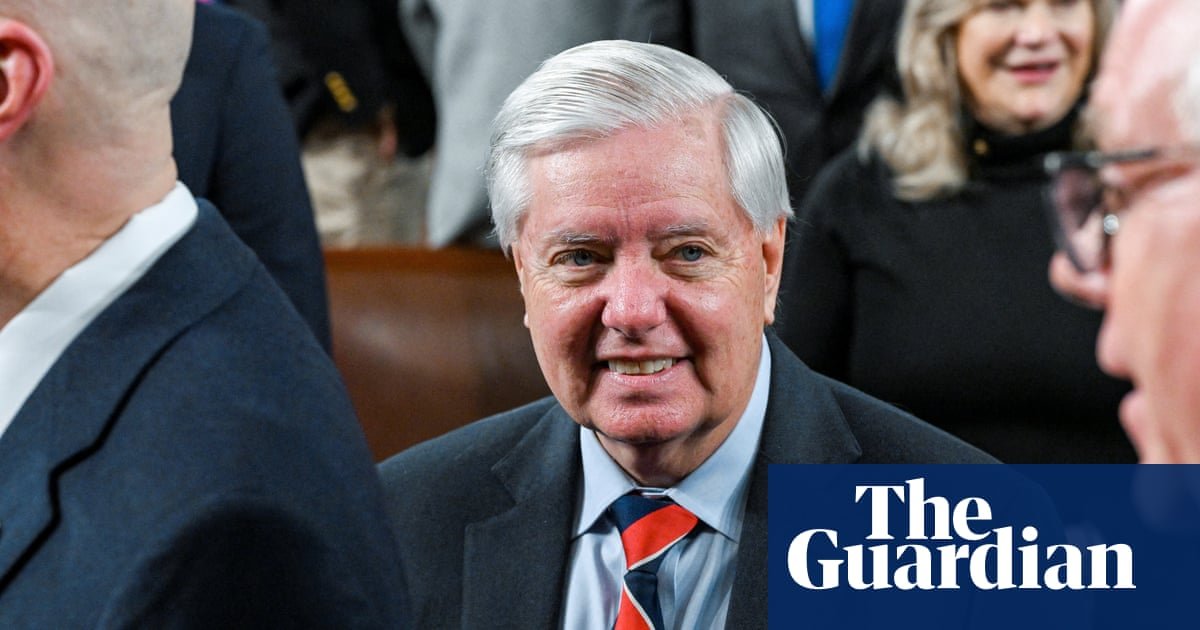
Senator Lindsey Graham, a close ally of Trump, warned: “If a deal is struck to end the Iranian conflict because it is believed that the strait of Hormuz cannot be protected from Iranian terrorism and Iran still possesses the capability to destroy major Gulf oil infrastructure, then Iran will be perceived as being a dominate force requiring a diplomatic solution.”
The perception of Iran being able to “terrorize” the strait of Hormuz, and its ability to damage oil infrastructure across the Gulf, amounts to a “major shift of the balance of power in the region and over time will be a nightmare for Israel”, Graham argued.
“Also, it makes one wonder why the war started to begin with if these perceptions are accurate,” he added, stressing the need for the US to “get this right”.
Tom Cotton, who chairs the Senate intelligence committee reposted Graham’s comments, while Texas senator Ted Cruz said he was “deeply concerned” by reports about the emerging agreement.
“If the result of all that is to be an Iranian regime – still run by Islamists who chant ‘death to America’ – now receiving billions of dollars, being able to enrich uranium & develop nuclear weapons, and having effective control over the Strait of Hormuz, then that outcome would be a disastrous mistake,” Cruz wrote on X.
Trump, he said, “should continue to hold the line, defend America & enforce the red lines he has repeatedly drawn”.
Responding to a Trump supporter who criticized his position, and said “no one asked” for his opinion, Cruz replied that “young political grifters pushing Iran appeasement are not remotely helping the President.”
Criticizing Trump’s agenda often prompts a swift backlash from the president and his senior officials.
In a second statement on Sunday, Senator Graham hailed a “brilliant proposal by President Trump”, suggesting that several countries in the Middle East could join the Abraham accords, diplomatic agreements brokered in 2020 in which several Arab nations agreed to recognize Israel.
“It is a brilliant move by President Trump,” declared Graham, publicly warning countries including Saudi Arabia that failure to join the accords would be a “major miscalculation”.
Mike Pompeo, who served as secretary state and CIA director under the first Trump administration, sharply criticized the deal being floated as “not remotely America First”.
In a harsh post on X, he compared the terms to the those of the 2015 nuclear agreement negotiated by the Obama administration, which Trump later abandoned, and has long chastised.
“It’s straightforward,” Pompeo claimed. “Open the damned strait. Deny Iran access to money. Take out enough Iranian capability so it cannot threaten our allies in the region. Overdue. Let’s go.”
Trump’s current secretary of state, Marco Rubio, hailed “significant” progress on Sunday. “I do think perhaps there is the possibility that in the next few hours the world will get some good news,” Rubio told reporters during a diplomatic visit to India.


