
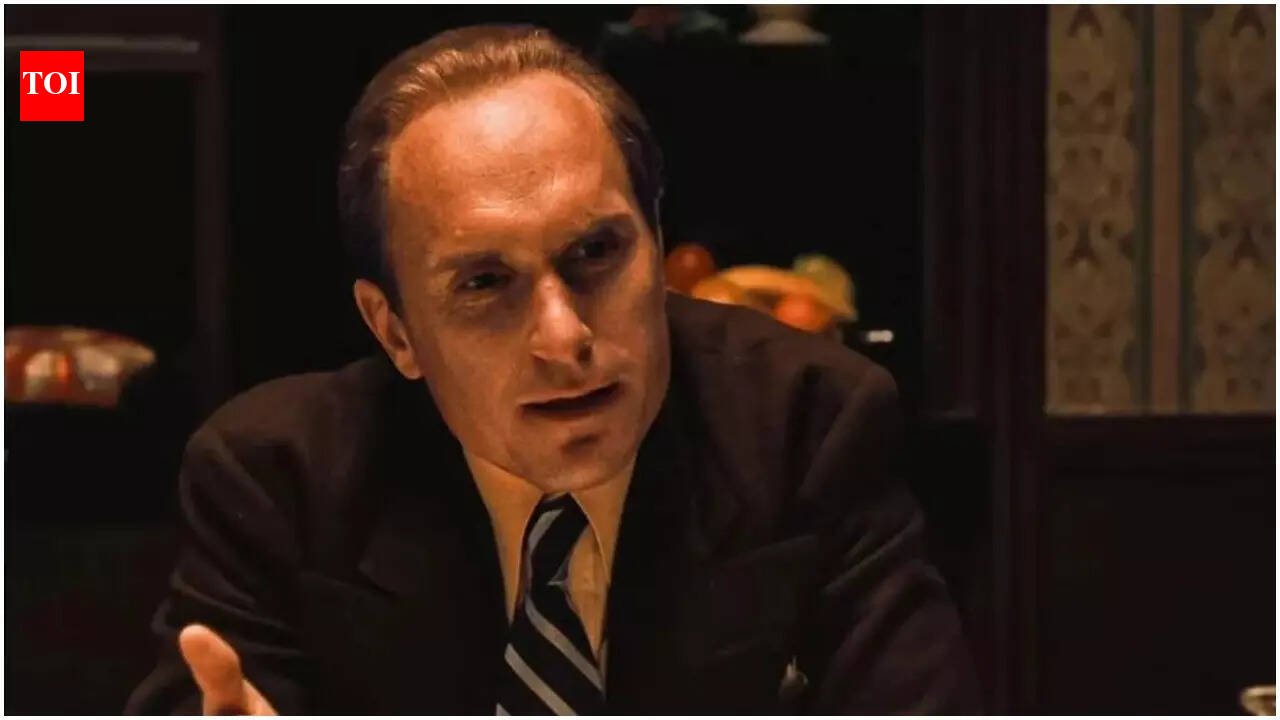
“A lawyer with his briefcase can steal more than a hundred men with guns.” Everyone remembers Robert Duvall as Tom Hagen when they hear that line, because in a single sentence, he distilled the essence of a character who quietly reshaped how cinema understood power. Hagen was not the loudest presence in The Godfather, nor the most feared, nor the most flamboyant. He was something more enduring: the mind that translated violence into legitimacy, chaos into order, crime into procedure. With that role, Duvall created a modern archetype of the counsellor, one whose authority came not from charisma but from discipline, calmness, and the ability to make the inevitable sound reasonable. It is fitting that when Duvall died at 95, the image that returned most vividly was not of a grand speech or a theatrical flourish, but of a man speaking quietly while the machinery of power moved around him.Yet Duvall’s legacy extends far beyond Hagen, even though Hagen remains its most precise expression. He first entered the cinematic imagination as Boo Radley in To Kill a Mockingbird (1962), a role that lasted only minutes yet transformed the emotional core of the story. Boo exists for most of the film as rumour and fear, a figure shaped by prejudice rather than reality. When Duvall finally appears, he does something extraordinary: he replaces myth with humanity. His Boo looks fragile, almost startled by light, a man who has lived too long in isolation. The performance turns a story about fear into a story about empathy, distilled in the simplest line spoken to him: “Hey, Boo.” In that quiet moment, Duvall revealed a lifelong artistic instinct: to locate vulnerability where audiences expected spectacle.
A decade later, he transformed that instinct into a very different form of restraint with Tom Hagen in The Godfather. Hagen is neither a gangster nor a hero. He is the language that makes gangsters sound respectable. Duvall plays him with a composure so complete that it becomes unsettling. Hagen does not argue morality or indulge emotion; he manages outcomes. His presence reframed the cinematic idea of the counsellor. Before Hagen, advisers were typically portrayed as either moral voices pleading for restraint or conspirators whispering betrayal. Duvall created something more complex: a counsellor whose role is not to judge but to ensure continuity. He embodies the uncomfortable truth that systems endure not because of force alone, but because someone translates force into legitimacy.
Then came Lt. Col. Bill Kilgore in Apocalypse Now, perhaps Duvall’s most culturally enduring performance. Kilgore is charismatic, confident, and entirely coherent in his worldview. What makes him terrifying is not instability but conviction. He believes fully in what he says, and that belief makes his most famous line unforgettable: “I love the smell of napalm in the morning.” Delivered with casual satisfaction, it captures a chilling truth about the human capacity to aestheticise destruction.
Duvall’s career repeatedly returned to father figures, where his restraint became almost painful to watch. In The Great Santini, he played a Marine officer whose identity depended on control and authority. The character is frightening precisely because he is recognisable: a man who confuses dominance with love. His defining declaration, “I am the Great Santini,” reveals a tragic need to assert identity loudly because he cannot sustain it quietly.He later offered a striking counterpoint in Tender Mercies, portraying Mac Sledge, a former country singer struggling with alcoholism and regret. The performance rejects dramatic transformation in favour of gradual repair. Duvall’s decision to sing himself gave the role an authenticity that cannot be replicated. Mac’s most revealing line, “I don’t trust happiness,” reflects a lifetime shaped by disappointment and cautious hope.
Across all these roles runs a single thread: Duvall’s commitment to authenticity. He did not seek attention through flamboyance. He built characters through observation. Even his most theatrical performances felt anchored in lived reality. He could move between genres without altering his method because his focus remained constant: the human being beneath the role.That is why his legacy cannot be reduced to iconic moments alone. His greatness lies in consistency. He treated acting not as spectacle but as discipline. He never tried to make audiences admire him. He aimed to make them recognise something true.Boo Radley stepping out of shadow in To Kill a Mockingbird: “Hey, Boo.” Tom Hagen in The Godfather: “A lawyer with his briefcase can steal more than a hundred men with guns.” Lt Col Kilgore in Apocalypse Now: “I love the smell of napalm in the morning.” Bull Meechum in The Great Santini: “I am the Great Santini.” Mac Sledge in Tender Mercies: “I don’t trust happiness.”Different films, different decades, different facets of the same country. One actor devoted to a single principle: truth presented without ornament.
