


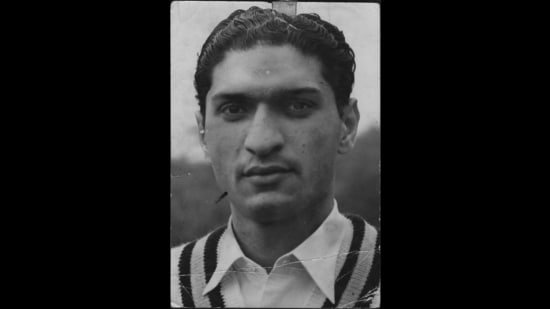
MUMBAI: “Mr. Cricket is the first phrase that comes to mind”, said Dilip Vengsarkar. “He knew everything about the game. He had an answer for everything.”
It remains a tidy way of describing Polly Umrigar, a man who donned multiple caps: captain, administrator, selector, manager and curator.
On his 100th birth anniversary on Saturday, a commemorative plaque was unveiled by former BCCI and ICC president Sharad Pawar at the MCA Museum at Wankhede Stadium.
Belovedly called ‘Polly kaka’, he was the country’s premier batsman in the 50s and early 60s at a time when Indian batting, particularly overseas, was still finding its feet. By the time he retired, he held the country’s principal records of most matches, runs and centuries until a certain Sunil Gavaskar surpassed them in 1978. He was the first Indian to score a double hundred and reach 3,000 Test runs. He also led Mumbai to three Ranji Trophy titles, and today the BCCI’s annual Cricketer of the Year award bears his name. Few cricketers have remained as closely tied to the game, in as many capacities, for as long.
But numbers alone do not explain Umrigar. For that, one must return to his penultimate test, Port of Spain, 1962.
India were, as was often the case then, struggling to hold their ground against a formidable West Indies side. Umrigar took five wickets in the first innings and then, fought brilliantly with the bat. At 30 for 5, he added 94 with Mansoor Ali Khan Pataudi. Asked to follow on, he built partnerships again—93 with Bapu Nadkarni and 51 with Budhi Kunderan—finishing unbeaten on 172 but his heroics could not save India from defeat.
That was Umrigar in essence. A silver lining in India’s losing causes.
“In those days he was considered as the mountain of Indian batting because to score 3000 runs against the quickest bowlers of West Indies, Australia and England was a mammoth feat,” said former Indian cricketer Karsan Ghavri.
The allrounder from Mumbai cut an imposing figure, a burly six footer, with broad shoulders and powerful forearms. Strong through the off-side, ferocious on the pull and hook, he was especially severe on spin, charging down the track, lifting the ball into open spaces at a time when preserving the wicket was the norm. It earned him the moniker of the “Palm Tree Hitter.”
The team relied on him with the ball too. He was an offspinner and could even open the bowling, sending down outswingers. On the matting wicket of Bahawalpur in 1954 against Pakistan, he produced one of his finest spells, taking 6 for 74.
“He was a utilitarian cricketer but what stood out was his kindness. He was a true gentleman and took so many youngsters be it from Mumbai or the national team under his wing and proved instrumental in their career, including mine”, Ghavri told HT.
It is a coincidence that his centenary falls on the same day as the start of another IPL season. Amid the rush of India’s recent T20 heroics and buzz around the IPL, it is easy to overlook those who laid the groundwork. The MCA’s commemoration feels fitting in that context, a brief pause to place the past alongside the present.
